
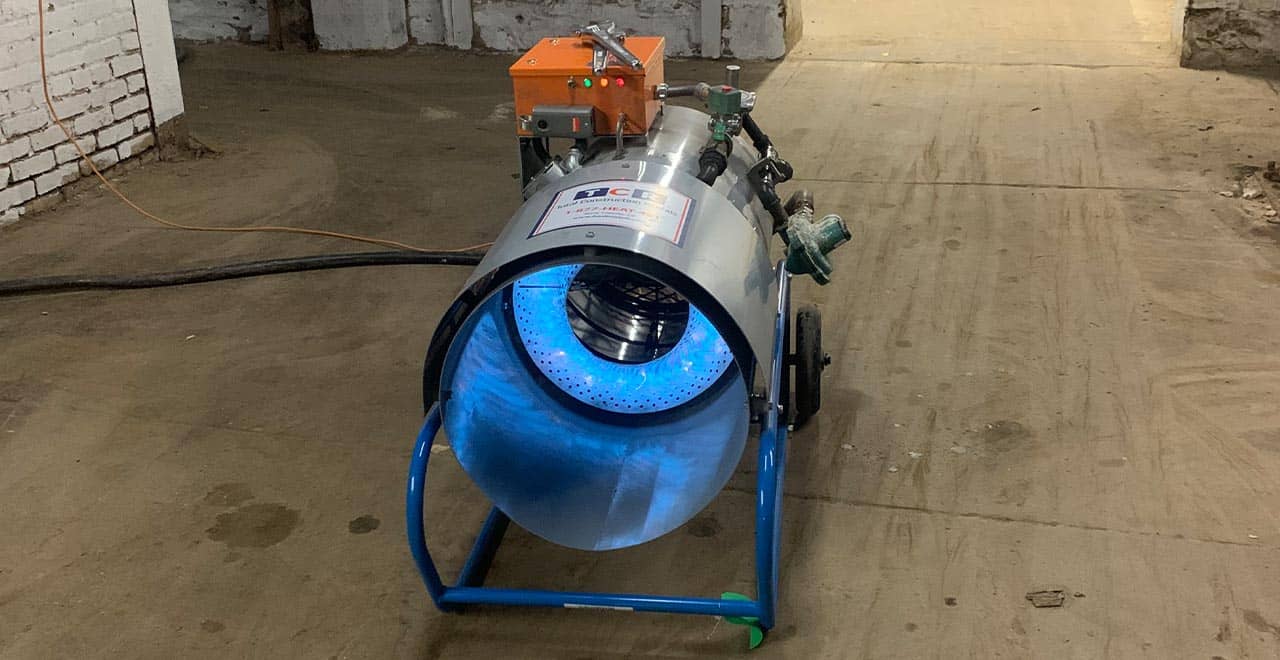
A Commercial Construction Guide to Protecting People, Property, and Productivity
Temporary heat is essential on commercial construction sites during cold weather. It keeps crews working, protects materials, and allows interior scopes to move forward on schedule. But when heaters are used inside enclosed or partially occupied spaces, safety becomes just as important as performance.
Improper heater selection, placement, or operation can introduce serious risks—from poor air quality and fire hazards to damaged finishes and unsafe working conditions. In commercial construction, where multiple trades often work simultaneously in tight environments, heater safety must be planned with the same care as any other critical system.
REIC Rentals works with commercial contractors to deploy temporary heating solutions that balance performance with safety. The following guide outlines best practices for teams to use temporary heat effectively in enclosed, occupied spaces—without putting people or projects at risk.
Start With the Right Heater for the Space
The most important safety decision happens before equipment ever reaches the site: choosing the correct heater type. Not all heaters are suitable for enclosed or occupied environments.
Key considerations include:
- Whether the space is fully enclosed, partially enclosed, or ventilated
- If workers or occupants will be present for extended periods
- The availability of fresh air and exhaust routing
Clean, indirect-heating solutions are typically preferred for interior commercial construction because they separate combustion from the delivered air. Selecting the right equipment from the outset dramatically reduces downstream safety concerns.
Understand Air Quality Risks Early
Air quality is one of the biggest safety factors when heating enclosed spaces. Combustion byproducts, reduced oxygen levels, and excess moisture can all create unsafe environments if not managed properly.
To protect air quality:
- Use heating systems designed for interior or occupied use
- Ensure combustion exhaust is vented outside the space
- Avoid heaters that introduce fumes or excessive moisture
Poor air quality not only puts crews at risk—it can also trigger inspections, shutdowns, and rework that delay the project.
Plan Ventilation as Part of the Heating Strategy
Even with clean heating systems, airflow matters. Stagnant air can lead to uneven temperatures, condensation, and discomfort—especially in large or irregular spaces.
Safe heating setups include:
- Planned air movement to distribute heat evenly
- Ventilation paths that prevent hot or cold pockets
- Clear exhaust routes that remain unobstructed
Ventilation should be intentional, not improvised. Planning airflow alongside heating improves safety and performance simultaneously.
Maintain Proper Clearances at All Times
Heaters generate significant heat, and improper placement can quickly become a fire hazard. In enclosed commercial spaces, clearance management is critical—especially as materials, tools, and debris move throughout the day.
Best practices include:
- Maintaining manufacturer-recommended distances from combustibles
- Keeping heaters clear of framing, tarps, and finishes
- Rechecking clearances as the site layout changes
What was a safe setup in the morning may not be safe by the afternoon if materials are staged nearby.
Secure Equipment Against Movement or Contact
In busy commercial environments, heaters are often placed in areas with foot traffic, carts, lifts, and rolling equipment. Unsecured units can be bumped, shifted, or damaged—creating new hazards.
Safety-focused setups include:
- Stable placement on level surfaces
- Physical barriers or marked exclusion zones when needed
- Protection from accidental contact by workers or equipment
Securing heaters reduces the risk of tip-overs, damaged ducting, or disrupted airflow.
Monitor Fuel and Power Connections Carefully
Temporary heaters rely on fuel or power systems that must be handled correctly—especially in enclosed spaces where leaks or failures can escalate quickly.
Important precautions include:
- Properly routed and protected fuel lines
- Secure electrical connections rated for the load
- Regular inspections for leaks, wear, or damage
Fuel and power systems should never be treated as “set and forget.” Ongoing monitoring is part of safe heater operation.
Avoid Overheating the Space
More heat is not always better. Overheating enclosed areas can damage materials, warp finishes, and create uncomfortable or unsafe conditions for workers.
To prevent overheating:
- Size heaters appropriately for the space
- Use thermostatic controls when available
- Monitor temperatures throughout the workday
Consistent, controlled heat is safer and more effective than extreme temperature swings.
Coordinate Heater Use With Other Trades
Commercial construction sites are shared environments. Heating systems often operate alongside painting, flooring, electrical work, and mechanical installations—each with its own sensitivities.
Safe coordination includes:
- Communicating heater locations and airflow paths
- Adjusting heat during sensitive applications
- Avoiding conflicts with temporary enclosures or containment
When trades understand how heating is being managed, they can work more safely and efficiently around it.
Keep Access Routes and Egress Clear
Heaters, ducting, and fuel lines can unintentionally block walkways, exits, or access points if not planned carefully. In enclosed or occupied spaces, clear egress is non-negotiable.
Safety planning should ensure:
- Emergency exits remain unobstructed
- Walkways are clearly marked and accessible
- Ducting and hoses are routed away from traffic areas
Maintaining clear access protects both workers and compliance with site safety requirements.
Assign Responsibility for Daily Checks
Temporary heat systems require oversight. Assigning responsibility ensures issues are identified before they become hazards.
Daily checks should include:
- Verifying heater operation and temperature output
- Inspecting ducting, exhaust, and ventilation paths
- Confirming clearances remain intact
A quick daily review can prevent incidents that cause downtime or injuries.
Adjust Heating as the Building Evolves
Commercial buildings change rapidly during construction. Walls go up, openings close, and air movement patterns shift. Heating setups must evolve along with the structure.
Safe adjustments include:
- Reassessing airflow as spaces become enclosed
- Modifying heater placement as floor plans change
- Scaling heating capacity as volume decreases
What worked early in the project may not be appropriate later without adjustment.
Prepare for Occupied or Partially Occupied Conditions
Many commercial projects involve phased occupancy, tenant improvements, or work in active buildings. Heating in these environments requires extra care.
Additional precautions include:
- Prioritizing low-noise, clean heating solutions
- Minimizing disruption to occupants
- Coordinating schedules around occupied hours
In occupied spaces, safety extends beyond the jobsite to include tenants, visitors, and facility staff.
Why Professional Guidance Matters
Temporary heating is a powerful tool—but only when deployed correctly. The safest setups come from experience, planning, and understanding how heaters behave in real-world construction environments.
Commercial contractors partner with REIC Rentals because we provide:
- Heating solutions designed for enclosed and occupied spaces
- Practical recommendations based on site conditions
- Job-ready equipment maintained for safe operation
- Responsive support when conditions change
Our goal is to help teams stay warm without compromising safety.
Making Heater Safety Part of the Winter Plan
Heater safety shouldn’t be reactive. It should be built into winter planning alongside scheduling, logistics, and quality control.
By choosing the right equipment, managing airflow, maintaining clearances, and monitoring conditions, commercial construction teams can use temporary heat safely—even in enclosed, occupied spaces.
Safe heating protects people, preserves property, and keeps projects moving through winter without unnecessary risk.
REIC Rentals delivers the service you trust and the equipment you need to heat commercial jobsites safely and effectively—no matter how cold it gets.
Ready to improve heater safety on your winter project?
Contact us today to work with experienced rental professionals who can help you select, stage, and manage temporary heating solutions designed for safe operation in enclosed and occupied environments.
