
Consider a January bridge deck pour on an interstate overpass: ambient temperature at minus 5 degrees Fahrenheit, wind gusts at 30 miles per hour, daytime high around 20 degrees. Without active heating and protection, fresh concrete on that deck drops below freezing in under six hours. Under-cured bridge deck concrete does not produce cosmetic defects. It reduces long-term load ratings, accelerates cracking, and can force posting limits or full deck replacement years before the design service life.
Bridge decks lose heat from both their top and bottom surfaces simultaneously, unlike ground-supported slabs that retain heat from the soil below. On elevated approach slabs, ramp connectors, and river crossings, wind exposure compounds the problem by stripping warmth from the concrete surface faster than hydration chemistry can replace it. Cold-weather concrete curing on bridges is a race against the conditions, and the margin for error is structural rather than cosmetic.
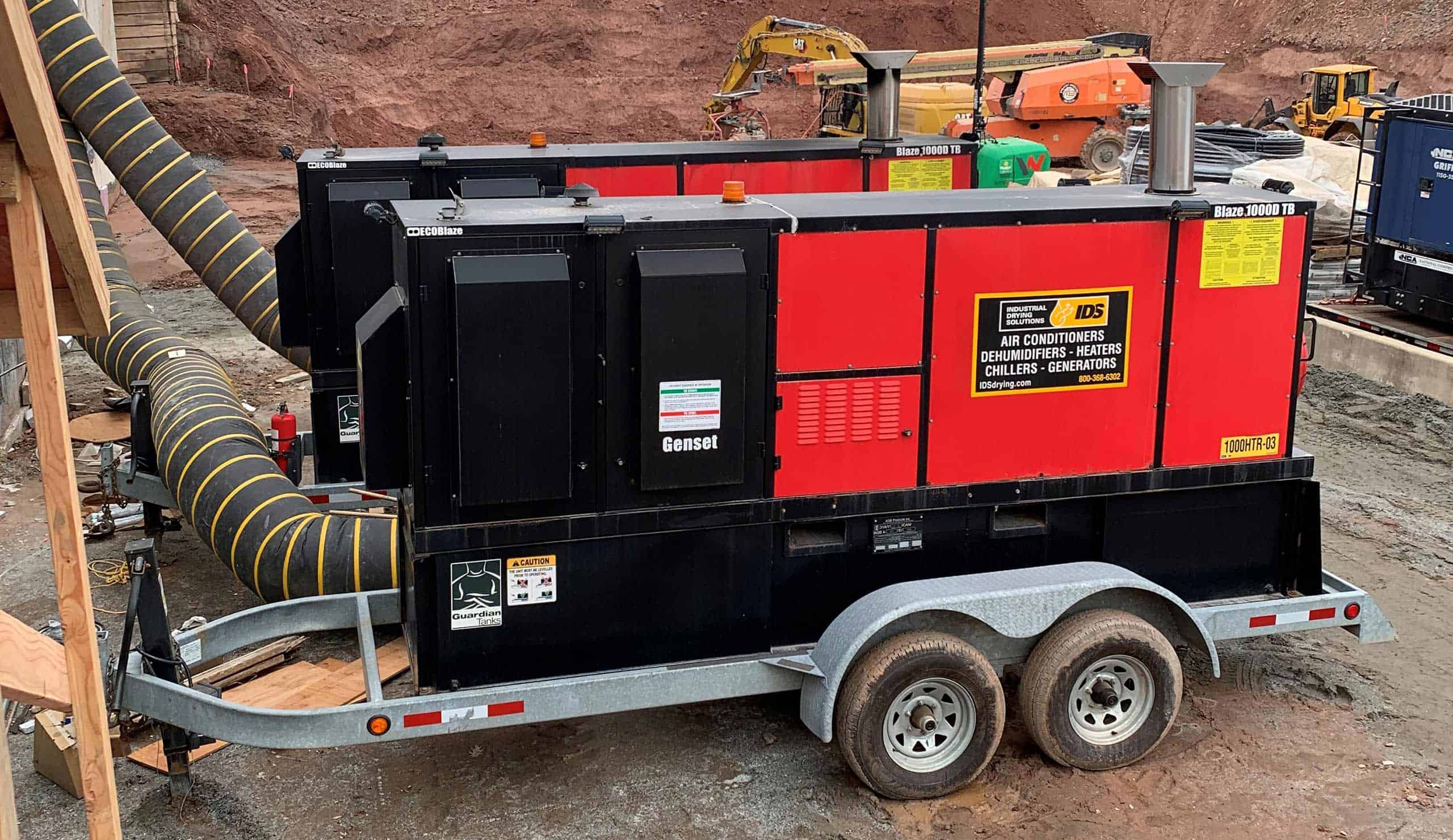
REIC Rentals provides temporary heating solutions engineered for the open exposure, wind, and exhaust sensitivity found on bridges and elevated infrastructure. Our heating equipment and HVAC accessories are sized and configured based on bridge geometry, deck area, deck thickness, exposure conditions, and the target curing temperature range.
Why Temperature Control Matters on Bridge and Infrastructure Concrete
ACI 306 defines cold weather concreting as any period when the ambient temperature may fall below 40 degrees Fahrenheit within the first 24 hours after placement. For bridge work, that definition applies with less margin than for protected on-grade work because elevated slabs have no thermal reservoir beneath them.
The critical threshold is a compressive strength of 500 psi. Concrete that freezes before reaching that strength can lose half or more of its long-term design strength, according to FHWA research on cold weather pavement performance. On a bridge deck carrying posted load limits based on design strength assumptions, that early-age freeze translates directly into a structural deficit that inspectors eventually find.
Cold weather problems specific to bridge and infrastructure concrete:
- Delayed set times that extend lane closures and push work past planned windows.
- Thermal shock from rapid temperature swings creates internal stresses in deep caps and thick deck sections, where the core stays warm while the exposed surface cools too quickly.
- Plastic shrinkage cracking intensified by winter winds on exposed deck surfaces.
- Carbonation in deck concrete from poorly ventilated direct-fired heating weakens the surface paste and creates pathways for chloride ingress.
- Failed cylinder breaks that trigger DOT hold orders, liquidated damages, and extended lane closures.
Heating Equipment Options for Bridge Decks and Elevated Slabs
REIC Rentals provides a range of temporary heating approaches for bridge and infrastructure concrete, selected based on the specific exposure, geometry, and regulatory requirements of each project. Indirect-fired heaters are the core solution for deck enclosures. They vent combustion gases outside the enclosure through a dedicated flue, delivering clean, dry air into the work area without introducing CO2 that would cause carbonation on fresh concrete surfaces. Contractors should not use direct-fired heaters inside concrete curing enclosures for this reason: the combustion byproducts directly compromise the surface layer of the concrete being protected.
REIC Rentals’ exclusive Jet Heat flameless system delivers dry heat with no open flame and no combustion emissions, making it appropriate for pier cap rooms, abutment chambers, and any confined space under a bridge structure where ventilation is limited, and emissions from conventional heaters would create both air-quality and concrete-quality problems.
Electric heaters deliver clean, dry heat with no combustion byproducts for confined pier cap areas and situations where emissions cannot be tolerated. Insulated curing blankets trap heat from hydration while blocking cold air, reducing fuel consumption and protecting against snow and ice during the protection period. For multi-span bridge projects, make-up air and limited dehumidification inside full weather enclosures maintain consistent conditions across long viaduct sections.
Designing a Winter Curing Plan for Bridge Projects
On major bridge projects, temporary heating and enclosures should be planned months before the first cold-weather pour. Pre-construction planning is where curing plans either protect the schedule or create the conditions for missed milestones.
The planning sequence that protects bridge concrete:
- Review project specifications and DOT cold weather concrete requirements for the specific state; identify critical pours, including mainline decks, ramp connectors, and post-tensioned segments.
- Define acceptable temperature and duration targets; most DOT specifications require maintaining concrete above 50 degrees Fahrenheit for at least 72 hours, extending through the full protection period.
- Assess site access for heater placement, fuel delivery, temporary power, and safe duct routing across traffic or water.
- Identify zones where confined space conditions apply to determine whether indirect-fired or flameless equipment is required.
- Plan a gradual temperature ramp-up after curing: rapid cooling after heat removal creates thermal shock that produces the cracking the heating was designed to prevent.
REIC Rentals conducts site assessments covering enclosure strategy, sensor placement, and equipment staging. We supply temporary power, fuel management, cable and duct routing hardware, and 24/7 response plans for sudden temperature drops or winter storms during the curing window.
Curing Concrete in Pier Caps, Abutments, and Confined Spaces
Pier caps, abutment walls, and the undersides of bridge spans create confined space conditions where conventional heating approaches do not apply. Ventilation is limited, combustion byproduct accumulation is rapid, and the geometry of the space limits how ducting can be routed without creating obstruction or egress problems.
REIC Rentals’ Jet Heat flameless technology was designed for exactly these applications. No-open-flame eliminates the ignition risk posed by other heater types in confined-space entries. No combustion emissions eliminate the CO monitoring requirement and the concrete carbonation risk associated with direct-fired equipment. Long-distance ducting capability allows the heating unit to be positioned outside the confined space, with conditioned air delivered to exactly where the concrete is curing.
Our teams have deployed flameless heating solutions in confined bridge space applications across our network. One challenge we regularly help bridge contractors navigate is the combination of confined space entry permit requirements and the heating needs of the pour, which are often planned separately rather than together. Coordinating those two requirements from the start produces a curing plan that satisfies both safety management and concrete quality requirements without the field conflicts that arise when they are addressed independently.
Monitoring and Documentation for Bridge Deck Curing
Monitoring is not optional on DOT and FHWA bridge projects. It is a specification requirement, and the documentation produced protects the contractor from disputes over failed cylinder breaks and load-rating challenges.
Temperature sensors placed at the top cover depth, mid-depth, and the underside of the slab provide data demonstrating that concrete was maintained within specification throughout the protection period. Sensor placement maps, time-stamped data logs, and documentation of protection methods all form part of the QC record that inspectors and DOT project engineers review.
REIC Rentals provides temporary power for monitoring equipment and supports monitoring planning alongside heating equipment selection so the documentation chain is complete from pour through form strip. That support is part of the engagement, not an afterthought.
Contact REIC Rentals before the upcoming winter to review your bridge and infrastructure schedule and build a temporary heating and concrete curing plan matched to your site. Request a quote or find a location near you to connect with the team supporting civil and bridge work in your region.
1.888.356.1880 | in**@**ic.com | reic.com
Service You Trust. Equipment You Need.
