
Understanding Temperature Control Requirements for Winter Concrete
Sub-zero construction projects present unique engineering challenges, especially when it comes to concrete curing. At REIC Rentals, we understand that when ambient temperatures drop below freezing, concrete hydration slows dramatically or stops entirely, creating significant risks to structural integrity and project timelines.
Understanding the relationship between temperature, hydration rates, and strength development is crucial for maintaining safety standards and keeping construction schedules on track in extreme cold environments. Below, we explore the effects of cold weather on concrete curing and the methods commonly used to mitigate these risks.
Hydration Process Protection in Sub-Zero Conditions
Concrete strength development depends entirely on the hydration process. During hydration, cement particles react with water to form crystalline bonds. This chemical reaction generates heat; however, extreme cold can overwhelm this internal heat production, halting hydration.
Once frozen, expanding ice can permanently damage the concrete’s internal structure, potentially reducing its final strength by 50% or more. This damage cannot be reversed, making prevention critical.
Hoarding System Integration for Maximum Effectiveness
Effective concrete curing in extreme cold requires integrated hoarding systems that create controlled microclimates around pour areas. These temporary enclosure systems trap heat while protecting concrete from wind, precipitation, and temperature fluctuations that could disrupt the curing process.
The most effective solution combines indirect-fired heaters with strategically designed hoarding systems to circulate warm, dry air throughout the enclosure. This circulation prevents cold spots that could lead to differential curing rates, ensuring consistent strength development throughout the entire concrete placement.
Engineering Solutions for Large-Scale Projects
Large-scale concrete projects in extreme cold require engineering solutions that address the scale, logistics, and coordination challenges unique to winter construction. Sequential pours, multiple elevation levels, and complex geometries each present specific thermal management requirements that demand customized approaches.
A recent project using REIC Rentals’ equipment demonstrates this integrated approach. During a multi-story commercial construction project, the contractor faced consistent sub-zero temperatures while maintaining a demanding concrete placement schedule. The engineering solution combined multiple heating zones with coordinated hoarding systems that moved systematically throughout the building as construction progressed.
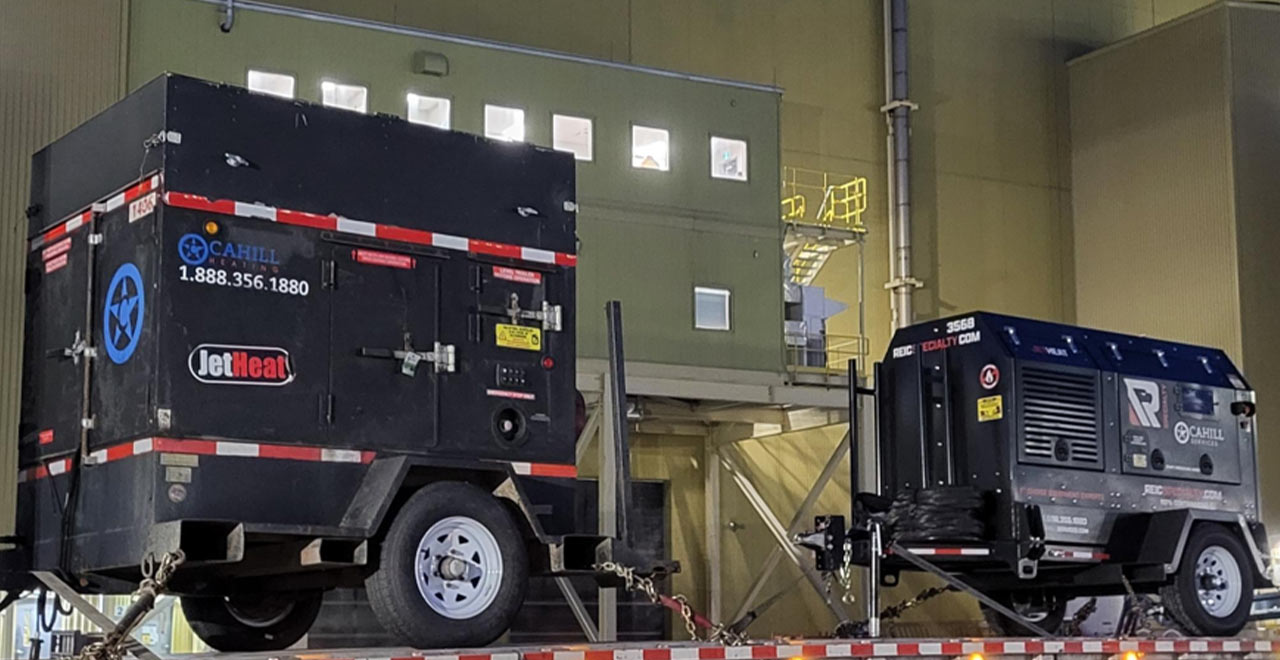
The system used flameless heaters to maintain stable temperature ranges across the working zones. Meanwhile, dehumidifiers removed moisture that could interfere with proper curing. Strategic air movement prevented cold pockets and maintained uniform conditions from floor to ceiling, ensuring consistent strength development across all concrete placements.
This engineering approach enabled the contractor to maintain the original construction schedule despite extreme weather conditions. An integrated monitoring system provided real-time verification of curing progress, supporting accelerated formwork removal and subsequent trade activities without compromising structural integrity.
Advanced Equipment Integration for Optimal Results
Successful concrete curing in extreme cold requires sophisticated equipment integration that addresses heating, moisture control, and air circulation as coordinated systems rather than independent components. This engineering approach optimizes both performance and energy efficiency.
Flameless heating technology provides consistent heat output with high static pressure capability, enabling heat distribution over extended distances through ducting systems. This capability supports large pour areas and complex building geometries without requiring multiple heating units.
Dehumidification equipment works in coordination with heating systems to remove excess moisture while preventing conditions that could compromise concrete surface quality. Air circulation systems ensure even temperature distribution and prevent stratification that could cause differential curing rates.
Transform Your Cold-Weather Construction Operations
Extreme cold concrete construction demands engineering solutions that go beyond conventional winter building practices. Most projects require an integrated systems approach that addresses temperature control, moisture management, monitoring, and quality assurance in a coordinated manner.
REIC Rentals’ proven engineering solutions and equipment enable contractors to maintain construction schedules and quality standards regardless of weather conditions. The combination of advanced heating technology, sophisticated monitoring systems, and expert engineering support ensures optimal concrete performance, even in the most challenging winter environments.
Don’t let extreme cold compromise your concrete quality or construction schedule. Contact us to learn how advanced engineering solutions from REIC Rentals can transform your cold-weather construction capabilities and deliver the consistent results your projects demand.
