
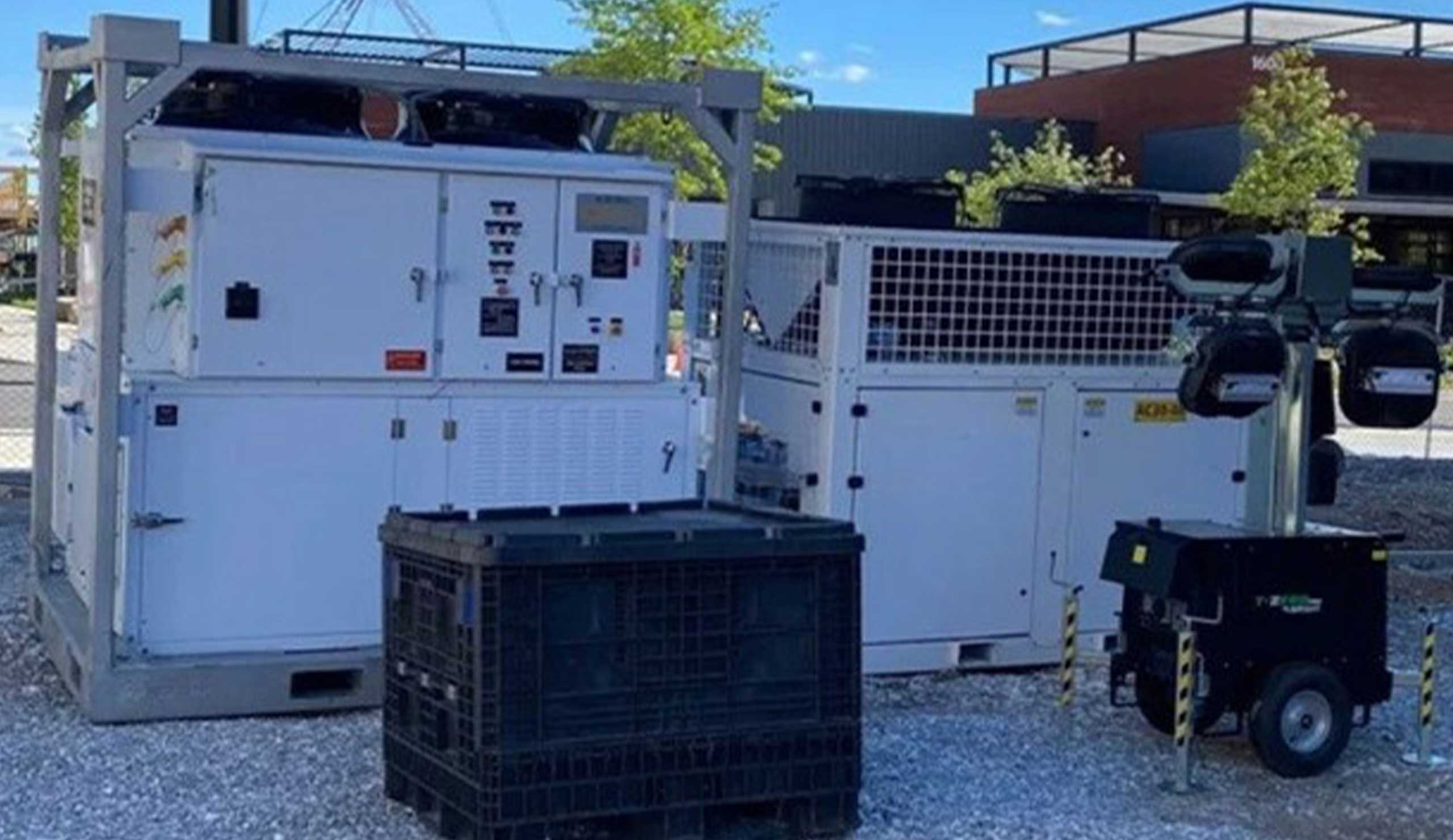
Summer heat is not just uncomfortable on a job site. It is a direct threat to safety, productivity, and schedule integrity. From infrastructure builds and plant shutdowns to large-scale industrial upgrades, projects that run through July and August face conditions that push workers, equipment, and materials past safe operating limits. Water bottles and shade structures are not a strategy. Effective temperature control is.
Temporary cooling solutions are a core element of summer project planning for any site where heat exposure creates risk. At REIC Rentals, we support construction, oil and gas, petrochemical, power station, and mining teams across North America with the cooling equipment and deployment expertise to keep operations running safely when ambient temperatures spike. This article covers what effective summer cooling looks like in practice and how to plan for it before heat becomes a problem.
Why Cooling Is a Schedule and Safety Issue, Not a Comfort Issue
Heat-related illness is one of the most preventable causes of lost time on industrial job sites, and one of the most common. Heat exhaustion and heatstroke develop faster than most supervisors expect, particularly in confined spaces, tented work zones, and areas with high radiant heat from equipment or direct sun exposure. When a worker goes down to heat illness, the ripple effect moves through the crew, the permit schedule, and the outage window.
The operational impact extends beyond the immediate safety incident. Worker efficiency drops measurably as core temperature rises. Crews working in sustained heat above safe thresholds make more errors, move more slowly, and require longer recovery periods between tasks. On a turnaround or shutdown where every shift counts, that productivity loss compounds across the project duration. Proper cooling does not just protect workers. It protects the schedule.
Equipment and materials face parallel risks. Control panels, switchgear, compressors, pumps, instrumentation, and temperature-sensitive products including adhesives, sealants, and resins all have operating limits that summer ambient temperatures can exceed without active cooling. An overheated control panel or failed compressor during a critical window creates delays that are difficult to recover within a fixed shutdown schedule.
The Cooling Challenges Specific to Large Industrial and Construction Sites
Large-scale project sites create cooling challenges that residential or commercial HVAC approaches do not address. Massive surface areas absorb radiant heat through the day and release it through the evening, keeping ambient temperatures elevated long after the sun drops. Enclosed or tented work zones trap heat and humidity with limited natural airflow. Electrical and mechanical rooms generate their own heat load from equipment operation that compounds the external temperature. Temporary structures, trailers, and containers heat up faster than permanent buildings and hold that heat longer.
Continuous operation schedules add further pressure. A 24/7 turnaround shift pattern offers no natural cool-down window for either workers or equipment. Cooling systems on these sites need to match the operational tempo of the project, running reliably through nights, weekends, and peak heat periods without requiring constant attention. Getting that reliability requires selecting the right equipment category for each zone and configuring it before the season is already running.
Cooling Equipment That Matches the Application
Selecting the right cooling technology for each work zone is what determines whether the system actually holds temperature under load. REIC Rentals carries portable air conditioners, spot coolers, evaporative coolers, and large-capacity cooling systems across the full range of industrial and construction cooling applications.
Portable air conditioners and spot coolers handle enclosed spaces where directed, recirculated cooling is the requirement. Break trailers, control rooms, electrical rooms, server installations, and crew offices all benefit from dedicated portable units that maintain a consistent setpoint regardless of what is happening outside. These units connect to standard power supplies and require no permanent installation, making them straightforward to deploy and relocate as the scope shifts.
Evaporative coolers are the right choice for large open areas and semi-enclosed work zones in dry climates. Water-based cooling technology delivers meaningful temperature reduction in low-humidity environments at a fraction of the power draw of refrigerant-based systems. On arid region sites where electricity is a constrained resource, evaporative cooling extends the capacity of available generators while keeping large work areas manageable through peak heat hours.
For large-scale mechanical or process-driven cooling requirements, temporary chillers and cooling towers reduce system and equipment temperatures during peak operations. These units suit refineries, power stations, and large industrial facilities where process cooling is integrated into the shutdown scope. High-volume fans and ventilation systems support confined space work and targeted relief in welding or grinding areas where spot cooling is needed without disrupting broader operations.
Heat Stress Prevention as an Operational Standard
Occupational health and safety regulations establish clear standards for heat exposure in the workplace. Compliance requires more than a posted policy. It requires active controls that keep workers within safe temperature ranges throughout their shifts. On sites where ambient conditions exceed regulatory thresholds, work activity must be reduced or suspended without adequate cooling infrastructure in place. That is a forced downtime scenario that no outage schedule can absorb easily.
Worker cooling stations, climate-controlled break areas, and ventilation for confined space work are the three most effective controls for heat stress prevention on industrial sites. REIC Rentals configures these as part of an integrated cooling plan rather than individual equipment drops. A cooling station that is properly positioned, adequately sized, and connected to reliable power actually gets used. One that is undersized or inconveniently located does not, and the safety gap remains.
Power and Infrastructure Considerations for Summer Cooling
Cooling equipment draws significant power, and that demand needs to be accounted for in site power planning from the start. REIC Rentals supplies generators and temporary power distribution alongside cooling equipment so the full system is configured to work together rather than discovering amperage conflicts after deployment. For remote sites running on diesel generation, energy-efficient cooling unit selection reduces fuel consumption and extends generator service intervals, both of which matter on sites where resupply logistics add cost.
Sites with partial power cutovers during turnarounds need cooling systems that can adapt to changing power availability across the outage window. Planning that flexibility into the rental configuration before the outage starts prevents the improvisation that creates safety gaps and equipment damage when power routing changes mid-project.
Planning Summer Cooling Before the Heat Arrives
Peak summer demand puts pressure on cooling fleet availability across every market. Sites that confirm equipment needs and reserve units in Q1 for Q2 and Q3 deployments secure the right configuration at the right time. Sites that wait until temperatures are already climbing compete for what is available rather than what is optimal.
Effective planning starts with a site assessment that accounts for work zone layout, sun exposure, equipment heat output, crew size, shift schedule, and power availability. That information determines total cooling load, which drives equipment selection, generator sizing, and layout planning. REIC Rentals works with project teams through this process ahead of the season so equipment arrives configured for the site rather than requiring field modifications after delivery.
Temperature and humidity monitoring across key work zones lets the cooling plan adjust as conditions change through the summer. A heat wave that pushes ambient temperatures 15 degrees above the seasonal average requires a different response than a standard summer day. Building that flexibility into the plan means adjustments happen through a phone call and a unit swap rather than through a forced work stoppage while the team figures out what to do.
Summer Does Not Have to Slow the Project Down
Heat is a predictable challenge. Managing it effectively is a planning decision, not a weather lottery. REIC Rentals brings the fleet depth, field experience, and local team presence across 55 locations in North America to support cooling deployments of every scale, from a single spot cooler in a control room to a full site cooling strategy across a multi-week turnaround. Our team is available around the clock during active projects to service equipment, respond to changing conditions, and keep operations running when temperatures spike.
Whether the project is a refinery turnaround, a power station outage, a pipeline shutdown, or a major construction build, the summer cooling plan should be in place before the first crew arrives on site. Tell us your site layout, crew size, shift schedule, and power constraints. We will build a cooling plan that protects your people, your equipment, and your schedule through the hottest months of the year.
1.888.356.1880 | in**@**ic.com | Get a Quote
Service You Trust. Equipment You Need.
