
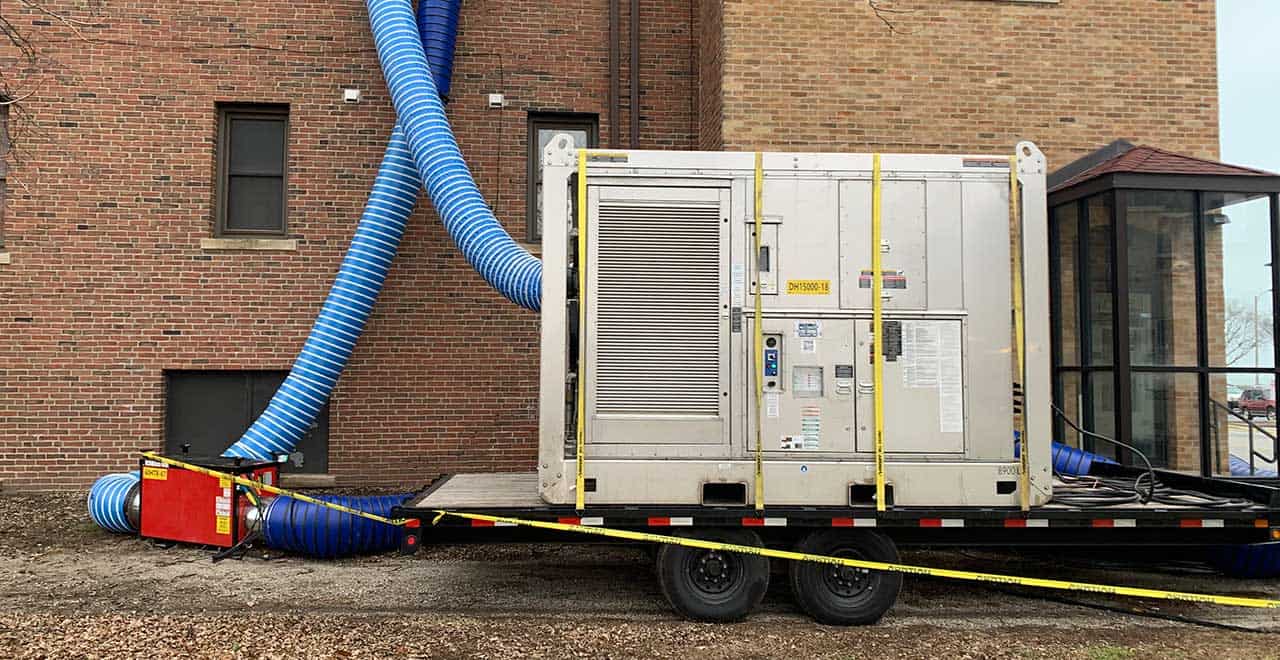
Protecting Commercial Construction Projects Through Moisture Control
Moisture is one of the most underestimated threats on a commercial construction site. While temperature and scheduling challenges are often top of mind, humidity levels can quietly determine whether materials perform as intended, finishes last, and timelines stay on track.
From large-scale interior buildouts to restoration work after water intrusion, dehumidification plays a critical role in protecting building materials, preventing costly rework, and ensuring quality standards are met.
At REIC Rentals, we support commercial contractors with dependable environmental control solutions for demanding job sites. Proper dehumidification is not simply about comfort—it is about safeguarding the investment, productivity, and long-term durability of the project.
This guide explains how dehumidification prevents material damage, where it matters most in commercial construction, and why moisture control should be part of every job site plan.
Why Humidity Control Matters in Commercial Construction
Commercial projects are complex environments. Multiple trades are working simultaneously, schedules are tight, and materials are often installed under conditions that must meet strict specifications.
When humidity rises beyond acceptable levels, the consequences can include:
- Warped or swollen building materials
- Delayed curing of concrete and coatings
- Mold growth in enclosed spaces
- Adhesive and flooring failures
- Increased risk of inspection setbacks
Moisture problems are rarely isolated. A single uncontrolled humidity issue can impact multiple phases of construction and create ripple effects across the entire schedule.
Dehumidification provides stability, consistency, and protection—especially in interior commercial environments.
Common Sources of Excess Moisture on Job Sites
Humidity issues do not only occur after major flooding. Commercial construction sites generate moisture in many ways, including:
Weather Exposure During Construction
Open structures, unfinished roofs, and seasonal rain or snow can introduce moisture into materials long before the building is sealed.
Concrete and Flooring Processes
Concrete pours release significant water vapor as they cure. Without proper drying, that moisture can remain trapped in the slab, affecting flooring installation later.
Water Intrusion and Restoration Events
Leaks, pipe bursts, and storm damage can quickly saturate insulation, drywall, and structural components, requiring immediate drying action.
Occupied Renovation Environments
Commercial renovations often occur in partially operational buildings. HVAC disruptions combined with occupant activity can create unpredictable humidity levels.
Understanding where moisture originates is the first step toward effectively controlling it.
How High Humidity Damages Commercial Construction Materials
Moisture impacts nearly every material used in modern commercial builds. Without proper dehumidification, even premium products can fail prematurely.
Drywall and Insulation
Drywall absorbs moisture quickly. When exposed to high humidity, it can:
- Lose structural integrity
- Sag or soften
- Become a breeding ground for mold
Insulation that becomes damp loses effectiveness and may require removal and replacement.
Flooring Systems
Commercial flooring installations are highly sensitive to moisture. Excess humidity can cause:
- Vinyl lifting or bubbling
- Hardwood expansion and warping
- Carpet adhesive breakdown
- Tile failures due to trapped vapor
Many flooring manufacturers require strict moisture readings before installation. Dehumidification helps contractors meet those thresholds.
Paints, Coatings, and Sealants
Finish work depends on controlled environmental conditions. High humidity can result in:
- Extended drying times
- Poor adhesion
- Surface blistering
- Uneven appearance
In commercial spaces where aesthetics and durability matter, humidity control is essential for proper curing.
Structural Materials and Stored Products
Even steel and metal components can corrode when stored in damp environments. Lumber and framing materials may twist or swell, impacting alignment and fit.
Moisture control protects both installed materials and those staged on-site for future phases.
The Role of Dehumidification in Commercial Project Success
Dehumidification is not only about responding to moisture—it is about preventing it from becoming a problem in the first place.
Supporting Faster Drying Timelines
In commercial construction, drying time affects everything. Dehumidifiers accelerate:
- Concrete curing schedules
- Drywall finishing
- Paint and coating completion
- Restoration recovery
Faster drying reduces downtime and helps contractors stay aligned with turnover dates.
Preventing Mold and Indoor Air Quality Issues
Mold can develop within 24–48 hours in damp conditions. In commercial environments—especially healthcare, education, or hospitality—air quality standards are strict.
Dehumidification helps maintain safe humidity levels, reducing microbial risk and supporting compliance.
Protecting Workmanship and Reducing Rework
Material failures caused by moisture often require removal and replacement, resulting in costly rework. Dehumidification protects craftsmanship by ensuring materials behave as intended during installation.
Where Dehumidification Is Most Critical
Moisture control is valuable across all commercial sectors, but it becomes especially important in projects such as:
- Interior tenant improvements
- Multi-story office construction
- Retail remodels with fast reopen deadlines
- Water damage restoration
- Food storage and processing facilities
- Healthcare renovations requiring strict environmental stability
- Government buildings that must remain operational
In these environments, humidity is not just a comfort issue—it is a performance requirement.
Types of Dehumidification Solutions for Job Sites
Commercial contractors need equipment that matches both the scale of the project and the on-site conditions.
REIC Rentals provides high-performance drying and environmental control solutions designed for demanding applications.
Common options include:
Portable Dehumidifiers
Ideal for contained interior zones, finish work areas, and smaller renovation footprints.
Desiccant Dehumidification Systems
Designed for colder conditions or applications requiring extremely low humidity levels.
Integrated Drying Packages
Large commercial projects often require coordinated systems that include:
- Dehumidifiers
- Air movers
- Ventilation ducting
- Temporary heating support
The right combination ensures moisture is removed efficiently and consistently.
Best Practices for Using Dehumidification on Commercial Job Sites
Contractors can maximize results by following proven moisture-control strategies:
- Begin drying early rather than waiting for visible damage
- Monitor humidity levels regularly throughout the project
- Seal off drying zones to improve efficiency
- Coordinate airflow, heating, and dehumidification together
- Ensure equipment is sized correctly for the square footage and moisture load
A proactive approach prevents moisture from turning into costly delays.
Moisture Control as a Competitive Advantage
Commercial construction is built on precision. When humidity is unmanaged, even minor moisture issues can cause significant schedule disruptions and long-term building performance problems.
Dehumidification protects:
- Materials
- Labor productivity
- Finish quality
- Occupant safety
- Project timelines
In short, it safeguards the outcome of the entire job.
Reliable Environmental Support for Commercial Construction
Dehumidification is one of the most effective ways to prevent material damage and protect commercial construction investments. Whether your project involves restoration, interior buildout, or weather-sensitive finishing work, moisture control is essential for maintaining schedule integrity and meeting quality standards.
REIC Rentals supports contractors with dependable equipment, experienced professionals, and environmental solutions designed for demanding commercial job sites. From targeted humidity management to comprehensive climate control planning, we help keep projects productive, protected, and on track. Contact our team today to ensure your job site has the right environmental support in place.
Service You Trust. Equipment You Need.
