
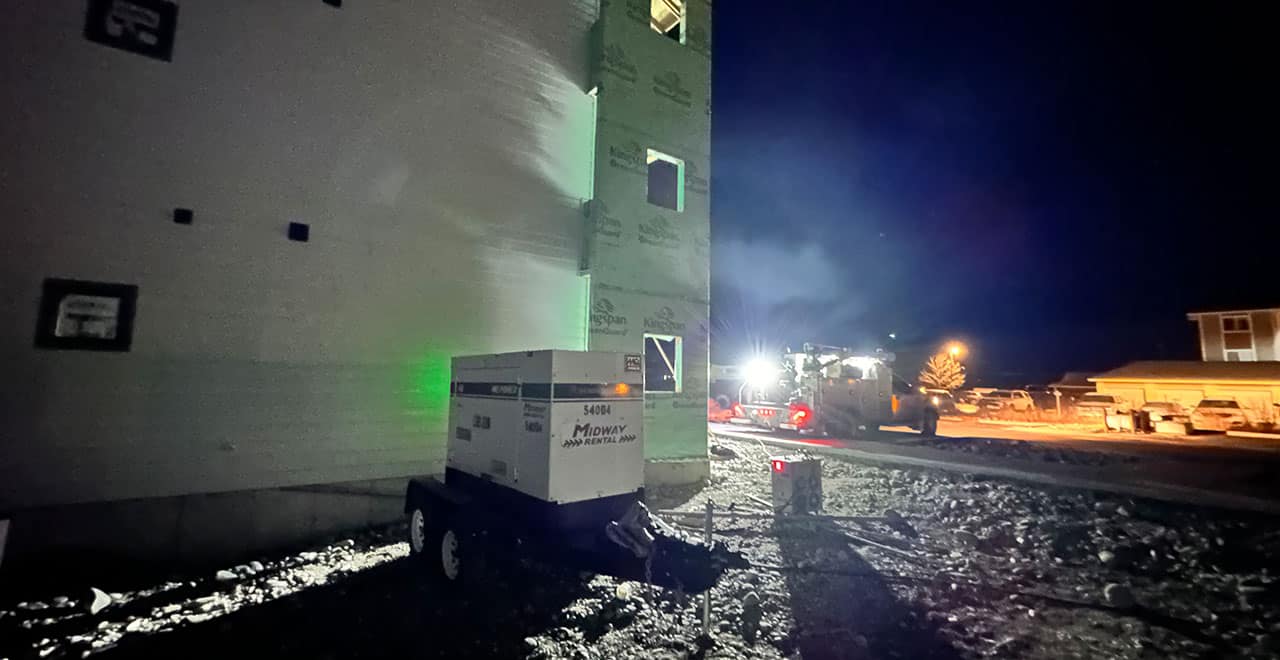
Reliable Power Planning for Commercial Construction Job Sites
Power is the backbone of every commercial construction project. From running tools and tower lights to supporting temporary HVAC systems and critical site operations, electricity keeps work moving and crews productive.
But on many commercial job sites, permanent power is not available—or not reliable enough to support the demands of construction. That’s where temporary generators become essential.
Choosing the right generator is not as simple as picking the biggest unit in the yard. Oversizing wastes fuel and increases costs, while undersizing can lead to equipment failures, downtime, and safety risks.
At REIC Rentals, we support contractors with dependable power solutions backed by knowledgeable teams and national reach. Whether your project requires standby support, continuous job site power, or emergency backup, selecting the right generator is key to staying safe, compliant, and on schedule.
This guide breaks down the key factors to consider when choosing the right generator for commercial construction projects.
Why Generator Selection Matters in Commercial Construction
Commercial job sites are complex, high-demand environments. Power needs often include:
- Heavy-duty tools and equipment
- Temporary lighting for extended shifts
- Climate control systems for occupied renovations
- Pumps and water management equipment
- Site trailers, security systems, and communications
If power is unstable or insufficient, the consequences can be immediate:
- Work stoppages and schedule delays
- Equipment damage from improper voltage
- Increased safety risks in low-visibility conditions
- Lost productivity across multiple trades
A properly sized generator keeps operations consistent and prevents costly interruptions.
Step One: Understand Your Project’s Power Requirements
Before selecting a generator, contractors must evaluate what the unit will actually need to support.
Start by identifying:
- All equipment that will be powered
- Whether loads run continuously or intermittently
- Startup surge requirements for motors
- Single-phase vs. three-phase needs
Commercial projects rarely involve one simple load. Generator planning must account for the full job site demand.
Common Job Site Power Loads Include:
- Air compressors
- Welders
- Tower lights
- Electric heaters or temporary HVAC
- Cranes and hoists
- Pumps and dewatering systems
- Office trailers and charging stations
Each item adds to the total required capacity.
Step Two: Calculate Total Wattage and Load Demand
Generators are typically rated in kilowatts (kW). To determine the right size, contractors must calculate:
- Running wattage (continuous power draw)
- Starting wattage (surge power when equipment turns on)
Motors, HVAC systems, and pumps often require significantly higher startup power than their running load.
If surge requirements are ignored, the generator may trip breakers or fail to reliably start equipment.
An experienced rental partner, like REIC Rentals, helps to ensure load calculations match real-world conditions.
Step Three: Consider the Type of Generator Your Site Needs
Commercial construction projects may require different generator setups depending on the application.
Portable Generators
Best for smaller work zones, short-term needs, or tool support.
Towable Generators
Common on mid-size construction sites that require flexible placement and steady output.
Industrial Standby Units
Designed for large commercial builds, continuous operation, or critical infrastructure projects.
The right generator depends on the scale and duration of the job.
Step Four: Determine Voltage and Phase Requirements
One of the most important technical factors in generator selection is matching the voltage output to the equipment being powered.
Commercial sites often require:
- 120/240V for general tools and trailers
- 208V three-phase for HVAC and larger systems
- 480V for industrial equipment and heavy loads
Choosing the wrong voltage can result in inefficient performance or serious equipment damage.
Always confirm electrical specifications before selecting a unit.
Step Five: Evaluate Runtime, Fuel Efficiency, and Refueling Logistics
Power planning is not just about output—it’s also about uptime.
Consider:
- How long the generator must run each day
- Whether the project requires overnight power
- Fuel consumption under load
- Refueling access and safety procedures
Larger generators may offer longer runtime, but efficiency depends on proper sizing. An oversized generator running at low load wastes fuel and increases operating cost.
For long-duration commercial projects, a fuel strategy should be part of the overall equipment plan.
Step Six: Account for Job Site Environment and Conditions
Commercial construction environments introduce unique challenges that affect generator performance.
Key factors include:
- Weather Exposure
Cold temperatures may require winterization packages, while extreme heat may require additional ventilation.
- Noise Restrictions
Urban commercial sites, hospitals, schools, and occupied retail zones may require quiet-run or sound-attenuated generators.
- Space Constraints
Tight staging areas may limit placement options and require towable or compact units.
- Emissions Compliance
Many jurisdictions require Tier-rated generators that meet strict emissions standards.
Matching the generator to site conditions ensures compliance and smoother operation.
Step Seven: Plan for Distribution and Accessories
A generator alone is only part of the solution. Commercial job sites often require supporting equipment such as:
- Distribution panels
- Camlock connections
- Power cables and cord management
- Transfer switches
- Grounding systems
- Load banks for testing
Proper distribution prevents overloading circuits and ensures power is delivered safely across the site.
A complete power package is often more effective than a standalone unit.
Step Eight: Identify Critical Loads and Backup Needs
Some commercial projects cannot afford power interruptions. Critical loads may include:
- Environmental control systems
- Medical or healthcare operations
- Security and lighting infrastructure
- Emergency pumping systems
In these cases, generator selection must account for redundancy, reliability, and rapid response support.
Temporary generators can serve as a standby backup or primary power, depending on project needs.
Step Nine: Work with Experts Who Understand Commercial Power Demands
Generator sizing and planning can become complex quickly, especially on industrial-scale or multi-phase commercial builds.
The best outcomes come from working with rental professionals who understand:
- Load calculations
- Site logistics
- Equipment compatibility
- Safety requirements
- Fuel and service planning
At REIC Rentals, our teams help contractors develop integrated equipment solutions that support productivity and minimize downtime.
Power is too important to leave to guesswork.
Common Generator Mistakes to Avoid
Contractors can protect schedules and budgets by avoiding these common issues:
- Choosing based on size alone, not load demand
- Ignoring startup surge requirements
- Forgetting voltage and phase compatibility
- Underestimating runtime and fuel needs
- Failing to plan distribution and cable access
- Placing generators without considering noise or emissions limits
The right generator strategy prevents these problems before they disrupt the job.
Powering Commercial Construction with Confidence
Temporary power is a critical component of successful commercial construction. From initial site development and structural phases to interior buildout and final turnover, generators supply the electricity needed to operate tools, lighting, climate systems, and essential infrastructure across the job site.
Selecting the right generator requires thoughtful planning around load demands, site conditions, runtime expectations, and safety compliance. When power solutions are properly sized and strategically deployed, contractors can maintain productivity, minimize downtime, and protect key schedule milestones.
REIC Rentals provides dependable power solutions backed by knowledgeable guidance and equipment readiness designed for demanding commercial environments. Contact our team to ensure your project has the reliable temporary power support it needs from start to finish.
Service You Trust. Equipment You Need.
