
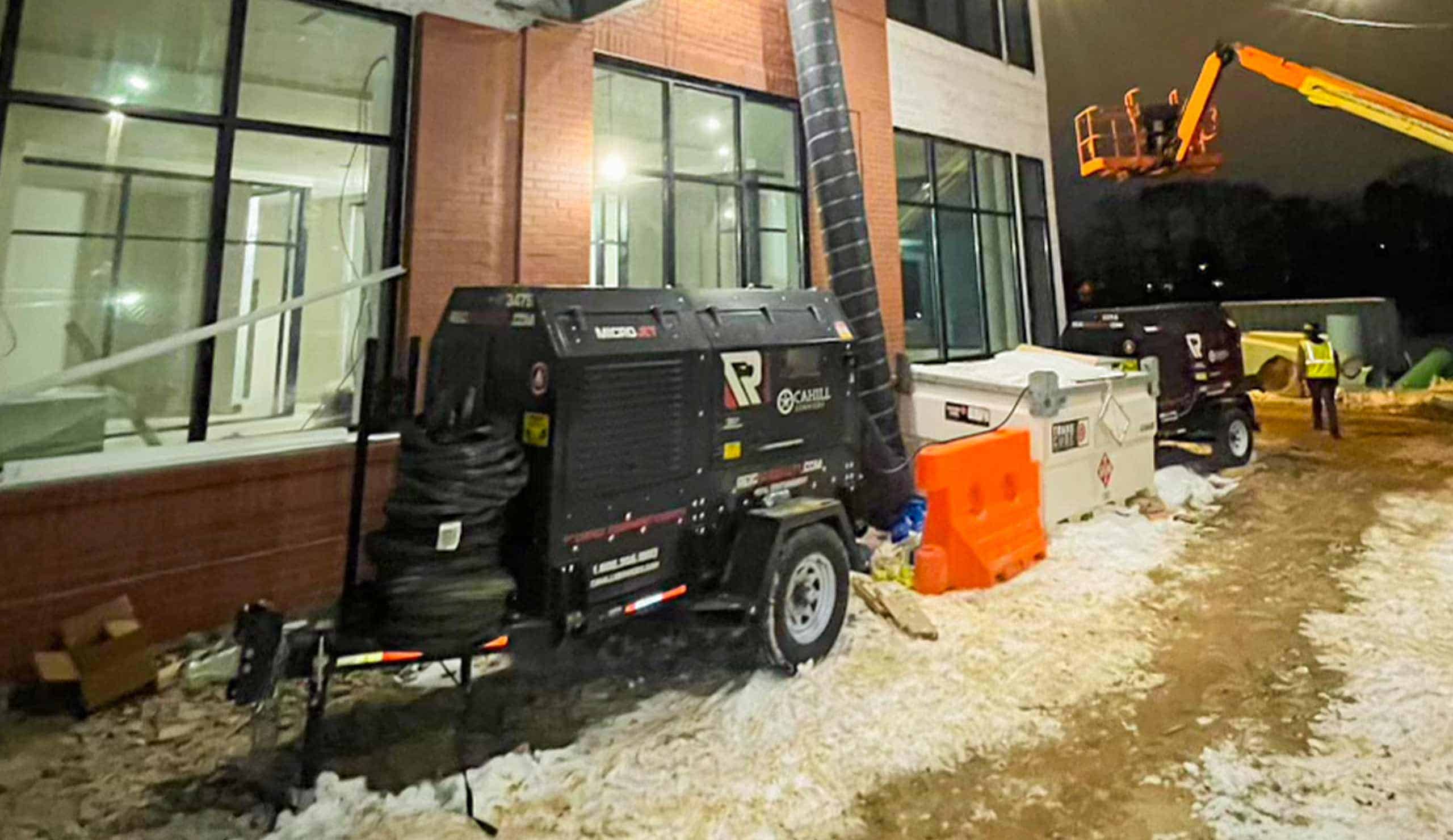
A wood-frame multifamily project in October has a fixed delivery date in March. The contractor knows that November through February will bring cold snaps, rain, and the occasional snow event that compresses the productive hours in each week. The projects that hit March on schedule are not the ones that got lucky with the weather. They are the ones that planned around it.
Residential and multifamily construction in cold climates faces winter conditions that are both predictable and manageable when planning accounts for them. Rain, snow, sleet, and ice slow outdoor work and can halt progress entirely on unprotected sites. But the contractors who treat cold weather as an operational variable rather than an external disruption consistently deliver projects on time, protecting both their reputation and their margins.
REIC Rentals provides temporary heating, drying, and dehumidification equipment, as well as HVAC accessories, for residential and multifamily construction throughout every winter phase. Here is what the most effective winter construction plans have in common.
Deploy Temporary Heating Early
Temporary heating for residential and multifamily construction is most effective when deployed before conditions become a problem rather than after cold has already compromised materials or slowed crews. The Cornell University research that found productivity peaks at 71.6 degrees Fahrenheit applies to residential construction sites as directly as it does in commercial offices: crews working in adequately heated, enclosed spaces sustain their normal production pace throughout the full shift.
Beyond crew performance, temporary heating enables the material installations that cold weather would otherwise prevent or compromise. Indirect-fired heaters that deliver clean, dry heat into enclosed residential construction spaces allow paint, putty, adhesives, and joint compound to be applied and cured at the temperatures specified by their manufacturers. Concrete poured and cured within temporary enclosures with active heating reaches its design strength on schedule rather than gaining strength more slowly in cold ambient conditions.
Sequencing interior trades to follow envelope closure and deploying temporary heating before interior work begins, rather than waiting for conditions to affect production, allows finishing trades to work through winter months that would otherwise pause their phases entirely.
Plan Around the Weather Rather Than Against It
Weather forecasts are imperfect, but they are actionable at a three-to-seven-day horizon for most construction scheduling decisions. When three days of rain are forecast, planning indoor tasks for those days and deferring exterior work that requires dry conditions until the window passes protects both production and material quality without requiring a schedule hold.
Building a schedule buffer into winter timelines that reflects actual cold-weather productivity rather than ideal-condition rates is what separates schedules that hold from those that progressively compress through the season. The standard optimistic baseline, which assumes winter conditions will not meaningfully affect production rates, is consistently wrong. Estimating slightly later deadlines for weather-sensitive phases during the November through February window, with explicit recovery planning if conditions turn out better than assumed, produces timelines that project owners can rely on rather than ones that require renegotiation by January.
A backup plan for daily operations during severe weather events, including who decides to suspend site work, how trades are notified, and how lost time is recovered, removes the improvisation from the decisions that bad weather forces.
Communicate Consistently Across All Parties
One of the most significant challenges in residential and multifamily construction is maintaining effective communication among all parties involved when weather conditions necessitate schedule changes. A missed notification to the framing crew about a rain delay, or a change to the drywall installation sequence that the taper does not hear about, creates compounding coordination problems that cost more time to resolve than the original weather event.
Regular communication through a defined schedule that includes daily site check-ins, weather-triggered alerts, and consistent update channels for all trades and suppliers is what keeps everyone aligned with the current plan rather than the plan that was current before the last weather event. Transparent communication about setbacks, including material delivery delays, changes in trade availability, and weather-forced scope adjustments, prevents the tension that builds when parties discover schedule changes after the fact rather than in advance.
Consider Prefabricated and Modular Approaches
Prefabricated shells, modular components, and pre-built assemblies reduce weather exposure in residential and multifamily construction by completing significant portions of the work in a controlled factory environment rather than on an open site during winter conditions. Structures that arrive with exterior cladding, window frames, and roof systems already installed require only assembly and connection on site rather than the sequential exterior work that weather disrupts.
When only interior work remains after the prefabricated shell is set, that work can proceed regardless of outdoor conditions, eliminating the weather dependency that slows traditional construction sequencing. For multifamily projects with repetitive unit configurations, prefabrication also reduces on-site labor requirements during the phases when cold weather has the greatest impact on productivity.
Use Winter Conditions to Your Advantage
The winter months represent a period of reduced competition for skilled trades and labor in many markets where construction activity slows significantly. Contractors willing to work through the winter with adequate climate-control infrastructure can access trades and crews that are unavailable during the busy spring and summer seasons. Scheduling the most labor-intensive interior phases for the winter months when trade availability is highest, converts a perceived disadvantage into a competitive advantage.
Material costs and delivery lead times also often improve during the winter slowdown in construction markets. Planning procurement of long-lead items for delivery during the winter window can improve both pricing and schedule certainty compared to competing for the same materials during peak construction season.
REIC Rentals supports residential and multifamily winter construction with temporary heating, dehumidification, and HVAC accessories sized to the actual construction phase rather than applied generically. Request a quote or find a location near you to begin the winter planning conversation for your next residential or multifamily project.
1.888.356.1880 | in**@**ic.com | reic.com
Service You Trust. Equipment You Need.
