
Maintaining Comfort and Continuity in Commercial Construction Projects
Renovating an occupied commercial building is one of the most challenging environments in construction. Unlike new builds, occupied renovations require contractors to complete complex work while tenants, employees, customers, or patients remain inside the space.
Whether you’re upgrading mechanical systems in an office tower, remodeling an active retail store, or completing phased improvements in a healthcare facility, comfort and indoor stability cannot be compromised. Heating and cooling disruptions can quickly lead to complaints, lost revenue, or even operational shutdowns.
That’s why temporary HVAC solutions are essential for occupied renovation projects. Proper planning and the right equipment help contractors maintain consistent temperatures, protect indoor air quality, and keep schedules moving without disrupting building operations. At REIC Rentals, we support commercial construction teams with dependable temporary climate control systems designed for demanding renovation environments.
This article explores how temporary HVAC supports occupied projects, where it provides the greatest value, and what contractors should consider when planning.
Why Occupied Renovations Require Temporary HVAC
Commercial renovation work often involves shutting down or modifying existing HVAC systems. During these phases, buildings may experience:
- Loss of heating or cooling
- Poor airflow and ventilation
- Temperature swings affecting occupants and materials
- Increased humidity levels
- Reduced indoor comfort in sensitive spaces
Occupied facilities have little tolerance for these disruptions. Tenants still expect comfort, and operations often must continue uninterrupted.
Temporary HVAC provides the environmental stability needed to complete renovations without sacrificing occupant experience or project momentum.
Common Scenarios Where Temporary HVAC Is Critical
Temporary heating and cooling systems are used in a wide range of occupied commercial projects, including:
- HVAC Replacement or Mechanical Upgrades
Chiller swaps, boiler replacements, rooftop unit changes, and ductwork modifications often require partial or full shutdowns.
- Tenant Improvement Buildouts
Office renovations and retail remodels frequently occur while adjacent suites remain occupied.
- Emergency Outages
Unexpected HVAC failures, boiler ruptures, or freeze events can create urgent climate needs.
- Seasonal Construction Challenges
Summer heat waves and winter cold snaps can amplify disruptions during renovations when systems are offline.
In each case, temporary HVAC keeps the building functional while construction progresses.
Key Benefits of Temporary HVAC in Occupied Commercial Spaces
Temporary climate control is about more than comfort—it’s about protecting the project, the occupants, and the facility.
1. MaintainingTenant Comfort and Operational Continuity
Occupied buildings must remain usable throughout renovation. Temporary HVAC helps ensure:
- Stable indoor temperatures
- Reduced complaints and disruptions
- Continued business operations
- Comfortable environments for staff and customers
For retail, hospitality, and office projects, comfort directly impacts revenue and tenant satisfaction.
2. Protecting Sensitive Equipment and Building Systems
Many commercial facilities house temperature-sensitive assets, such as:
- Server rooms and IT infrastructure
- Medical equipment
- Manufacturing or processing operations
Temporary cooling and airflow prevent overheating and protect critical operations during HVAC downtime.
3. Supporting Indoor Air Quality and Ventilation
Renovation work creates dust, fumes, and airborne debris. Temporary HVAC systems can be integrated with ventilation and filtration to support:
- Air exchange in enclosed work zones
- Cleaner air in occupied areas
- Containment strategies for sensitive environments
This is especially important in healthcare, education, and government facilities where air quality standards are strict.
4. Controlling Humidity During Interior Renovations
Humidity is often overlooked during occupied renovations, yet it directly affects:
- Flooring installation
- Paint and coating performance
- Mold prevention
- Comfort levels in enclosed spaces
Temporary HVAC systems paired with dehumidification help stabilize moisture levels and protect finishes.
5. Preventing Schedule Delays and Costly Downtime
Commercial renovation schedules are often compressed into short shutdown windows. Temporary HVAC reduces the risk of delays caused by:
- Weather extremes
- Mechanical system outages
- Material curing slowdowns
- Occupant-driven restrictions
Maintaining stable conditions helps crews work efficiently and meet turnover deadlines.
Temporary HVAC Solutions Commonly Used in Commercial Renovations
The right system depends on the building type, scope, and environmental demands.
REIC Rentals supports contractors with equipment solutions designed for high-performance renovation needs.
Temporary Heating Systems
Temporary heat is essential during:
- Winter renovations
- Boiler replacements
- Emergency freeze protection
- Occupied spaces requiring consistent warmth
Options include indirect-fired heaters, make-up air units, and flameless heating technology designed for safe indoor applications.
Temporary Cooling and Spot AC
Cooling support is often required for:
- Summer remodels
- Rooftop unit replacement projects
- Occupied retail environments
- Equipment rooms and data centers
Portable AC systems and engineered cooling packages provide fast, reliable relief during outages.
Ventilation and Airflow Support
Temporary ventilation is critical for:
- Air movement in enclosed zones
- Odor and fume control
- Supporting indoor air quality
- Preventing stagnant conditions during shutdowns
Ventilation solutions often work alongside heating and cooling equipment to provide comprehensive environmental management.
Dehumidification and Moisture Control
Renovations frequently involve moisture-sensitive finishes. Dehumidification helps prevent:
- Flooring failures
- Extended drying times
- Mold risk in occupied buildings
Humidity control is a major factor in protecting the quality and schedule of renovations.
Planning Considerations for Temporary HVAC in Occupied Buildings
Temporary HVAC planning requires careful coordination, especially in active facilities.
Key considerations include:
- Load Requirements and Space Size
Contractors must evaluate the heating or cooling capacity needed based on square footage, occupancy, and equipment heat loads.
- Access and Equipment Placement
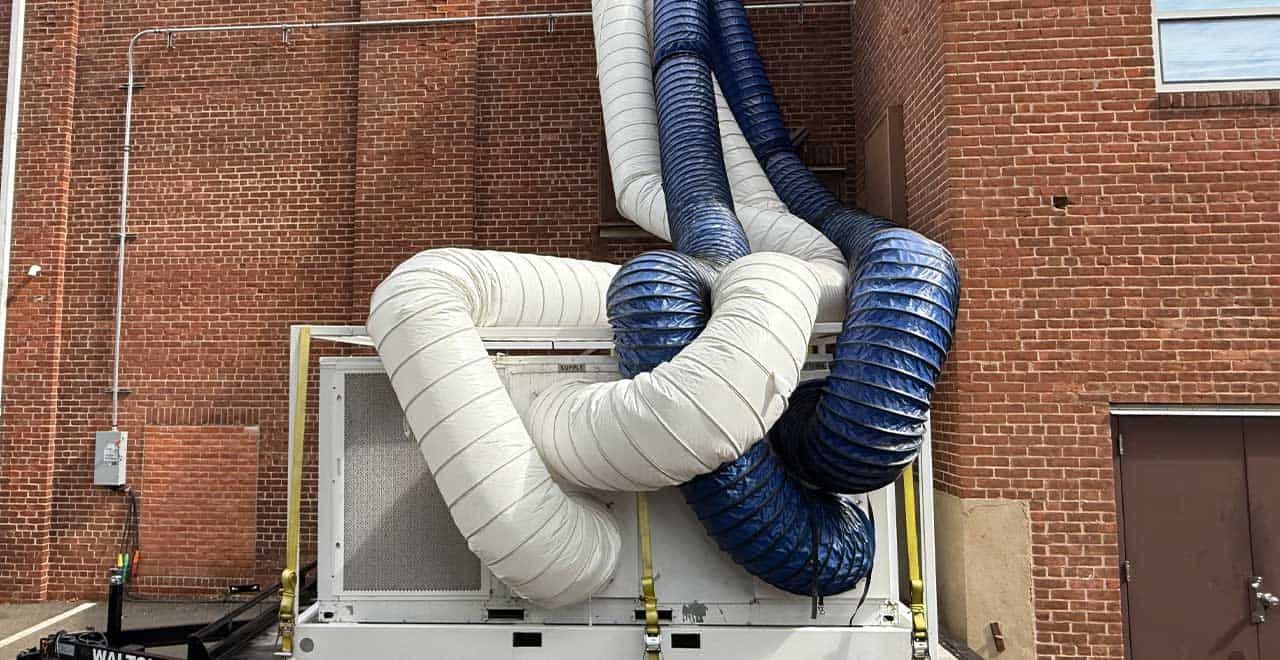
Renovations in occupied spaces often have limited staging space. Systems may need to be placed outdoors with ducting routed inside.
- Noise and Disruption Limits
Hospitals, offices, and schools may require quiet-run equipment to minimize disruption.
- Safety and Compliance
Temporary HVAC systems must be installed safely, with proper ventilation, fuel management, and code compliance.
- Phased Renovation Scheduling
Many occupied projects occur in stages. Temporary HVAC must be flexible enough to move with the renovation footprint.
Working with experienced rental professionals, such as REIC Rentals, ensures that systems are sized and staged correctly.
Where Temporary HVAC Makes the Greatest Impact
Temporary HVAC is especially valuable in occupied renovation environments, such as:
- Office tenant improvement projects
- Hotels and hospitality upgrades
- Healthcare facility expansions
- Government and municipal building renovations
- Data center retrofits
- Educational campus improvements
These projects demand comfort, continuity, and minimal disruption.
Keeping Occupied Renovations Productive and Comfortable
Occupied commercial renovations require a careful balance between construction progress and operational stability. When permanent HVAC systems are taken offline, temporary heating, cooling, ventilation, and humidity control become critical for maintaining comfort and protecting project timelines.
Temporary HVAC solutions help preserve tenant satisfaction, support proper material performance, maintain indoor air quality, protect sensitive equipment, and sustain project momentum from phase to phase. With a well-planned environmental strategy, contractors can complete renovations efficiently without disrupting building occupants or daily operations.
REIC Rentals supports commercial construction teams with dependable temporary HVAC and climate control solutions backed by responsive service and job site expertise. Contact our team to ensure your renovation has the environmental support needed to stay comfortable, compliant, and on schedule.
Service You Trust. Equipment You Need.
