
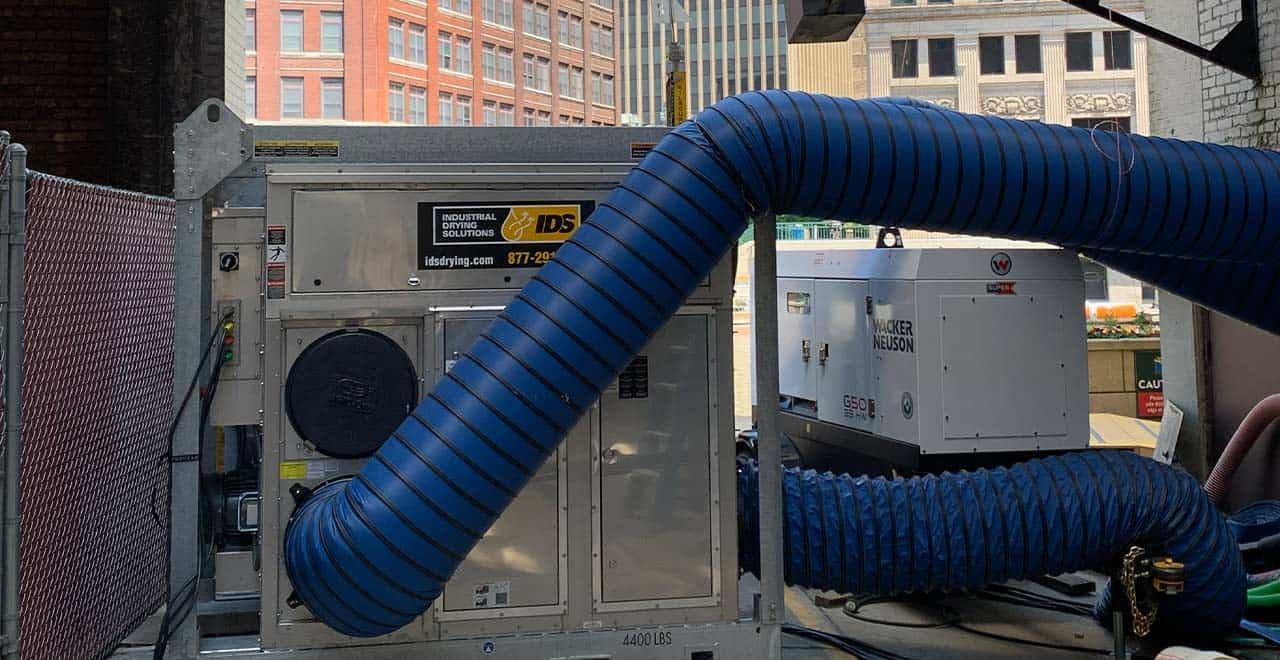
Spring marks peak mobilization season across commercial, industrial, and infrastructure construction. New warehouse builds, refinery turnarounds, data center fit-outs, hospital expansions, and major tenant improvements all ramp up simultaneously as the weather thaws, enabling rapid groundwork. Tight timelines and overlapping trades create intense pressure on temporary power systems that are often planned too late, sized too conservatively, or delivered without sufficient coordination to keep pace with the project.
Temporary power is not a utility setup task to hand off and forget. It is a schedule-critical system that determines whether crews stay productive or sit idle, whether an outage window closes on time or runs over, and whether the trades that depend on stable electricity can execute without interruption. REIC Rentals provides turnkey temporary power packages, from 20kW to 2MW generators, distribution panels, cam-lock cabling, spider boxes, load banks, and temporary lighting, engineered for fast 24 to 72-hour deployment and sustained, safe operation throughout the full project duration.
Why Temporary Power Is Schedule-Critical During Turnaround Season
A single day’s delay from power shortages on a major commercial build carries labor and liquidated damage exposure that makes the cost of proper planning look negligible. On refinery and power station turnarounds where planned outages enforce strict hour-by-hour work windows, inadequate power during the outage does not just lose a day. It risks missing the restart window entirely, with extended downtime penalties that compound quickly into significant financial consequences for the plant owner and the contractor alike.
Every trade on an active construction site depends on a stable power supply. Concrete vibrators and pumps, steel welders running 6 to 25kW per unit, tower cranes drawing 150 to 400kW on startup surge, temporary HVAC running 150 to 500kW during interior fit-out, NDT inspection equipment, coating sprayers and compressors: the aggregate load on a complex site builds quickly, shifts by phase, and peaks when the most trades are working simultaneously. Temporary power planning that does not account for coincident peak demand across overlapping trades will run short at exactly the wrong moment.
During turnaround season, from March through October for most refineries, chemical plants, and power stations, temporary power systems must match the 24/7 operational tempo of the outage. A 14-day April refinery overhaul requiring redundant paralleled generators, thousands of feet of cam-lock cable, and dozens of spider boxes to power simultaneous welding crews across multiple work zones is a logistics and engineering challenge that requires planning, not improvisation. REIC Rentals designs these systems around job schedules and shift structures, not just nameplate kilowatt ratings.
Step 1: Assessing Load and Phased Power Requirements
Accurate load assessment is the foundation of any temporary power plan and should be completed 6 to 8 weeks before mobilization. Load demand shifts significantly as a project phases from early site work through structural, interior, and commissioning stages. Early site work draws relatively modest power for dewatering pumps, site trailers, and minimal lighting. Structural phase demand rises sharply as tower cranes, welding stations, and concrete equipment run simultaneously. Interior fit-out brings the highest sustained load from temporary HVAC, tools, and scissor lifts operating continuously across multiple floors. Commissioning adds test banks and temporary chillers that can draw 200 to 1,000kW for relatively short but intensive periods.
Building a load inventory means listing all equipment by phase, translating counts into kilowatt and amperage requirements, and planning for peak concurrent use. Overlapping trades during spring ramp-up can double expected demand above average levels. A load study that reflects individual equipment ratings without accounting for the realistic pattern of simultaneous operation will undersize the system for the conditions that actually occur on site.
REIC Rentals takes contractor equipment lists and produces preliminary load studies and one-line diagrams within two to three business days. Breaking the catalogue down by site zone, with specific attention to laydown yards, crane areas, confined-space work zones, and critical plant areas during turnarounds, provides the spatial detail needed to plan cable runs and distribution points before the site is active, rather than improvising after conflicts emerge.
From Load Inventory to System Sizing
An equipment inventory becomes a system design by summing kilowatts, applying diversity factors typically in the 70-80% range for non-coincident loads, then selecting generator sizes, transformers, and distribution panels that match the load profile with an appropriate margin. A 250,000-square-foot warehouse built at peak construction draws approximately 500-800kW of temporary power: 100kW for site infrastructure plus 400kW for trades, with a 20% buffer yielding a 600kW system as the baseline sizing target.
Voltage drop on long cable runs is a practical constraint that affects both power quality and equipment performance. A maximum 3-5% drop over 500-foot runs using 4/0 cable is the standard design target. Generator derating at high ambient temperatures is particularly important during summer turnarounds, when diesel consumption increases by 10-20% and the rated output drops below nameplate in sustained heat. Fuel logistics need to be planned alongside electrical design, not after the system is already running. REIC Rentals engineers account for all of these variables at the design stage, so the system delivers what the project needs rather than what looked adequate on paper.
Step 2: Choosing the Right Power Source
Utility-fed temporary service and generator-based systems each suit different project profiles, and complex sites often use both. The choice depends on schedule, site location, risk tolerance, and the realities of utility lead times in the project’s jurisdiction, not on convenience alone.
Utility temporary service is suitable for long-duration builds of 6 to 24 months, urban infill projects, and sites with a short distance to existing infrastructure. A downtown high-rise running an 18-month build on a 600-800A temporary service incurs substantially lower power costs than a diesel-only approach. The trade-off is lead time. In many regions, utility approvals and energization take 4 to 12 weeks. Spring projects targeting March through June mobilization need to initiate the utility process in January or February to avoid the crew arriving and finding no power.
Generator-based systems excel for greenfield projects, remote site locations, tight turnaround windows where utility lead times exceed the schedule, and brownfield industrial work where plant power is intentionally offline. REIC Rentals maintains a fleet of diesel and Tier 4 Final generators from 20kW to 2MW that can be paralleled for redundancy and scaled as project load grows. For industrial turnarounds requiring N+1 redundancy, paralleled multi-megawatt systems ensure that a single generator failure does not interrupt the outage window. Hybrid approaches that use grid power for base loads, with REIC Rentals generators covering backup or remote zones, provide flexibility for complex sites where neither approach alone meets all requirements.
Step 3: Distribution, Cabling, and Jobsite Layout
Safe, logical power distribution converts raw kilowatts into usable energy at each workface. The power flow path from source through main distribution, to subpanels, to spider boxes, and finally to tools and temporary lighting needs to be mapped and planned before cable is pulled, rather than developed reactively as trades claim work areas. Spring conditions, including mud, thaw cycles, high winds, and rain, demand extra attention to protecting cables, connectors, and distribution gear. Elevating equipment six to twelve inches above grade and using IP65-rated enclosures where water intrusion is a risk are standard practice, not optional precautions.
Overhead, Underground, and Ground-Run Options
Cable routing strategy is a site logistics decision as much as an electrical one. Overhead runs suit busy laydown yards and long runs but require wind-resistant mounting. Underground routing eliminates trip hazards and vehicle conflicts in high-traffic areas, but comes at a higher installation cost. Ground-run cable with ramps and guards is the fastest deployment option for short corridors where mud exposure is managed. Most active spring sites use a combination of all three, planned to keep access roads open to cranes and heavy equipment while providing power to the remote corners of the site without creating the safety conflicts that ground-run cable creates when not properly protected.
Spider Boxes, Panels, and Point-of-Use Safety
Spider boxes and smaller distribution panels convert higher-voltage feeds into multiple GFCI-protected outlets where crews actually work. REIC Rentals stocks caged load centers, 50-400A panels, and rugged spider boxes designed for construction, industrial, and turnaround environments. Keeping spider boxes elevated above wet or muddy ground, labeling circuit breakers clearly, and relocating boxes as the workface moves through building phases are the operational disciplines that keep the distribution system functioning safely through a dynamic construction environment. REIC Rentals assists in reconfiguration as site needs evolve rather than leaving the adjustment to the site team to figure out independently.
Regulatory Compliance, Permits, and Inspections
Compliance with the National Electrical Code Article 590, OSHA 1926 Subpart K, and local authority having jurisdiction requirements is non-negotiable on active construction sites, particularly during high-activity spring seasons when inspectors are working through a high volume of active projects simultaneously. Temporary power plans must address permits, utility service approvals for grid-tied systems, and inspection before energization. Permit applications submitted 4 to 8 weeks before power is needed account for the processing slowdowns common during construction booms.
Standard documentation required by inspectors includes one-line diagrams, load calculations, equipment data sheets, and grounding details demonstrating less than 25 ohm resistance on 8-foot ground rods. REIC Rentals provides standard drawings, equipment specifications, and support letters that help speed permit review and has experience navigating permitting requirements across multiple jurisdictions. Common inspection failure points include missing GFCI protection at 120V receptacles, unlabeled panels, and cords that do not meet current ratings. Pre-inspection walk-throughs with REIC Rentals and the electrical subcontractor catch and correct these issues before the official visit, rather than after a failed inspection, which would delay energization.
For industrial turnarounds, internal approvals from plant safety and operations teams carry the same schedule weight as external permits. Coordinating with plant owners during the planning phase rather than during the outage window itself removes the approval delays that push power readiness past the outage start date. REIC Rentals has direct experience supporting both the external permitting process and the internal plant approval requirements that apply on industrial sites, and we coordinate across both tracks rather than treating them as separate workstreams.
Safety, Grounding, and Daily Operational Practices
Energized temporary systems on busy, muddy spring jobsites require disciplined daily safety practice. Improper temporary power setups contribute to a significant portion of construction electrical incidents annually, with inadequate grounding being the primary failure mode in environments where metal structures, scaffolding, and wet surfaces amplify fault risks. Proper grounding and bonding provide the primary protection against shock hazards. GFCI protection on all 120V receptacles, regular cord inspection, and lockout/tagout procedures for temporary equipment during routine maintenance or reconfiguration are the minimum required standard, not a best-practice aspiration.
Daily walk-throughs by superintendents and safety leads should check for damaged cords, open panel doors, unauthorized modifications, and water intrusion at connections. Weekly deeper inspections with the electrical contractor or REIC Rentals technician should review load levels, identify hot spots through infrared scanning, and check breaker trip history for patterns that indicate overloading before it becomes a failure. Spring-specific hazards include thawing ground, shifting pole installations, heavy rain filling cable trenches, and wind stressing overhead runs that were installed in calmer conditions. Folding temporary power checks into daily pre-task planning and Job Hazard Analysis during peak construction months is what converts safety policy into field practice.
GFCI protection detects current imbalances and trips within 1/40 of a second, reducing shock incidents by approximately 70%. Every 120V single-phase receptacle used by crews must be protected with GFCI at the panel, spider box, or plug-in device. REIC Rentals’ distribution equipment includes built-in GFCI where applicable, reducing the compliance burden on the installation team. Environmental factors, including UV degradation of cords, corrosion at coastal or chemical plant sites, and temperature swings affecting equipment enclosures, require prompt replacement of damaged components rather than field repairs that compromise both safety and liability standing.
Planning Timeline and How REIC Rentals Supports the Full Project Lifecycle
A well-coordinated temporary power engagement with REIC Rentals moves from initial consultation and equipment list review within a few days, to preliminary design and budget quote within a week, through permitting and utility coordination over several weeks for grid-tied systems, to onsite installation in one to three days, depending on scope. For generator-only or emergency deployments, REIC Rentals can mobilize equipment in 24 to 72 hours, depending on location and fleet availability. That response capability matters during industrial turnarounds, when power system changes during the outage window need to occur faster than standard procurement timelines allow.
Typical package configurations scale to project type. Small commercial builds under 50,000 square feet suit 125 to 250kW generator packages with spider boxes, cabling, and lighting towers. Large warehouse and industrial builds run 500 to 800kW paralleled systems with extensive panel distribution and load banks for commissioning testing. Major plant turnarounds require 1 to 2MW redundant systems with full distribution, transformers, and fuel management. Multi-building campus projects with hybrid power needs combine zone-based panels with sound-attenuated generator sets for urban environments where noise is a constraint alongside power quality.
REIC Rentals supports projects across the full lifecycle: early mobilization, peak construction, commissioning, and demobilization to permanent power. The time to engage is during schedule development and before permit submission, not when the first trade is asking why there is no power at their workstation. For projects targeting spring mobilization, that conversation starts now. Tell us your project type, site location, schedule, and load requirements. We will build a temporary power plan that keeps your project moving from the first day on site through final handover.
1.888.356.1880 | in**@**ic.com | Get a Quote
Service You Trust. Equipment You Need.
