
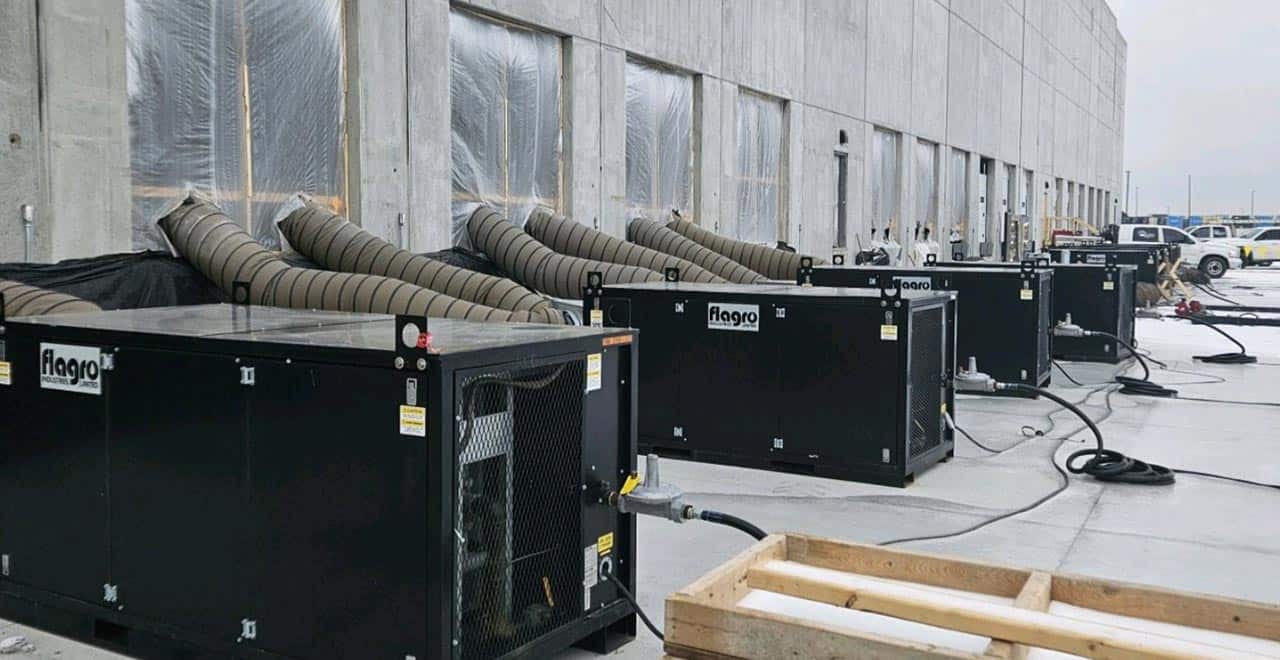
A Commercial Construction Guide to Moisture Control, Quality, and Schedule Protection
Cold weather introduces more than just low temperatures to commercial construction sites. Moisture becomes harder to manage, drying times stretch out, and condensation can quietly compromise materials and finishes. While heating is often the first line of defense in winter, dehumidification is just as critical—especially when buildings are enclosed, and interior work is underway.
Without proper moisture control, cold-weather projects are vulnerable to delays, rework, and long-term performance issues. Dehumidification helps contractors create stable interior environments where materials can perform as intended, regardless of outdoor conditions.
REIC Rentals supports commercial construction teams with temporary dehumidification and environmental control solutions designed to manage moisture during cold weather. Understanding why dehumidification matters—and how to use it effectively—can make the difference between staying on schedule and falling behind.
Cold Weather Doesn’t Eliminate Moisture—It Changes It
It’s a common misconception that winter air is always dry. While cold air holds less moisture, winter construction environments often trap humidity inside buildings. As structures become enclosed and heated, moisture from concrete, finishes, and occupant activity has nowhere to go.
Common winter moisture sources include:
- Concrete slabs and toppings releasing moisture
- Snow tracked into buildings and melting indoors
- Temporary heating that introduces water vapor
- Limited ventilation once the building envelope closes
When warm, moist air contacts cold surfaces, condensation forms—creating problems that heating alone cannot solve.
Condensation Is One of Winter’s Biggest Hidden Risks
Condensation is often invisible until it causes damage. Moisture can collect on windows, steel framing, ductwork, and interior surfaces, leading to a range of issues.
Unchecked condensation can result in:
- Delayed installation of finishes and flooring
- Adhesion failures in coatings and adhesives
- Corrosion of metal components
- Increased mold risk in concealed spaces
Dehumidification reduces the amount of moisture in the air, lowering the likelihood that condensation forms when temperatures fluctuate.
Heating Alone Can Make Moisture Problems Worse
Temporary heat is essential in cold weather—but without moisture control, it can exacerbate humidity issues. As air is heated, its ability to hold moisture increases, pulling water from slabs, materials, and the surrounding environment.
This can lead to:
- Elevated indoor humidity levels
- Longer dry times for finishes
- Moisture migrating to cooler surfaces
Dehumidification works alongside heating to maintain balanced conditions, allowing materials to dry predictably rather than redistributing moisture throughout the space.
Protecting Interior Finishes and Materials
Many commercial interior finishes are sensitive to moisture levels. Flooring systems, paints, sealants, and coatings all require specific humidity ranges to perform correctly.
Dehumidification helps ensure:
- Proper curing and drying of finishes
- Reduced risk of blistering, peeling, or delamination
- More consistent installation conditions across large areas
By stabilizing humidity, contractors protect quality and reduce the likelihood of rework later in the project.
Supporting Concrete Drying and Floor Readiness
Concrete doesn’t just need heat—it needs time and the right environment to release moisture. In winter, drying slows significantly, especially in enclosed spaces with limited airflow.
Dehumidification accelerates drying by:
- Removing moisture from the surrounding air
- Increasing the vapor pressure gradient
- Allowing slabs to release moisture more efficiently
This is especially important for projects with moisture-sensitive floor coverings or tight turnover schedules.
Managing Moisture in Enclosed and Partially Enclosed Spaces
As commercial buildings transition from open shells to enclosed structures, airflow becomes restricted. Moisture generated inside the building has fewer exit paths, increasing the need for active control.
Dehumidification is commonly used to:
- Stabilize conditions during enclosure phases
- Manage humidity in stairwells, corridors, and mechanical rooms
- Support phased construction and tenant improvements
Targeted moisture control enables contractors to focus on specific zones without unnecessarily conditioning the entire building.
Improving Air Quality and Worker Comfort
Excess humidity affects more than materials—it impacts the people working on site. Damp environments feel colder, reduce comfort, and can contribute to slippery surfaces and poor air quality.
Dehumidification helps:
- Create more comfortable working conditions
- Reduce musty odors associated with moisture buildup
- Support safer, more productive jobsite environments
When crews are comfortable, productivity and morale improve—especially during long winter months.
Reducing Weather-Related Schedule Delays
Moisture-related delays are some of the hardest to recover from. Waiting for floors to dry, finishes to cure, or inspections to pass can stall entire project phases.
By proactively managing humidity, contractors can:
- Keep critical path activities moving
- Avoid surprise delays tied to moisture testing
- Maintain predictable timelines despite cold weather
Dehumidification turns moisture from an unknown variable into a controlled condition.
Pairing Dehumidification With Airflow and Ventilation
Effective moisture control doesn’t rely solely on dehumidification. Air movement and ventilation play key roles in distributing dry air and preventing stagnant zones.
Integrated winter strategies often include:
- Dehumidifiers to remove moisture from the air
- Fans to circulate air evenly
- Ventilation to manage fresh air and exhaust
REIC Rentals helps contractors design these combined systems so moisture is removed efficiently without creating cold spots or uneven drying.
Adapting to Changing Project Conditions
Winter construction environments are dynamic. As buildings close in, trades change, and weather fluctuates, moisture levels shift.
Flexible dehumidification setups allow teams to:
- Scale capacity as project phases change
- Reposition equipment to new work zones
- Respond quickly to moisture spikes after storms or snowmelt
This adaptability helps maintain control even when conditions are unpredictable.
Where Dehumidification Adds the Most Value
Dehumidification is especially valuable on commercial projects that include:
- Large concrete floor plates
- Moisture-sensitive interior finishes
- Tight turnover or phased occupancy schedules
- Cold-weather enclosures with limited ventilation
In these scenarios, moisture control directly supports quality, safety, and schedule adherence.
Why Commercial Contractors Work With REIC Rentals
Managing moisture in winter requires more than equipment—it requires experience. Contractors rely on partners who understand how temperature, humidity, and airflow interact on real jobsites.
REIC Rentals supports commercial construction teams with:
- Job-ready dehumidification equipment maintained for winter use
- Practical recommendations based on building conditions
- Fast deployment and responsive service
- Coverage across North America for consistent support
Our goal is to help contractors control the environment so they can focus on building.
Turning Moisture Control Into a Competitive Advantage
Cold weather doesn’t have to dictate project outcomes. With the right dehumidification strategy, commercial construction teams can protect materials, maintain quality, and keep schedules intact—even in winter.
Dehumidification transforms moisture from a hidden risk into a managed variable. When paired with heat and airflow, it creates stable interior conditions that support consistent progress throughout the cold season.
REIC Rentals delivers the service you trust and the equipment you need to control moisture and keep commercial projects moving—no matter the weather.
Ready to take control of winter moisture?
Contact us to work with experienced rental professionals who can help you design and deploy dehumidification solutions tailored to your project conditions and schedule.
