
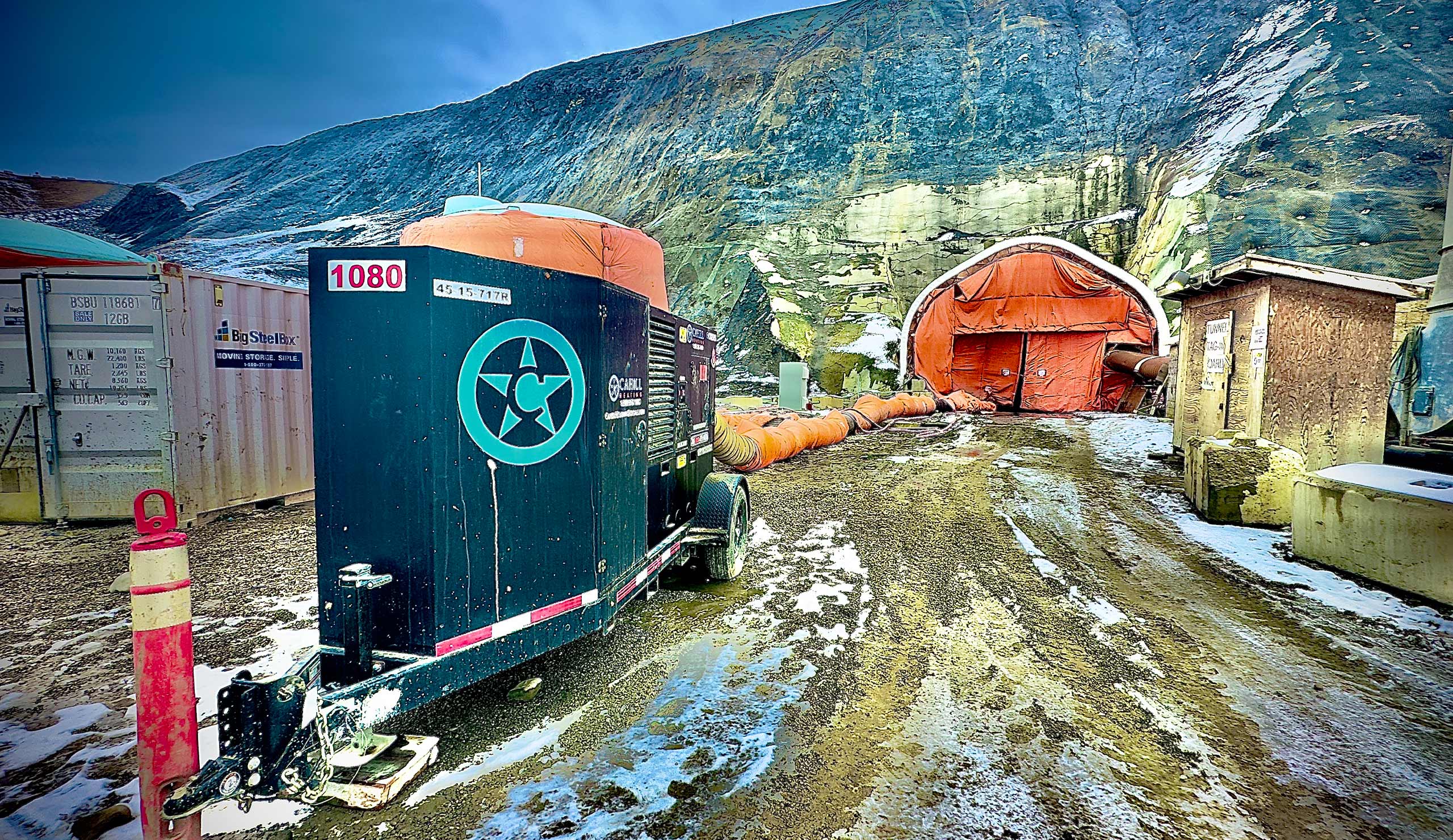
Mining construction projects in British Columbia, Alberta, Saskatchewan, and the Northwest Territories continue through conditions that would halt most other industries. Sustained extreme cold, wind chill that compounds the danger well beyond what the thermometer alone suggests, and remote locations that limit emergency response are the standard operating environment for the better part of the year. Three winter hazards specifically require active management rather than passive awareness: cold stress, falls, and the risks associated with snow removal on elevated structures and scaffolding.
Mining construction crews face these hazards with less margin than urban construction projects because the remoteness of most mining sites means that emergency response takes longer, conditions can change faster than forecasts predict, and the combination of heavy physical work and cold exposure creates cumulative risk that supervisors must actively monitor rather than assume workers are managing individually.
REIC Rentals supports mining operations in Western Canada with temporary heating equipment, light towers, and generators that address the three primary winter hazards on remote mining construction sites.
Hazard 1: Cold Stress
Cold stress is the most pervasive and most consistently underestimated winter hazard on mining construction sites. It develops progressively through mechanisms that are easy to miss until the symptoms become acute. As core body temperature drops toward the hypothermia threshold of 95 degrees Fahrenheit, workers experience reduced manual dexterity, impaired concentration, and slowed reaction times. Those impairments affect safety-critical work long before the worker or supervisor recognizes them as symptoms of cold stress.
Heavy physical work in cold conditions creates a specific risk that supervisors need to understand: metabolic heat from exertion masks the core temperature drop that precedes cold stress. A worker performing demanding physical labor in cold conditions may feel warm from the exertion while their core temperature is falling. The first visible symptom may be impaired judgment or a near miss rather than an obvious chill.
WorkSafeBC guidance and similar provincial regulations in Alberta and Saskatchewan require specific cold-stress controls when equivalent chill temperatures fall below defined thresholds, including heated shelters and increased rest-break frequency. Those controls must be in place before conditions reach the threshold, not assembled after the first incident confirms that the threshold has been crossed.
REIC Rentals helps mining construction safety teams size and stage heating equipment for warming shelters, change rooms, break trailers, and first-aid facilities scaled to crew size and site layout. One challenge our teams regularly help mining site safety managers solve is the lead time gap between when regulations require warming infrastructure to be in place and when procurement processes would normally begin. Early engagement with REIC Rentals before the cold season ensures equipment is on site before it is urgently needed. Request a quote to begin the planning conversation.
Hazard 2: Falls From Ice and Snow
Ice, particularly when concealed beneath snow, is a serious and consistent hazard on mining construction sites through the winter months. Falls on icy surfaces while carrying heavy equipment or materials are among the leading causes of serious construction injuries, and mining sites compound this hazard with inherently more uneven terrain than prepared urban construction sites.
The risk is compounded by the equipment that mining construction crews regularly handle: pipe sections, structural steel components, and heavy tools that compromise balance and limit the ability to break a fall. A worker carrying a 110-pound component across an icy surface is at significantly higher risk than a worker on the same surface with their hands free.
Proactive ice management is more effective than reactive clearance after accumulation. Maintaining site circulation routes, equipment access paths, and work platform surfaces through regular clearing and treatment before ice accumulates prevents the conditions that make falls likely. Temporary heating of critical pedestrian routes and work platforms, where practical, reduces ice formation by maintaining surface temperatures above freezing.
REIC Rentals’ light towers provide the visibility required for ice and slip hazard detection during the shortened daylight hours of Western Canada winters, when crews may be starting or finishing shifts in full darkness on sites where ice conditions vary across the work area.
Hazard 3: Snow Removal on Elevated Structures and Scaffolding
Snow removal on mining construction sites involves a specific category of elevated work that carries a higher risk than ground-level clearing. Workers removing snow from roofs, decks, scaffolding, and partially completed structures are working on surfaces that may be sloped, uneven, and obscured by the snow being cleared. The combination of elevated position, reduced visibility, and the physical effort of snow removal creates conditions that require fall protection equipment and explicit work procedures, not simply general site safety awareness.
Long-handled snow rakes reduce the need for workers to position themselves at the edge of elevated surfaces during clearing operations. Snow loading on scaffolding and partially completed structures should be assessed before crews work on them, as accumulated snow weight can affect structural stability in ways not visible from the work surface.
The scheduling of snow removal work requires explicit decision-making rather than the assumption that crews will manage it alongside their primary tasks. Assigning specific crews for snow removal, with defined safety procedures, appropriate fall protection equipment, and supervision, removes the informality that increases incident risk when snow removal is treated as an ancillary activity.
Temporary Heating as a Hazard Mitigation Tool
Temporary heating addresses all three winter hazards simultaneously. Heated work areas and warming shelters keep core body temperatures above the cold stress risk threshold. Heated pedestrian routes and work platforms reduce ice formation that creates fall hazards. Heated enclosures around elevated work areas reduce snow accumulation on structures, which creates snow removal risk.
Snow and ice on mining construction sites pose hazards that temporary heating can reduce but not entirely eliminate. The combination of adequate heating, active ice management, appropriate fall protection equipment, and explicit work procedures for snow removal produces a winter safety program that protects crews throughout the cold season. REIC Rentals supports mining construction winter safety programs with equipment that addresses the environmental conditions that create these hazards, deployed and ready before the first significant weather event of the season.
Contact REIC Rentals to discuss winter safety equipment for your mining construction project. Request a quote or find a location near you to connect with the team supporting mining operations across Alberta, British Columbia, and Saskatchewan.
1.888.356.1880 | in**@**ic.com | reic.com
Service You Trust. Equipment You Need.
