
A Commercial Construction Guide to Staying Productive Through Cold Weather
Winter doesn’t slow commercial construction schedules—it challenges them. Snow, ice, frozen ground, reduced daylight, and unpredictable storms all add friction to daily operations. Materials still need to move, crews still need power, and sites still need to function safely and efficiently. The difference between projects that stay on track and those that fall behind often comes down to equipment readiness.
A reliable winter equipment fleet is not about having more machines—it’s about having the right ones. Telehandlers, skid steers, and generators form the backbone of winter commercial construction because they address the three biggest cold-weather challenges: material handling, site mobility, and dependable power.
REIC Rentals supports commercial construction teams with job-ready equipment designed for winter performance. This guide breaks down why these three equipment categories are essential and how they work together to keep projects moving when conditions are toughest.
Why Winter Demands a Different Equipment Strategy
Winter conditions expose weaknesses in planning and logistics. Equipment that performs well in summer may struggle when temperatures drop, and surfaces become unpredictable. Delays often come from slowed material movement, power interruptions, or limited access rather than weather alone.
A winter-focused fleet helps contractors:
- Maintain productivity despite snow and ice
- Reduce manual handling and safety risks
- Support extended work hours during short days
- Adapt quickly as site conditions change
Telehandlers, skid steers, and generators are versatile enough to address all of these challenges across a wide range of commercial projects.
Telehandlers: The Backbone of Winter Material Handling
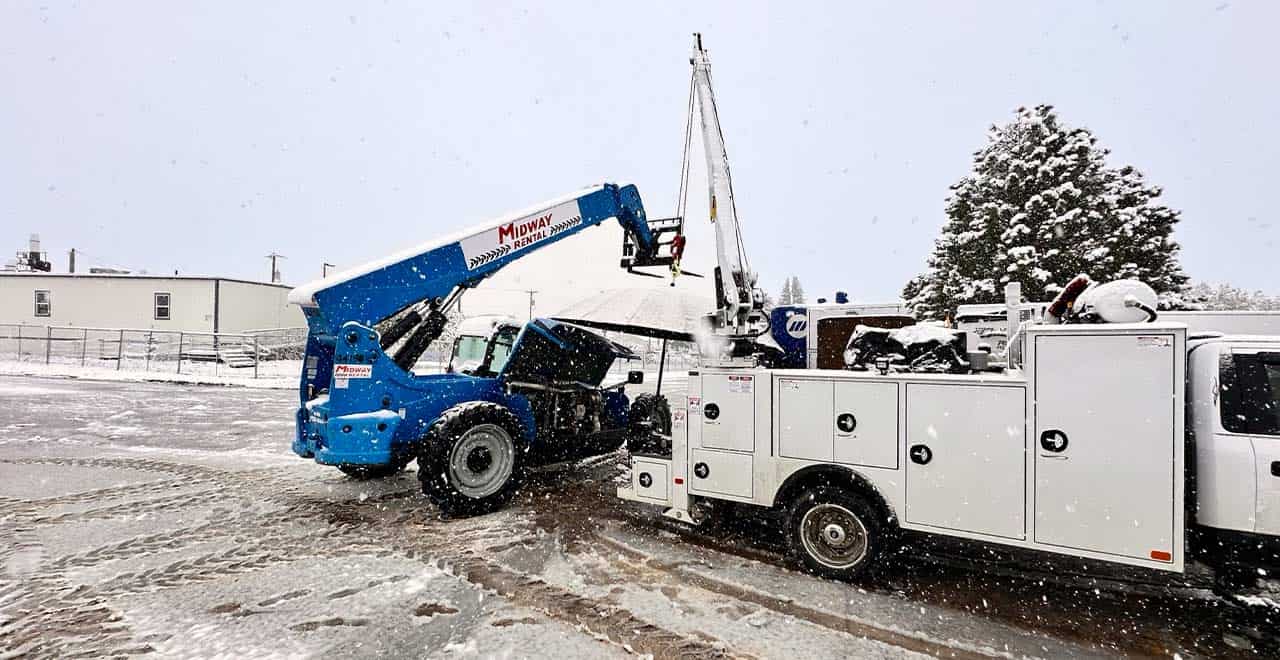
Telehandlers are one of the most valuable machines on a winter jobsite. Their ability to lift, place, and move materials across uneven terrain makes them indispensable in less-than-ideal conditions.
Why Telehandlers Excel in Winter
Unlike traditional forklifts, telehandlers are built for rough terrain. Larger tires, increased ground clearance, and four-wheel drive allow them to operate on snow-covered or muddy sites where standard equipment struggles.
Telehandlers support winter operations by:
- Moving pallets of materials across icy or uneven ground
- Placing materials at elevation without staging delays
- Reducing the need for manual handling in cold conditions
Their reach also minimizes travel paths, which is especially valuable when access routes are limited by snow or frozen ground.
Improving Safety and Efficiency With Telehandlers
Winter increases the risk of slips, falls, and material handling injuries. Telehandlers reduce these risks by keeping materials off the ground and limiting the need for crews to carry loads manually.
Key winter benefits include:
- Faster material placement with fewer trips
- Reduced congestion in staging areas
- Improved workflow when multiple trades are active
By streamlining material movement, telehandlers help contractors maintain momentum even when site conditions are working against them.
Skid Steers: Winter Versatility in a Compact Package
If telehandlers handle the heavy lifting, skid steers handle everything else. Their versatility makes them among the most widely used machines on winter commercial construction sites.
Why Skid Steers Are Essential in Cold Weather
Skid steers can be quickly outfitted with attachments that adapt them to changing winter needs. From snow removal to material transport, a single machine can handle multiple tasks throughout the day.
Common winter applications include:
- Clearing snow from access roads and staging areas
- Moving materials in tight or congested spaces
- Supporting site cleanup and maintenance
Their compact size allows them to operate where larger equipment can’t, keeping sites functional even during storms or freeze–thaw cycles.
Adapting Skid Steers as Conditions Change
Winter conditions are rarely consistent. A site that’s frozen solid in the morning may be muddy by afternoon. Skid steers excel in these environments because they can adapt quickly.
Benefits of skid steers in winter include:
- Quick attachment changes as needs shift
- Reliable performance in variable ground conditions
- Support for both exterior and interior scopes
This adaptability helps contractors respond to weather changes without bringing in additional equipment.
Generators: Powering Productivity When Winter Tests Infrastructure
Power is the silent dependency behind nearly every winter operation. Temporary heat, lighting, tools, and site offices all rely on a consistent electrical supply. Winter weather often stresses permanent systems, making temporary power a critical part of the fleet.
Why Generators Matter More in Winter
Cold weather increases power demand and the risk of outages. Generators provide a reliable backup—or primary—power source when grid access is limited or interrupted.
Generators support winter construction by:
- Powering temporary heating systems
- Supplying electricity for lighting during long nights
- Supporting tools, trailers, and site utilities
Without dependable power, winter productivity quickly breaks down.
Supporting Extended Work Hours and Short Daylight
Shorter daylight hours are one of winter’s biggest productivity challenges. Generators paired with jobsite lighting allow crews to work safely beyond daylight limits.
This capability helps contractors:
- Extend workdays without sacrificing visibility
- Recover time lost to weather delays
- Maintain consistent progress during critical phases
In winter, the ability to control when work happens—not just how—is a competitive advantage.
How These Three Work Together on Winter Jobsites
Telehandlers, skid steers, and generators are most effective when deployed as a coordinated fleet rather than isolated machines.
Together, they allow contractors to:
- Move materials efficiently regardless of ground conditions
- Maintain safe, accessible sites during snow events
- Power heating, lighting, and tools without interruption
For example, skid steers keep access routes clear, telehandlers place materials where they’re needed, and generators ensure the site stays operational even during power disruptions.
Reducing Downtime and Schedule Risk
Winter delays are expensive because recovery is difficult. Once time is lost, it often requires overtime, resequencing, or added crews to regain momentum.
A well-planned winter fleet reduces risk by:
- Minimizing weather-related stoppages
- Supporting proactive site maintenance
- Allowing crews to work safely and consistently
Instead of reacting to winter challenges, contractors with the right equipment stay in control.
Planning Equipment Needs Before Winter Hits
The most successful winter projects are planned early. Contractors who wait for the weather to force decisions often face limited availability or rushed setups.
Best practices include:
- Identifying winter-critical scopes in advance
- Securing equipment sized for cold-weather conditions
- Planning fuel, power, and maintenance logistics
REIC Rentals works with commercial contractors to build winter-ready equipment plans that align with schedules and site conditions.
Applications Across Commercial Construction
This essential winter fleet supports a wide range of commercial construction projects, including:
- Office and mixed-use developments
- Warehouses and distribution centers
- Retail and tenant improvement projects
- Institutional and public buildings
Regardless of project type, winter creates similar challenges—and these machines help solve them.
Why Commercial Contractors Rely on REIC Rentals
Winter equipment must be reliable, adaptable, and ready to perform in harsh conditions. Contractors choose REIC Rentals because we deliver more than machines—we deliver confidence.
Our support includes:
- Job-ready telehandlers, skid steers, and generators
- Equipment maintained for winter performance
- Practical guidance based on real jobsite experience
- Fast response and North America-wide coverage
This approach helps contractors focus on building instead of troubleshooting equipment issues.
Building a Fleet That Works All Winter Long
Winter doesn’t have to derail commercial construction projects. With the right equipment fleet, contractors can maintain productivity, protect schedules, and keep crews working safely through the coldest months.
Telehandlers, skid steers, and generators form the foundation of that strategy. Together, they address the most common winter challenges—material handling, mobility, and power—so projects can keep moving regardless of conditions.
REIC Rentals delivers the service you trust and the equipment you need to build confidently through winter—jobsite to jobsite, day after day.
Ready to winterize your equipment strategy?
Contact us to work with experienced rental professionals who can help you build a practical, winter-ready fleet tailored to your project scope, site conditions, and schedule.
