
A Commercial Construction Guide
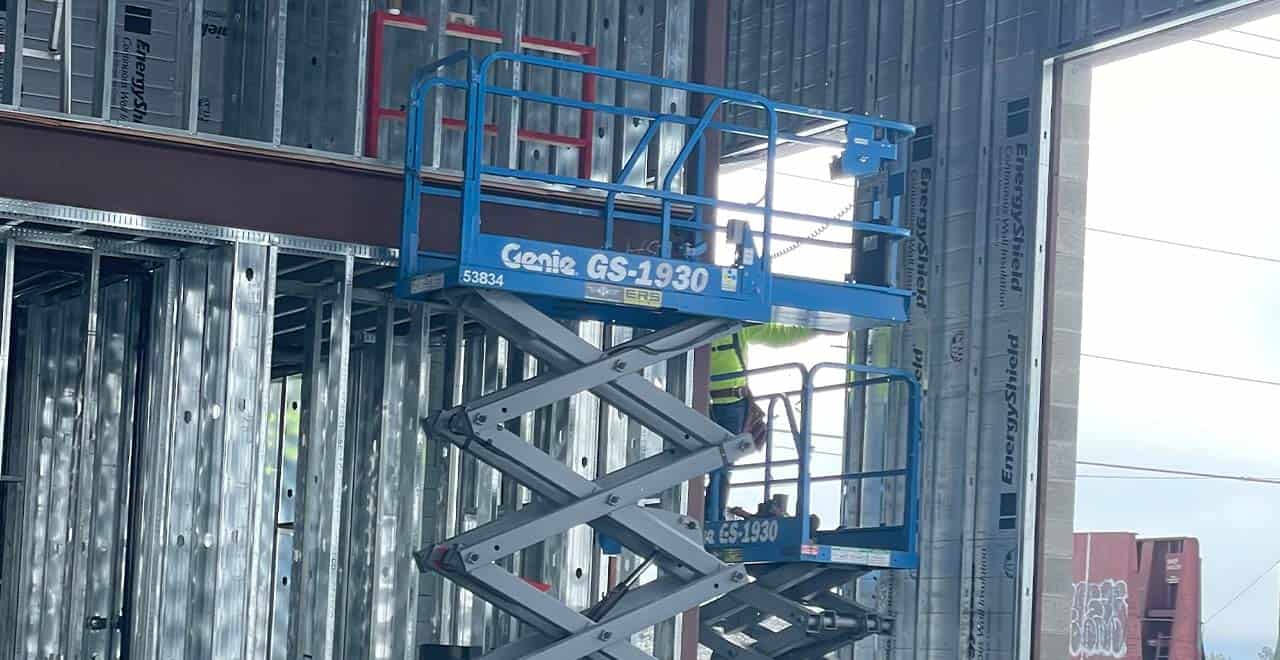
Winter changes everything on a commercial construction site. Cold temperatures, snow, ice, wind, and reduced daylight all introduce risks that can slow schedules, impact safety, and strain equipment. When work moves vertical—as it often does in commercial construction—choosing the right scissor lift for winter conditions becomes critical to maintaining productivity and protecting crews.
Scissor lifts are a staple on commercial job sites, supporting everything from structural work and mechanical installs to façade, electrical, and interior finishing. But not every scissor lift is built to perform reliably in winter environments. Understanding how cold weather affects lift performance, traction, power systems, and safety features helps contractors make smarter rental decisions—and avoid costly downtime.
At REIC Rentals, we support commercial construction projects across North America year-round. With local expertise, national scale, and equipment that’s ready for demanding conditions, we help contractors choose scissor lifts that keep work moving even when winter tries to shut it down.
How Winter Conditions Impact Scissor Lift Performance
Before selecting a lift, it’s important to understand how winter conditions affect equipment performance and overall site operations.
Cold temperatures can affect battery efficiency, hydraulic performance, and engine starts. Snow and ice reduce traction and stability. Wind chill and freezing precipitation increase operator exposure and safety risks. Limited daylight means equipment must be reliable during shorter work windows.
Choosing the wrong lift can result in reduced performance, unsafe operating conditions, or complete shutdowns—especially on tight commercial schedules where delays compound quickly.
Electric vs. Engine-Powered Scissor Lifts in Winter
One of the most important decisions for winter work is choosing between electric and engine-powered scissor lifts.
Electric Scissor Lifts
Electric scissor lifts are commonly used indoors or in temperature-controlled environments, such as parking garages, retail build-outs, and enclosed structures. In winter, battery performance can drop significantly in cold temperatures, reducing runtime and charging efficiency.
Best winter uses:
- Interior commercial construction
- Heated or enclosed spaces
- Finished or smooth slab surfaces
Considerations:
- Cold temperatures reduce battery capacity
- Requires reliable charging access
- Not ideal for snow or icy outdoor conditions
For winter interior work, electric scissor lifts remain an excellent choice—but only when temperature exposure is controlled.
Engine-Powered Scissor Lifts
For outdoor commercial construction, engine-powered scissor lifts (diesel or hybrid) are typically the better option. These lifts are designed to handle rough terrain, colder temperatures, and longer duty cycles.
Best winter uses:
- Exterior building work
- Steel erection
- Façade installation
- Roofing and envelope work
Advantages:
- Better cold-weather reliability
- No battery performance loss
- Designed for rough, uneven ground
REIC Rentals ensures engine-powered lifts are winter-ready, properly serviced, and equipped to perform in freezing conditions.
Terrain Matters: Slab vs. Rough-Terrain Scissor Lifts
Winter conditions magnify surface challenges. Snow, ice, mud, and frozen ground all affect stability and traction.
Slab Scissor Lifts
Slab scissor lifts are designed for smooth, level surfaces. They perform well indoors or on finished concrete but are not suited for winter outdoor use.
Use slab lifts when:
- Working indoors
- Operating on clean, dry slabs
- Conditions are climate-controlled
Rough-Terrain Scissor Lifts
Rough-terrain scissor lifts are designed for outdoor use and uneven terrain. With larger tires, enhanced traction, and higher ground clearance, they are the preferred option for winter commercial construction.
Key winter advantages:
- All-terrain tires for snow and ice
- Increased stability on uneven surfaces
- Better performance in muddy or frozen conditions
For exterior winter conditions, rough-terrain scissor lifts are typically the most appropriate and reliable choice.
Weight Capacity and Platform Size in Cold Weather
Winter gear adds weight. Operators wear heavier PPE, carry insulated tools, and sometimes work with temporary heating ducts, materials, or enclosures.
When choosing a scissor lift:
- Ensure platform capacity accounts for winter PPE and materials
- Choose a platform size that allows safe movement without crowding
- Avoid maxing out capacity, which can reduce stability on icy surfaces
Our rental professionals at REIC Rentals help contractors match lift capacity and platform size to real-world winter job deman63ds—not just specs on paper.
Cold Weather Safety Features to Look For
Winter elevates risk, making safety features even more important.
Key features to prioritize:
- Enhanced traction tires for snow and ice
- Guardrails and non-slip platforms
- Wind ratings appropriate for exposed sites
- Cold-weather hydraulic systems
- Reliable emergency lowering systems
Visibility also matters. Shorter days and winter weather reduce sightlines, making proper lighting and clear communication essential.
REIC Rentals maintains equipment to strict safety standards and performs regular inspections to ensure lifts perform as expected—even in harsh winter conditions.
Planning for Winter Downtime and Uptime
Commercial construction schedules don’t stop for winter. Choosing the right scissor lift helps protect uptime, but planning matters just as much.
Best practices include:
- Scheduling proactive maintenance
- Allowing warm-up time for equipment
- Keeping surfaces cleared of snow and ice
- Using proper staging and access planning
REIC Rentals supports contractors with responsive service, fast equipment swaps when needed, and local teams who understand winter conditions in their regions.
Why Rental Expertise Matters in Winter
Winter isn’t the time for guesswork. Choosing a scissor lift based solely on availability or price can lead to performance issues, safety concerns, and delays.
At REIC Rentals, customers don’t just rent equipment—they gain a knowledgeable partner. Our team understands the realities of winter commercial construction and helps contractors select lifts that are:
- Appropriate for the environment
- Properly sized for the scope of work
- Maintained and ready for cold-weather operation
With locations across the U.S. and Canada, REIC Rentals combines local insight with national support to deliver consistent service wherever winter work takes place.
The Bottom Line: Choose for Conditions, Not Convenience
Winter commercial construction demands equipment that can withstand cold, uneven surfaces, and high uptime expectations. Choosing the right scissor lift means evaluating environment, terrain, power source, safety features, and real jobsite conditions—not just lift height.
With the right selection and the right rental partner, winter doesn’t have to slow progress. It becomes just another condition to work through—with confidence.
REIC Rentals delivers the service you trust and the equipment you need—season after season.
If you need help selecting the right scissor lift for winter conditions on your commercial construction project, our experts are ready to help.
Get a quote or speak with a rental professional today.
