Practical Cost-Control Strategies for Commercial Construction Equipment Users
Commercial construction projects are built on tight schedules, demanding job site conditions, and constant coordination between trades. In this environment, rental equipment is essential for maintaining productivity—whether you need aerial lifts, material handlers, power solutions, or specialty climate control.
But while renting equipment provides flexibility, operating costs across a rental fleet can escalate quickly if usage isn’t managed carefully. Fuel burn, idle time, improper sizing, unplanned downtime, and inefficient logistics all contribute to higher job costs.
The good news is that contractors can significantly reduce operating expenses without sacrificing performance. With the right planning, communication, and support, rental fleets become a cost-efficient advantage rather than a budget risk. At REIC Rentals, we work with commercial construction teams to provide dependable equipment backed by knowledgeable guidance and service focused on uptime.
This article outlines key ways to lower operating costs across your rental fleet while keeping projects safe, efficient, and on schedule.
Why Rental Fleet Operating Costs Matter
On commercial job sites, equipment is one of the largest controllable cost categories. Even short-term rentals can create unexpected expenses when:
- Machines sit unused but still accrue charges
- Fuel consumption rises due to oversizing
- Maintenance issues cause project delays
- Delivery and pickup logistics become inefficient
- Operators misuse equipment due to lack of training
Reducing operating costs is not only about cutting spend—it’s about improving fleet utilization and preventing disruptions that impact labor and schedule.
1. Match Equipment Size to the Actual Job Requirements
One of the most common cost drivers in commercial construction is renting equipment that is larger or more complex than the job demands.
Oversized machines often lead to:
- Higher fuel usage
- Increased transport costs
- More difficult maneuvering on tight sites
- Paying for capacity you don’t need
For example, selecting the correct lift height, generator output, or telehandler capacity ensures you’re not carrying unnecessary operating expense.
Working with experienced rental professionals helps contractors choose equipment that fits the scope precisely.
2. Reduce Idle Time Across the Fleet
Idle equipment is one of the fastest ways costs accumulate unnoticed. Machines that are running but not working still consume fuel and contribute to wear.
Idle time increases:
- Fuel burn
- Maintenance intervals
- Engine hours
- Long-term repair risk
To control idle costs:
- Shut down equipment during extended pauses
- Coordinate usage schedules between trades
- Avoid keeping machines on standby “just in case”
Proper planning ensures rentals are working assets, not idle liabilities.
3. Improve Equipment Scheduling and Utilization
Commercial projects often involve multiple phases, overlapping trades, and changing site needs. Without clear scheduling, rentals may arrive too early, stay too long, or overlap unnecessarily.
Better utilization starts with:
- Forecasting equipment needs by phase
- Staging rentals only when required
- Returning equipment promptly after use
- Sharing resources across crews when possible
A well-managed rental fleet reduces waste and keeps costs aligned with actual production.
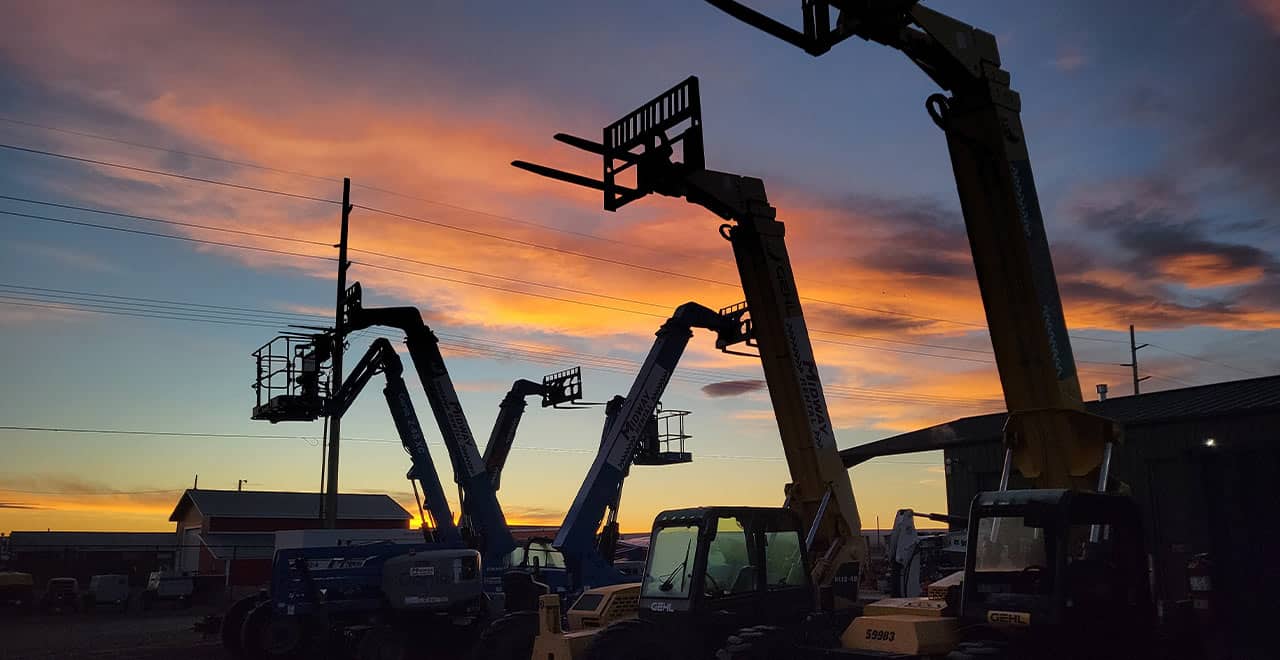
4. Prevent Downtime Through Daily Inspections
Unplanned downtime is one of the most expensive equipment-related disruptions on a job site. When a machine goes offline, the cost extends beyond the rental itself.
Downtime impacts:
- Labor productivity
- Trade sequencing
- Schedule milestones
- Safety and site logistics
Daily operator inspections help catch issues early, including:
- Fluid leaks
- Tire damage
- Control malfunctions
- Wear on critical components
Reliable equipment starts with consistent checks and immediate reporting.
5. Train Operators to Avoid Misuse and Damage
Improper operation leads to higher costs through damage, inefficiency, and safety incidents. Even rental equipment requires skilled handling to maximize value.
Operator training helps reduce:
- Equipment abuse
- Overloading and unsafe use
- Premature wear
- Accidental job site damage
Certified, knowledgeable operators also work faster and more confidently, improving overall job productivity.
6. Consolidated Rentals with One Trusted Partner
Managing rentals from multiple vendors can create inefficiencies, including:
- Inconsistent service response
- Varying equipment standards
- Complicated billing and tracking
- Delays in sourcing replacements
Consolidating rentals through one reliable provider, like REIC Rentals, improves cost control by streamlining:
- Fleet coordination
- Delivery schedules
- Maintenance support
- Equipment availability
A unified rental partner also helps contractors build long-term efficiency through familiarity with project needs.
Optimize Fuel and Power Consumption
Fuel is a major operating cost for many rental categories, including generators, heaters, telehandlers, and lifts.
Fuel-saving strategies include:
- Selecting properly sized units
- Avoiding unnecessary runtime
- Using hybrid or energy-efficient options when available
- Monitoring consumption trends across the fleet
On large commercial projects, fuel logistics should be treated as part of the equipment plan—not an afterthought.
8. Plan Site Logistics to Reduce Transport Costs
Delivery, repositioning, and pickup costs can add up quickly—especially on multi-site commercial builds.
To reduce logistics expense:
- Schedule equipment deliveries in coordinated batches
- Avoid last-minute swaps caused by poor planning
- Position machines strategically to minimize on-site moves
- Return equipment quickly when phases are complete
Efficient logistics protect both budget and schedule.
9. Use Specialty Equipment to Reduce Labor Costs
Sometimes, the right specialty rental solution reduces overall operating expense by cutting labor time dramatically.
Examples include:
- Telehandlers replacing manual material staging
- High-capacity dehumidification preventing finish rework
- Temporary HVAC systems maintaining occupied renovation comfort
- Modern light towers improving nighttime productivity
Specialty solutions may cost more upfront but deliver major savings through improved efficiency and reduced delays.
10. Track Equipment Performance and Adjust as Needed
Cost control improves when contractors actively monitor fleet performance rather than treating rentals as fixed expenses.
Key metrics to track include:
- Utilization rate (hours used vs. rented)
- Idle time patterns
- Fuel consumption
- Maintenance or service calls
- Phase-based equipment needs
By regularly reviewing performance, contractors can adjust the rental strategy mid-project to prevent overspend.
Building a More Cost-Efficient Rental Fleet Strategy
Lowering operating costs across your rental fleet is not about cutting corners—it’s about improving planning, utilization, and support.
Commercial construction teams that manage rentals effectively benefit from:
- Higher productivity
- Less downtime
- Better cost predictability
- Stronger safety performance
- More efficient project execution
With the right equipment strategy, rental fleets become a competitive advantage that supports both schedule and profitability.
Reliable Equipment Support for Commercial Construction
Every commercial job site relies on equipment that’s ready to perform, day after day. Uptime, efficiency, and disciplined cost management all contribute to keeping projects on schedule. From aerial access and material handling to temporary power and environmental control, a well-managed rental strategy is essential to maintaining momentum.
REIC Rentals partners with contractors to deliver dependable equipment, responsive service, and practical guidance tailored to the realities of commercial construction. With thoughtful planning and the right support, your rental fleet can operate more efficiently, reduce unnecessary expenses, and stay aligned with the project at every phase. Contact our team to strengthen your equipment strategy and keep your job site moving forward.
Service You Trust. Equipment You Need.
