
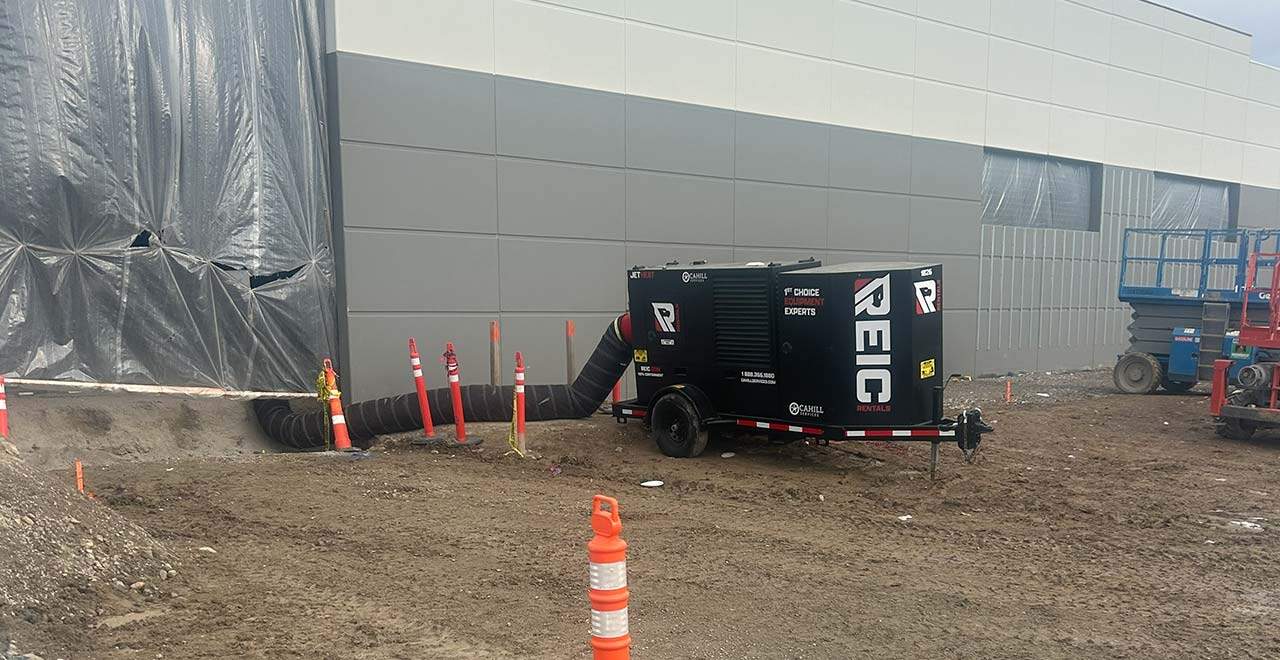
Protecting Commercial Construction Schedules with REIC Rentals
When spring arrives, many commercial construction teams feel a sense of relief. Snow has melted, daylight hours are longer, and projects that slowed during winter are beginning to accelerate. However, one critical misconception can create serious problems during this transitional season: assuming that warmer days eliminate the need for temperature control during concrete curing.
In reality, spring conditions can be some of the most unpredictable and risky for concrete placement. Cool nights, fluctuating daytime temperatures, wind exposure, and excess ground moisture can all interfere with proper curing. For commercial builds where structural integrity and schedule precision are non-negotiable, maintaining appropriate heat during curing remains essential.
Understanding why heat still matters and planning accordingly helps contractors avoid costly rework, failed inspections, and long-term performance issues. With specialized heating solutions, integrated equipment planning, and deep industry expertise, REIC Rentals helps commercial teams protect their concrete investments during spring construction.
The Science Behind Spring Concrete Curing
Concrete strength develops through a chemical reaction called hydration. This process depends heavily on temperature. If the concrete mixture becomes too cold during early curing stages, hydration slows significantly or stops altogether.
While daytime temperatures in spring may appear adequate, overnight lows can dip well below optimal curing thresholds. Additionally:
- Ground temperatures often remain cold even after air temperatures rise.
- Wind exposure accelerates surface cooling.
- Rain and moisture fluctuations affect finishing conditions.
For large commercial pours such as foundations, slabs, structural walls, and elevated decks, inconsistent curing temperatures can compromise structural performance.
Maintaining stable thermal conditions ensures the concrete achieves its specified strength within the expected timeframe.
The Risks of Underestimating Spring Conditions
Commercial construction projects operate on tight sequencing. Structural concrete often sits on the critical path of the schedule. When curing issues arise, the consequences ripple across trades and timelines.
Potential risks include:
- Surface cracking
- Delayed strength gain
- Reduced load-bearing capacity
- Freeze-thaw damage
- Failed compressive strength tests
- Inspection setbacks
These complications increase labor costs, extend equipment rentals, and disrupt subcontractor coordination.
Spring may feel milder than winter, but the margin for error remains small, especially during nighttime temperature drops.
Why Supplemental Heat Is Still Necessary
Even when daytime conditions appear comfortable, maintaining controlled temperatures around newly placed concrete can require additional heating support.
Temporary heat systems help:
- Protect early hydration stages
- Prevent internal freezing
- Maintain consistent curing rates
- Support enclosed pours
- Meet engineering specifications
Large-scale commercial projects often require sustained heating across expansive surfaces or within enclosed formwork systems. Passive measures alone may not be sufficient.
REIC Rentals provides advanced heating equipment specifically designed for demanding construction environments. With scalable solutions, contractors can match heating capacity to project size, whether supporting a single slab or a multi-phase structural build.
Flameless Heating for Safer Performance
Safety is paramount on commercial job sites, particularly when introducing heat sources near active work areas. Traditional open-flame heating methods present risks, especially around combustible materials or partially enclosed spaces.
REIC Rentals offers patented flameless heating systems, including specialized equipment engineered to deliver consistent warmth without open combustion at the discharge point.
Advantages include:
- Enhanced job site safety
- Even heat distribution
- Reduced emissions
- Efficient fuel usage
- Reliable operation in challenging conditions
These systems are particularly valuable for infrastructure, industrial, and large commercial developments where safety standards are stringent and performance expectations are high.
Coordinating Heat with Broader Site Operations
Concrete curing does not occur in isolation. Spring projects frequently require coordination between multiple equipment categories, including:
- Earthmoving equipment for subgrade preparation
- Compaction tools for base stabilization
- Pumps to manage excess water
- Power systems for lighting and tools
- Climate control for enclosed spaces
A fragmented equipment strategy increases the likelihood of logistical conflicts and delays.
REIC Rentals streamlines coordination by offering a comprehensive fleet that supports every phase of commercial construction. Instead of managing separate vendors for heating, power, and heavy equipment, contractors benefit from centralized planning and responsive service.
For large-scale or complex projects, REIC Rentals Expert Solutions provides integrated equipment planning, on-site staging support, spare unit coordination, and real-time service responsiveness. This proactive model minimizes downtime and supports schedule reliability.
Addressing Moisture and Environmental Variables
Spring often brings elevated humidity levels and precipitation. Excess moisture around curing concrete can create additional challenges, particularly in enclosed pours or partially completed structures.
Environmental management strategies may include:
- Temporary enclosures
- Ventilation systems
- Supplemental heating
REIC Rentals supplies climate control solutions that complement heating systems, ensuring balanced conditions that promote proper curing and worker comfort.
Maintaining stable environmental parameters protects both structural integrity and finishing quality.
Power Reliability for Continuous Heating
Consistent heat output relies on a dependable power supply. Unexpected outages or inadequate power capacity can interrupt curing and jeopardize structural outcomes.
REIC Rentals offers generators and temporary power distribution systems designed to support heating equipment in demanding commercial environments.
With coordinated power planning, contractors can ensure uninterrupted curing, even in remote or newly developed locations where permanent utilities may not yet be operational.
Supporting Large Commercial and Industrial Projects
The scale of commercial concrete pours often requires strategic equipment deployment. From distribution centers and manufacturing plants to office towers and infrastructure builds, large projects demand precision and coordination.
REIC Rentals serves a wide range of clients, including:
- Commercial contractors
- Industrial teams
- Infrastructure developers
- Institutional construction projects
With locations across the United States and Canada, REIC Rentals combines national inventory strength with localized expertise. Regional teams understand seasonal weather patterns and soil conditions specific to their markets, enabling tailored recommendations that reflect real-world challenges.
This blend of scale and responsiveness enhances planning confidence.
Protecting Schedules and Budgets
Concrete placement often anchors the project timeline. When curing delays occur, framing, mechanical installation, and finishing trades may be pushed back.
Proactively integrating heating solutions into spring concrete planning helps:
- Maintain scheduled form removal timelines
- Meet compressive strength milestones
- Avoid costly rework
- Reduce labor inefficiencies
- Preserve subcontractor coordination
REIC Rentals emphasizes uptime, performance reliability, and consultative support, ensuring equipment aligns with both environmental conditions and construction sequencing.
The Value of Professional Guidance
Spring curing strategies require more than equipment delivery. Determining appropriate heating capacity, placement configuration, and runtime demands expertise.
REIC Rentals works collaboratively with project managers and site supervisors to:
- Assess environmental risks
- Determine heating requirements
- Coordinate delivery schedules
- Provide responsive service throughout the curing process
This consultative approach ensures solutions are aligned with engineering specifications and operational realities.
Rather than reacting to temperature drops after problems emerge, contractors can implement preventive measures with confidence.
Building Stronger Structures This Spring
Spring construction season brings momentum, but it also introduces variability that cannot be ignored. Concrete curing remains temperature-sensitive, regardless of calendar dates. By maintaining controlled thermal conditions, commercial construction teams protect structural performance, avoid delays, and uphold quality standards.
REIC Rentals stands ready to support your next concrete placement with specialized heating systems, integrated equipment planning, and dependable service that prioritizes safety and uptime.
If your commercial project includes spring pours, connect with REIC Rentals to ensure your curing strategy is built on experience, precision, and reliability. Because when it comes to concrete, strength begins with the right conditions, and the right partner makes all the difference.
