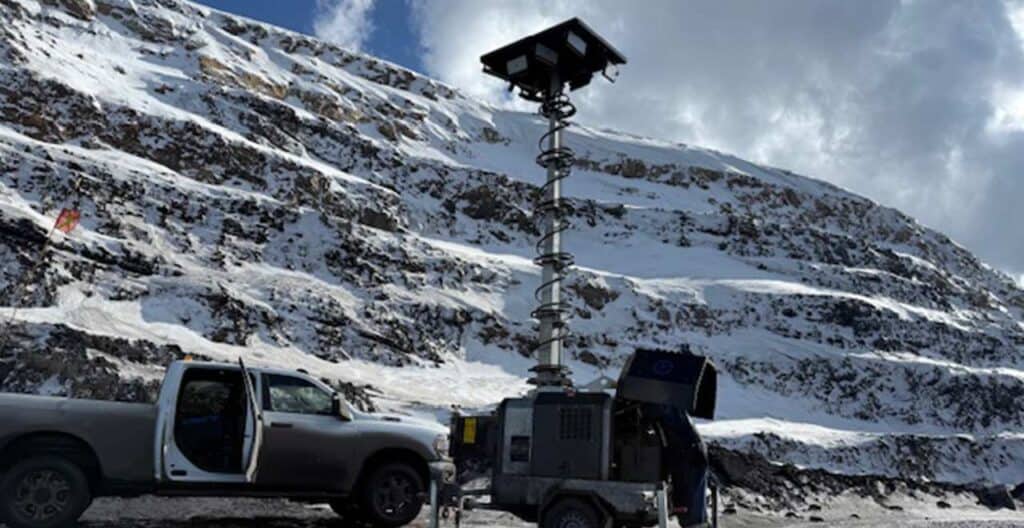
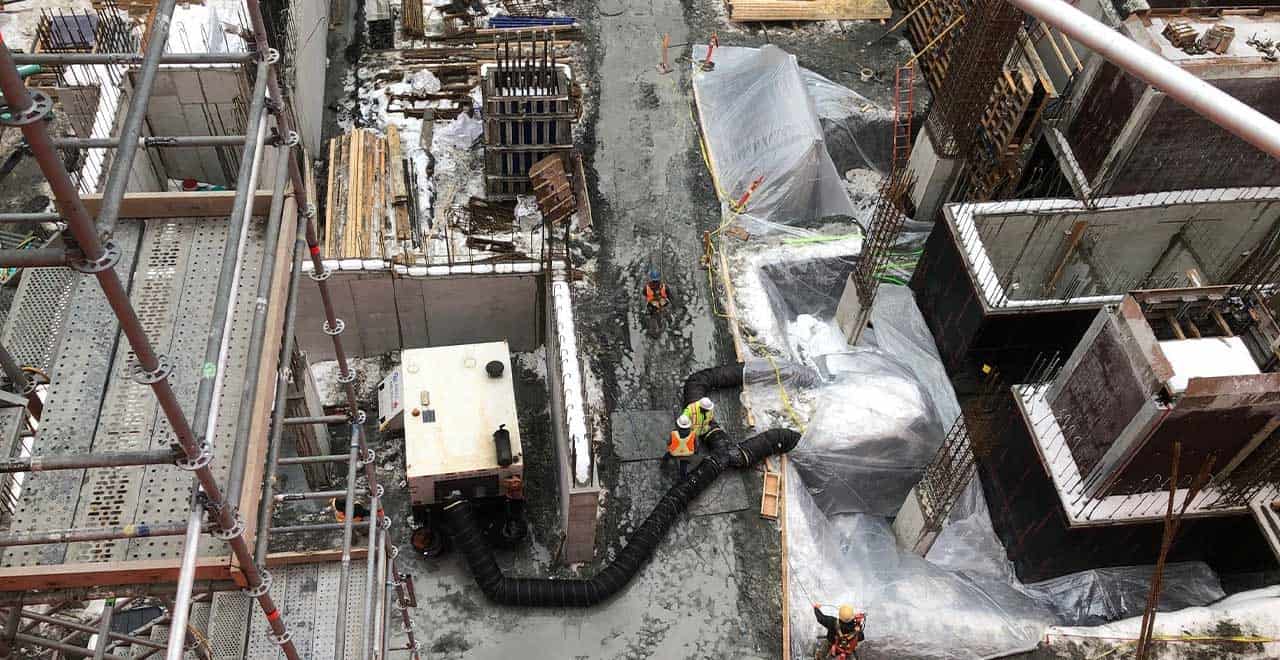
Late-winter and early-spring precipitation transforms industrial sites into operational obstacles. When March through May brings 6 to 12 inches of rain across North American refinery, power station, and pipeline locations, saturated soils and snowmelt create conditions that directly threaten turnaround schedules. Ground conditions account for 20 to 30 percent of lost time in spring turnaround projects, with costs extending well beyond schedule delays into equipment damage, fuel waste, and safety incidents.
The scenarios are consistent across oil and gas, petrochemical, pipeline, and power station projects every spring. Crane mobilization stalls on saturated access roads. Excavators bog down in soft subgrade. Scaffolding yards lose stable footing for entire shifts. These are not rare occurrences. They are predictable outcomes of sites that treat ground conditions as a weather problem rather than a planning problem.
Managing mud is not housekeeping. It is a strategic element of turnaround planning. At REIC Rentals, we support the equipment side of that strategy, from dewatering pumps and compaction equipment to temporary power and light towers, keeping access open when conditions are at their worst.
Permanent Drainage Solutions for Industrial and Construction Sites
Permanent drainage is the foundation of long-term jobsite reliability. Engineered drainage channels divert spring rain away from critical zones before moisture destabilizes subgrades on access roads and laydown areas used during every outage season. Sites that invest in permanent infrastructure consistently outperform those that react to problems after conditions deteriorate.
For new builds or expansions, position laydown yards, tool cribs, and modular assembly areas on higher ground that dries within 48 to 72 hours after a storm. Topographic surveys identify low-lying depressions where water tables rise significantly after snowmelt. Fill those areas before they become recurring schedule problems.
These targets are not arbitrary. Cross-slopes of 4 to 6 percent directed away from process units, a minimum 1 percent longitudinal fall to prevent ponding, 12 inches of freeboard at low access points, and culverts of 24 to 48 inches under haul roads are the specifications that keep access functional when March and April deliver what they typically do. Engage civil engineers in Q4 so these features are complete and tested before spring mobilization begins.
High-Traffic Pads and Access Routes That Hold Up Under Load
Crane pads, loading bays, scaffolding yards, and main shutdown corridors demand layered construction to handle the axle loads generated by mobile cranes and heavy haulers. The construction sequence matters as much as the materials: excavate to a stable subgrade 12 to 24 inches below grade, install geotextile fabric to separate fines and distribute load, apply 2 to 3 inches of crushed stone compacted in 6 to 12 inch lifts to 95 percent Proctor density, and finish with a 0.5 to 1 inch fine aggregate top layer for traction. REIC Rentals provides plate compactors and other equipment to support this work throughout the full turnaround window.
Footing Options for Zones Active Only During Turnarounds
Not all areas justify full engineered pads. For zones active only during a three- to six-week turnaround, the right footing depends on load requirements, duration, and whether the area sees repeated annual outages.
Fine-crushed gravel at 0.5 to 0.75 inches installs quickly and suits walkways and staging well. Recycled concrete, 0.75 to 1.5 inches thick, forms temporary roads 6 to 10 inches deep, with a durability of 6 to 12 months. HDPE matting installs in hours, handles substantial crane loads, and reuses across five or more turnarounds. Timber mats perform well but degrade due to seasonal moisture. Geogrids and cellular confinement provide permanent stabilization where soils are weak, and outages recur annually.
The decision framework is straightforward: temporary solutions for temporary needs, and permanent investment in sites that return year after year.
Maintaining Pads and Drainage Through the Active Season
Even well-designed pads degrade under intensive spring traffic and freeze-thaw cycles. Maintenance is part of the execution plan, not an afterthought. Daily inspection during March through May means walking access routes after rain or snowmelt, flagging ruts exceeding 2 inches, identifying ponding over 4 inches deep, and checking drains for silt buildup. These tasks need to be assigned, scheduled, and tied to corrective action protocols that move before minor issues become mobilization problems.
Corrective actions include motor grader reprofiling, 2- to 4-inch gravel top-ups, high-pressure culvert flushing, and plate compaction of soft spots before heavy equipment returns. REIC Rentals compactors, grading tools, and pressure washers support this work across the full turnaround window.
Temporary Drainage and Dewatering for Unplanned Work Scopes
Temporary measures apply when permanent works are not in place, such as emergency outages, unplanned work scopes, or late-added tasks that expand the original turnaround scope. Speed matters, and the tactics that work quickly are well established.
Spot gravel at 3 to 4 inches of angular stone over geotextile addresses bogged laydown areas within hours. Shallow swales, 12 to 20 inches wide, with a 1 to 2 percent grade, divert surface flows away from active work zones. Submersible pumps from REIC Rentals dewater ponds up to 3 feet deep, with capacity and hose configurations sized to the volume and urgency of the situation. Raised platforms using 12 to 20 inches of compacted fill, crowned at 2 percent with 2 inches of surface gravel, provide stable standing areas within a single shift.
Document effective temporary setups as they are deployed. They form the basis for permanent solutions before the next turnaround season. One material caution: in saturated clay soils, angular crushed stone over geotextile outperforms sand or select fill every time.
Safety, Equipment Performance, and Workforce Productivity in Muddy Conditions
Mud connects directly to safety KPIs and equipment reliability during high-intensity shutdown periods. Saturated ground drops walkway friction by 50 percent, extends braking distances 30 to 50 percent, and increases dropped object risk from bogged cranes and aerial lifts by 20 to 30 percent. A heavy truck mired for several hours can push critical path activities into overtime and generate significant claims. Proper access matting and dewatering equipment prevent that scenario. The math is straightforward.
Equipment damage compounds quickly. Wheel spin drives up fuel consumption. Tire, track, and undercarriage wear accelerate beyond normal rates. Workforce efficiency drops further as travel times slow and worker fatigue increases through sticky mud.
Operational controls that deliver results include designated gravel walk routes, traction overshoes, boot scrapers at building entries, and housekeeping sweeps tied to permit activity. Light towers from REIC Rentals extend the inspection and maintenance window into early mornings and evenings without interrupting active work. These controls only work when enforced consistently across the full turnaround window.
Integrating Mud Management into Turnaround Planning from the Start
Ground condition risk belongs in formal turnaround planning, integrated into readiness gates alongside mechanical and electrical scope reviews. Sites that plan six months ahead consistently outperform those that react in real time. Assess topography and soil conditions in Q3, model drainage requirements for 10-year and 25-year storm events in Q4, build pads and drainage infrastructure in Q1, and confirm all measures are in place during pre-mobilization site walks in January and February.
Role clarity is essential. Civil and engineering teams own the drainage design. Construction manages pad installation. Site management and HSE monitor conditions and log issues against the daily permitting agenda. Undefined responsibilities create gaps that cost days.
REIC Rentals supports the full equipment scope for spring execution demands, including dewatering pumps, compaction equipment, generators, temporary power distribution, and light towers. For oil and gas, petrochemical, pipeline, power station, and mining teams, we have seen enough spring turnarounds to know where ground conditions break schedules and what equipment keeps them from doing so.
Building Repeatable Standards Across Turnaround Seasons
Track mud management performance across every spring outage. Daily field logs, geotagged photos of problem areas, and post-storm inspection reports give teams the data to improve specifications year over year rather than repeating the same failures at the same locations.
Feed observations into lessons-learned sessions at turnaround close. Capture which pad designs held up, which drainage features handled peak flows, and where materials fell short. Incremental improvements compound across seasons into meaningful reductions in maintenance labor, downtime, and reactive spend.
Build repeatable standards: template pad cross-sections, preferred material specifications, and reusable equipment scope templates. Working with a consistent rental partner compounds the efficiency gain further. REIC Rentals maintains records of equipment deployed on prior projects and coordinates fleet staging to match the mobilization schedule rather than reacting to it.
Treating Jobsite Readiness as a Competitive Advantage
Disciplined mud management transforms spring turnarounds from weather-dependent gambles into predictable operations. Sites that open each season with prepared access, functional drainage, and clear maintenance protocols gain a measurable edge in schedule adherence, safety, and cost control. That edge is not a function of favorable conditions. It is the result of planning that began six months earlier, when the site was dry, and the decisions were easy.
Ground conditions should not appear on the critical path. When access is engineered, maintained, and backed by the right equipment, they do not have to.
Tell us your site constraints, timeline, and turnaround scope. We will build a plan that keeps your access open, keeps your crews productive, and protects your schedule.
1.888.356.1880 | in**@**ic.com | Get a Quote
Service You Trust. Equipment You Need.