
Healthcare construction is among the most complex operating environments in the industry. Crews work in occupied buildings where patients are receiving care on the other side of a temporary barrier. The materials being installed, the air quality being maintained, and the temperatures being controlled all carry consequences that general commercial construction does not face.
In that environment, temporary heating is not a cold-weather convenience. It is an operational requirement that simultaneously affects patient safety, material performance, infection control, and schedule continuity. A hospital renovation that underestimates its heating requirements does not just run behind. It risks clinical outcomes.
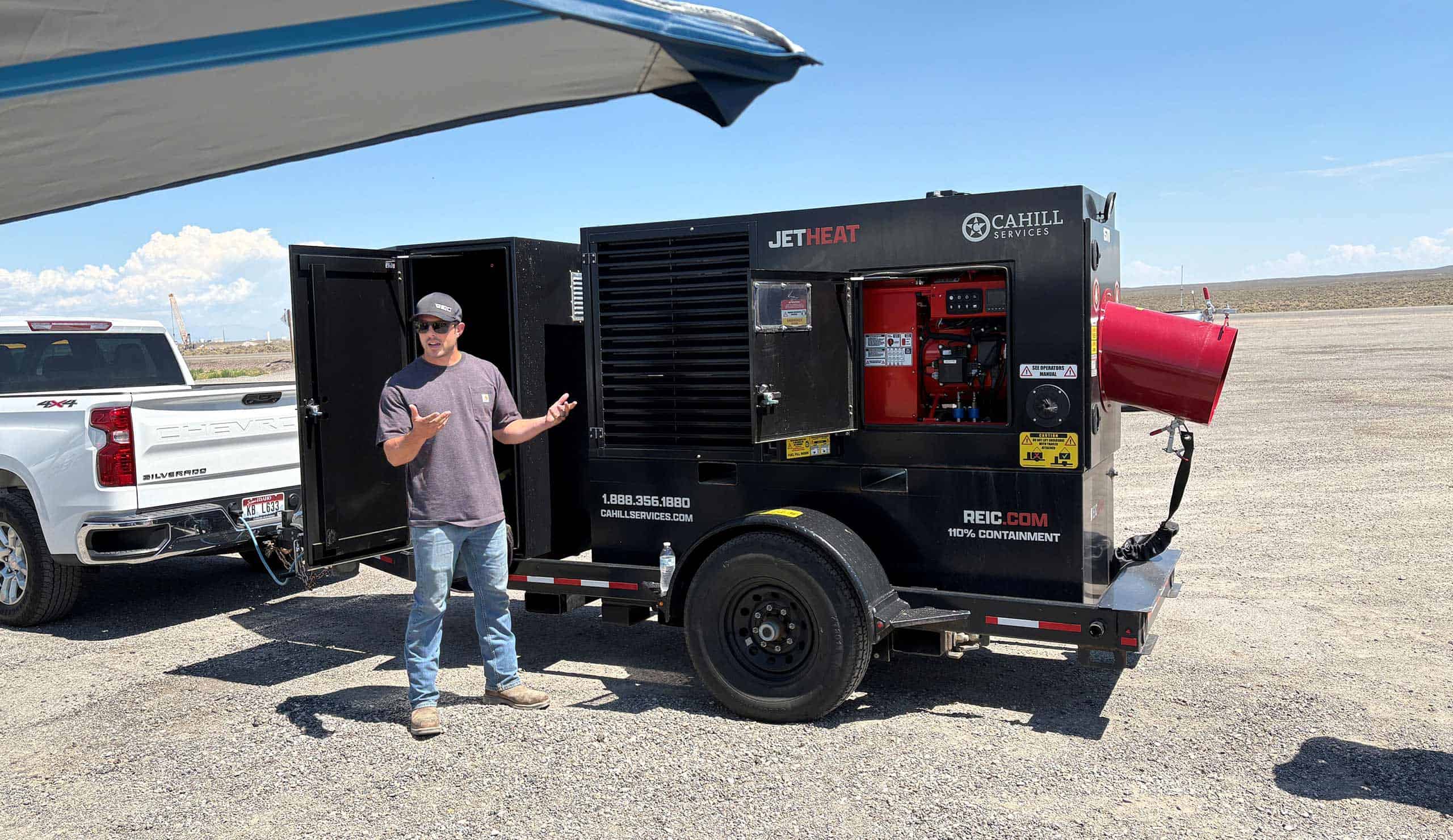
REIC Rentals supports hospital and healthcare facilities with temporary heating equipment, including indirect-fired heaters for occupied building applications and the exclusive Jet Heat flameless system for environments where emissions restrictions apply. Here is why temporary heating should be included in every hospital construction plan from the start.
Worker Safety in Occupied Building Environments
Construction crews working on hospital renovation projects face a version of cold stress risk that compounds the standard worksite challenge. They often work in partially conditioned spaces where the permanent HVAC serving the construction zone has been isolated for infection control, leaving areas without active heating during cold months.
Hypothermia begins when core temperature falls below 95 degrees Fahrenheit, and the impairments that precede it, such as reduced dexterity, slowed reaction times, and impaired concentration, affect safety-critical work before either the worker or the supervisor recognizes the problem. In a hospital construction environment where precision work near clinical areas is the standard, those impairments carry consequences beyond the immediate task.
Providing adequate heating in isolated construction zones demonstrates the same commitment to crew welfare that hospital construction quality standards require. Workers who are warm maintain the attention to detail that healthcare renovation demands.
Material Protection: The Consequences of Getting It Wrong
Hospital construction involves materials with specific temperature requirements that cold weather violates without active intervention. Joint compound, adhesives, coatings, and sealants all have minimum application and curing temperatures. Failures in cold-weather applications manifest as delamination, cracking, or adhesive failure, sometimes months after installation, when the connection to winter construction conditions is no longer obvious.
In a healthcare environment, material failures carry additional consequences. A floor coating that fails in a sterile processing area or a wall finish that develops cracks adjacent to a patient room requires remediation in an occupied, infection-controlled environment. The cost and disruption of that remediation consistently exceed the cost of the heating that would have prevented it.
Concrete poured during construction phases that include structural elements or floor slabs also requires temperatures above 50 degrees Fahrenheit for proper curing. Concrete that cures at reduced temperature and strength creates a structural quality problem that is not visible until testing or failure reveals it.
Clean Heat: A Healthcare-Specific Requirement
Healthcare construction has a heating requirement that most other construction environments do not: the heat delivered to occupied-adjacent spaces must be clean and dry, without combustion byproducts that would compromise indoor air quality in clinical areas.
Direct-fired heaters, which heat air with an open flame, are not appropriate for enclosed spaces adjacent to occupied clinical areas. The carbon dioxide and moisture from combustion accumulate in enclosed spaces and can migrate into adjacent areas through gaps in temporary barriers. In a clinical environment where air quality is managed as an infection control measure, that migration poses an unacceptable risk regardless of the equipment’s heating efficiency.
Indirect-fired heaters eliminate combustion byproduct risk in the heated space by passing combustion gases through a heat exchanger and discharging clean, dry air. The Jet Heat flameless system goes further, delivering dry heat with no open flame and no combustion emissions, making it the appropriate choice for environments where emission restrictions apply or where the proximity to clinical areas makes any combustion risk unacceptable.
Schedule Protection in a High-Stakes Environment
Hospital construction projects carry schedule pressures that general commercial builds do not. Clinical operations are planned around construction milestones. Patient care areas are blocked, relocated, or phased in response to renovation sequences. A construction delay affects more than just the contractor’s timeline. It disrupts the clinical operations that were reorganized to accommodate the construction schedule.
Temporary heating is one of the most direct interventions available for protecting the schedule during cold weather. Heated construction zones allow materials to be applied and cured on their designed schedule rather than waiting for conditions to improve. Crews work at full productivity rather than slowing as cold accumulates. The phases that depend on temperature-sensitive materials proceed on schedule rather than extending into windows that further disrupt clinical operations.
Before cold weather arrives, a practical planning checklist for hospital construction heating includes the following:
- Identify zones where permanent HVAC has been isolated for infection control and will require temporary heating.
- Confirm that the heating equipment type is appropriate for occupied-adjacent applications: clean heat only.
- Review ventilation and pressure relationships to ensure that heated air movement does not compromise infection-control barriers.
- Engage REIC Rentals before the cold-weather phase begins to confirm equipment availability and delivery logistics.
REIC Rentals works with hospital construction teams and infection control practitioners during preconstruction to identify the right heating approach for each zone. Request a quote or find a location near you to connect with the team supporting healthcare construction in your area.
1.888.356.1880 | in**@**ic.com | reic.com
Service You Trust. Equipment You Need.
