
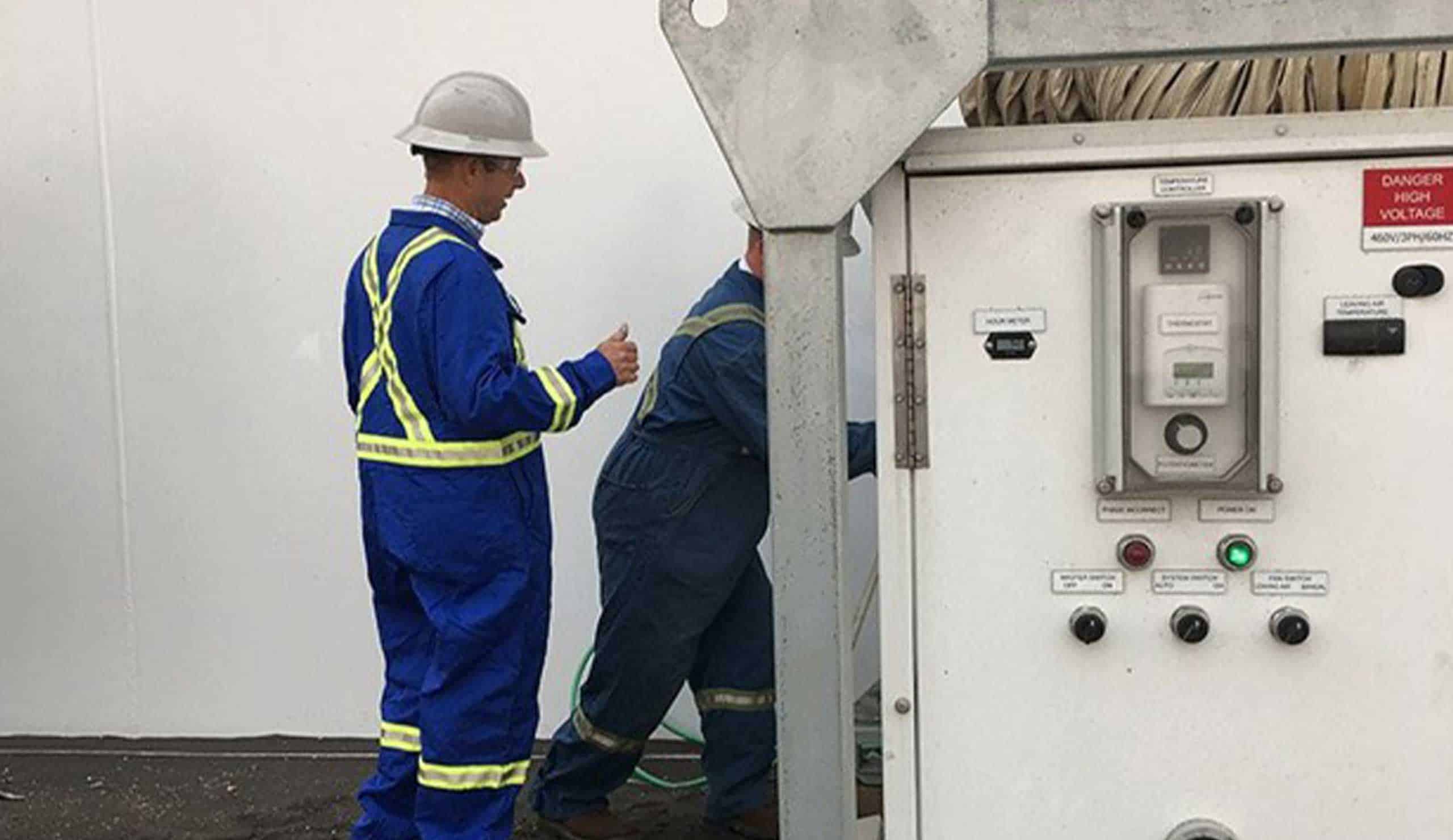
Paint and protective coatings are engineered to perform within specific environmental parameters. When temperature and humidity fall outside those ranges, the chemistry does not work as intended. Drying times extend, adhesion fails, finishes blister or crack, and coatings that looked acceptable on application begin to fail in service.
Environmental control is not an optional upgrade for painting and coating work. It is a technical requirement. At REIC Rentals, we support painting contractors, industrial applicators, and project teams with the heating, cooling, dehumidification, and air circulation equipment needed to maintain the conditions specified by coatings manufacturers and expected by project owners.
Why Environmental Conditions Determine Coating Performance
Every paint and coating product has a defined application window: the temperature and humidity range within which it will cure, bond, and perform as intended. Applying outside that window does not just affect appearance. It affects structural integrity and long-term performance.
The variables that matter most are temperature, relative humidity, air movement, and static pressure, and they interact in ways that compound problems quickly. High humidity slows drying, promotes blistering, and causes adhesion failure. Low humidity causes paint to dry too quickly, leaving brush marks, an uneven finish, and cracking in thicker coatings. High temperatures accelerate solvent evaporation before the coating can level, producing lap marks and poor film formation. Low temperatures prevent proper cure, particularly in water-based products. Poor air circulation creates hot and cold spots and fume buildup, leading to inconsistent results across the surface. Static pressure imbalances mean conditioned air does not reach the full work zone, so humidity and temperature vary even when the primary equipment is running correctly.
None of these are edge cases. They are standard conditions on construction sites, in industrial facilities, and on exterior projects. Managing them requires equipment that adjusts temperature, removes moisture, and moves air in a coordinated way.
The Role of Each Equipment Type
Heating
Cold temperatures slow the cure of nearly every coating type, and water-based products can be permanently damaged if temperatures drop below their minimum application threshold during or after application. Temporary heating maintains the work area within the product’s specified range, protecting both the application process and the cure.
On large-scale coating projects in cold climates or winter construction scenarios, heating is often the difference between a coating that performs to specification and one that fails in the first season of service. The investment in temporary heat is a fraction of the cost of reapplication.
Cooling and Air Conditioning
High temperatures accelerate solvent evaporation and dry time, which sounds like a benefit but creates significant application problems. When a coating dries faster than it can level, lap marks, brush marks, and uneven film thickness become difficult to avoid. In extreme heat, the applicator loses control of the process entirely.
Cooling the work area brings temperatures into the product’s optimal range, giving applicators the time they need to work properly and ensuring consistent film formation across the entire surface.
Dehumidification
Humidity is the most common cause of coating failure on industrial and commercial projects. High moisture in the air slows drying, promotes blistering, and prevents proper adhesion, particularly on metal substrates, where surface moisture contributes to flash rust between surface preparation and coating application.
Industrial dehumidifiers maintain relative humidity within the range specified by the coating manufacturer, protecting the application from the moment the surface is prepared through the full cure cycle. For multi-coat systems, where each layer must reach a defined moisture content before the next is applied, consistent humidity control keeps the schedule on track.
Air Circulation and Ventilation
Even with temperature and humidity controlled at the equipment level, poor air distribution creates microclimates within the workspace where conditions vary significantly from one area to another. A corner with inadequate airflow may read 15 percent higher relative humidity than the center of the same room.
Proper air circulation ensures conditioned air reaches every part of the work zone, eliminating the hot spots, cold spots, and humidity pockets that cause inconsistent results across a surface. It also serves a safety function, diluting solvent fumes and maintaining a fresh air supply for workers in enclosed spaces.
Static Pressure and Distribution
Static pressure determines how effectively conditioned air moves through a space and its ductwork. An imbalance in static pressure means some areas receive adequate conditioned air while others do not, regardless of the primary equipment’s capabilities. For large or complex spaces, understanding and managing static pressure is essential to designing an environmental control system that delivers consistent conditions across the entire work area.
REIC Rentals can support projects with high-static-pressure equipment designed to push conditioned air through duct runs and into spaces where standard units cannot maintain coverage.
Where Environmental Control Matters Most for Coatings Work
Industrial facilities and tank linings. Protective coatings in oil and gas, petrochemical, and manufacturing environments must meet strict performance standards. Surface preparation and coating application windows are tightly controlled, and environmental conditions directly affect whether the coating passes inspection and lasts in service.
Bridge and infrastructure coating. Exterior steelwork is highly sensitive to dew-point conditions. Applying a coating when the surface temperature is within 5°F of the dew point risks condensation forming on the substrate, which causes immediate adhesion failure. Environmental monitoring and control are standard practices on infrastructure coating projects.
Commercial construction interiors. Multi-trade schedules depend on coating phases completing on time. Humidity that extends dry time by 30 percent does not just delay painting; it delays every trade that follows. Environmental control protects the coating schedule and the trades that depend on it.
Restoration and remediation. Coatings applied during restoration work often need to perform in challenging existing environments. Controlling conditions during application ensures the coating bonds correctly to the substrate and cures to specification, even when the surrounding environment is not ideal.
Cold storage and refrigerated facilities. Coating cold storage interiors requires specialized environmental management because the ambient conditions work against nearly every standard application approach. Temporary heating and dehumidification create a window for application and cure that would otherwise not exist.
Planning Environmental Control for a Coating Project
Getting environmental control right on a coating project requires thinking through the full sequence before specifying equipment. The questions that shape the plan include:
- What are the manufacturer’s specified application and cure conditions for each product in the coating system?
- What are the ambient temperature and humidity conditions at the site during the planned application window?
- How large is the work area, and how does air move through it naturally?
- Are there multiple coats, or a multi-product system in which each layer must reach a defined condition before the next is applied?
- Are there ventilation requirements for the products being applied?
- What is the dew point at the site, and what is the surface temperature of the substrate?
The answers to those questions determine what equipment is needed, how it should be configured, and how long it needs to run. Our team works through this with customers before any equipment is specified, because deploying the wrong system or the right system in the wrong configuration wastes time and does not solve the problem.
Integrated Climate Control
Heating, cooling, dehumidification, and air circulation rarely work in isolation on a coating project. REIC Rentals builds integrated climate control packages that combine all of the equipment a project needs, coordinated to maintain consistent conditions through every phase of application and cure.
What REIC Rentals Provides
REIC Rentals supports painting and coating projects with a full range of climate control equipment, including temporary heating for cold-weather applications, high-static-pressure air conditioning for summer and enclosed-space work, industrial dehumidifiers for humidity control across multi-coat systems, and air movers and ventilation equipment for distribution and fume management.
We deliver, set up, and verify that systems are running correctly before the application begins. For critical projects or tight schedules, our 24/7 support line is available throughout the rental period. If something needs attention mid-project, we respond.
For projects where the coating scope is complex or environmental conditions are challenging, our team can work with you to develop a comprehensive environmental control plan before equipment is deployed. Getting conditions right from the start of a coating project protects the work, protects the schedule, and protects the coating system’s performance for the life of the project.
Build your environmental control plan with REIC Rentals.
1.888.356.1880 | in**@**ic.com | Get a Quote
Service You Trust. Equipment You Need.
