
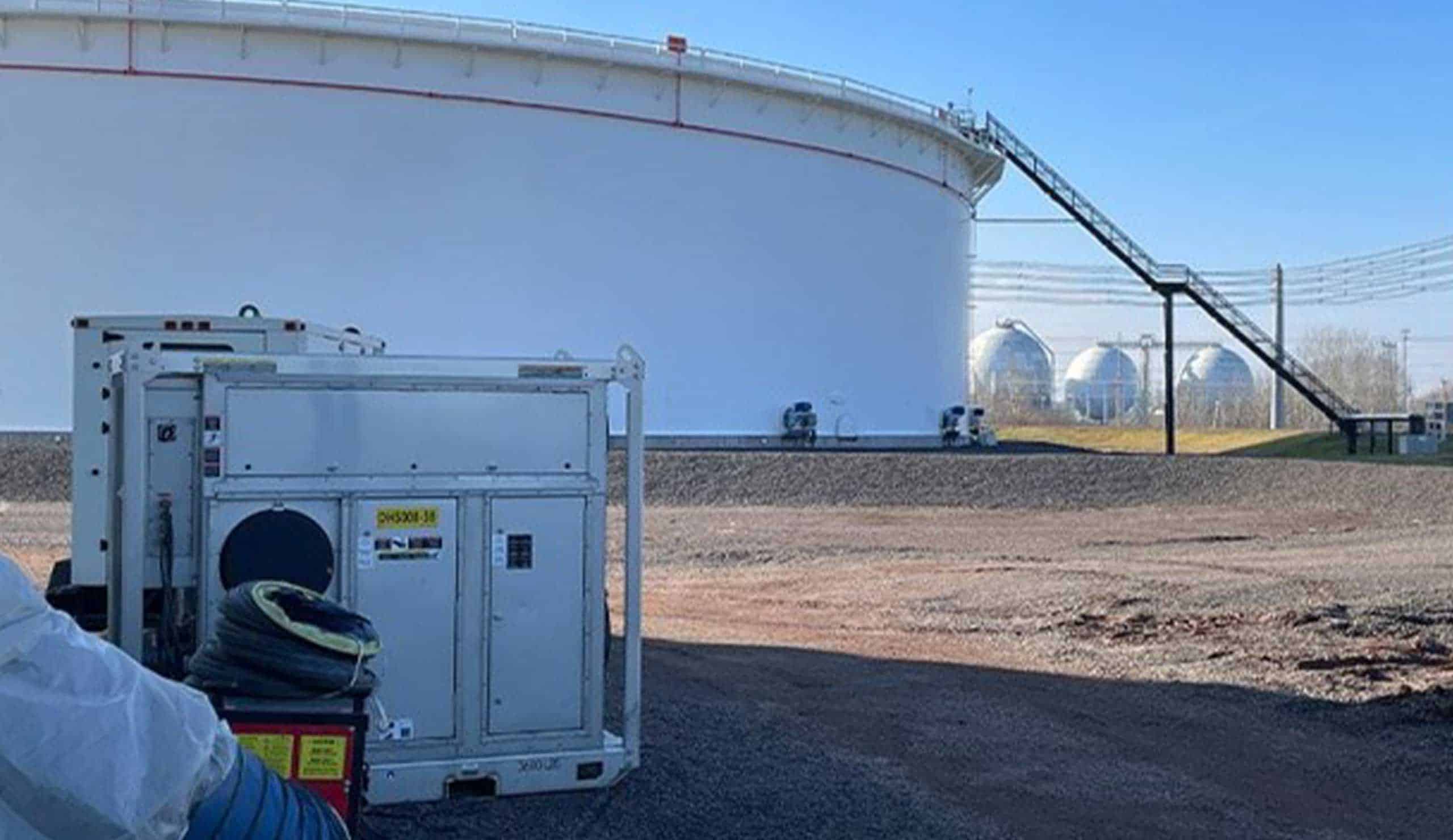
Industrial coating failures are rarely caused by inferior materials or poorly skilled applicators. They are caused by uncontrolled environments. Steel that flash-rusts between blasting and application, coatings applied outside the manufacturer’s specified temperature window, humidity levels that trap moisture under a film before it cures: these are the failure modes that show up at inspection and drive rework costs that dwarf the original coating budget.
Total climate control, the coordinated management of temperature, humidity, and airflow across every phase of the coating project, is what prevents those outcomes. It is not a contingency for bad weather. It is a standard element of coating project execution on pipelines, tanks, steel structures, and process equipment where the performance of the coating system directly affects asset life and regulatory compliance. REIC Rentals delivers climate control solutions for industrial coating and painting projects across North America, with equipment and field support sized for the scale and conditions of the work.
Why Environmental Conditions Determine Coating Outcomes
Coating specifications exist for a reason. Temperature and humidity windows defined by coating manufacturers are not conservative guidelines. They are the conditions under which the system’s chemistry operates as designed. Outside those windows, the chemical reactions that govern adhesion, cure, and film build are compromised in ways that are not always visible during application but surface as field failures.
Steel flash-rusts within 30 to 60 minutes of abrasive blasting when relative humidity is high, or the surface temperature drops near the dew point. A surface that required hours of blast preparation is contaminated and must be reblasted before coating can proceed. Cold temperatures slow or halt the chemical reactions that govern coating cure, leaving films that appear dry but lack the crosslink density required for corrosion resistance. High ambient humidity during application traps moisture at the coating-to-steel interface, creating an adhesion weakness that leads to blistering and delamination months or years later.
Waiting for natural conditions to align with coating specifications is not a viable strategy on most industrial projects. Shutdown windows are fixed, schedules are interdependent, and outdoor conditions in the environments where this work occurs, such as coastal refineries, northern pipelines, offshore platforms, and open tank farms, do not remain within specification limits for predictable intervals. Engineered climate control creates the microclimate required by the work, independent of the weather outside the shelter.
Surface Preparation: Protecting the Blast Before the Coating Goes On
Abrasive blasting creates an anchor profile that provides the coating system with a mechanical bond to the steel. That profile is also highly reactive. Bare steel in a humid environment begins oxidizing within minutes of blasting, and surface contamination from flash rust or condensation compromises adhesion at the foundation of the entire coating system. Industrial dehumidifiers deployed in blast enclosures and shelters reduce ambient relative humidity below the threshold where flash rust develops, extending the coating window from minutes to hours and giving applicators the time they need to work without the pressure of a deteriorating surface.
In cold-weather operations, indirect-fired heaters raise surface and ambient temperatures above the dew-point margin required by the coating specification, preventing condensation on freshly blasted steel and ensuring substrate temperatures remain within the application range. Desiccant dehumidifiers outperform refrigerant-based units in cold environments where refrigerant systems lose efficiency, making them the right choice for winter surface preparation work in northern climates. REIC Rentals offers both technologies and can advise on the right configuration for the deployment’s ambient conditions.
Application Phase: Creating the Environment the Coating Specification Requires
Most industrial coating systems specify application windows that are narrower than contractors expect. Ambient temperatures between 50 and 95 degrees Fahrenheit, relative humidity below 50 percent, and substrate temperatures at least 5 degrees Fahrenheit above the dew point are common baseline requirements. In practice, field conditions often fall outside these ranges, particularly during the shoulder seasons and in coastal or high-humidity environments.
Flameless Jet Heat technology, exclusive to REIC Rentals, delivers high-volume heat to coating enclosures and shelters without combustion exhaust or moisture introduction. Conventional direct-fired heaters introduce combustion byproducts and water vapor into the work environment that interfere with coating chemistry and surface conditions. Jet Heat eliminates both concerns, providing clean, dry heat that raises ambient and substrate temperatures without compromising the environment on which the coating system depends.
Dehumidification during application maintains relative humidity within specification across the full shift, not just at the start of the day when conditions may be favorable. Humidity rises as the day progresses on coastal and humid sites, and a coating applied in acceptable conditions at 7 AM can be out of spec by mid-morning without active humidity control. Explosion-proof ventilation fans provide the airflow required for safe solvent management in enclosed spaces and tanks, preventing volatile organic compound buildup while supporting even solvent flash-off during application.
Curing Phase: Protecting the Investment Through Final Inspection
The curing phase is where long-term coating performance is either secured or compromised. A film that appears dry and intact immediately after application may still be undergoing chemical crosslinking, which determines its final hardness, flexibility, and corrosion resistance. Temperature and humidity conditions during cure affect the rate and completeness of those reactions. Coatings cured below the minimum temperature specifications achieve a lower crosslink density than the manufacturer’s data assumes, resulting in reduced chemical resistance and earlier field failure than expected for the product.
Maintaining specification conditions through full cure, not just through application, is what the warranty and inspection record reflect. Climate control equipment staged for the application phase should remain in place and operational throughout the cure window defined by the coating specification for the ambient temperature during deployment. On cold-weather projects, this is often longer than project teams anticipate, and the temptation to demobilize climate control equipment before full cure is achieved is a common source of inspection failures and warranty disputes.
Data loggers monitoring relative humidity and temperature throughout the cure period provide the quality assurance documentation that inspectors and asset owners require. REIC Rentals supports the setup of monitoring systems that create a continuous record of environmental conditions from blast through final cure, giving project teams the documentation they need to demonstrate specification compliance and defend the coating system’s performance over its design life.
Specific Environments and Applications
Pipeline coating and recoating projects present the climate-control challenge of maintaining conditions over long stretches of exposed steel in open environments. Portable shelter systems with integrated heating and dehumidification create a controlled microclimate that moves with the work face, maintaining specification conditions across the coating and curing window for each joint and section as the crew advances.
Petrochemical and refinery coating work during turnarounds operates under the additional pressure of a fixed outage window. Climate control failures that force re-blasting or extend cure times push coating work into the critical path of the shutdown, with consequences that cascade through inspection, recommissioning, and startup sequences. Configuring climate control into the turnaround plan before the outage begins, with equipment on site and operational from the first blast, is what prevents the coating scope from becoming the constraint on outage duration.
Coastal and marine environments create sustained humidity challenges that require continuous dehumidification rather than periodic intervention. High ambient moisture, salt-laden air, and temperature cycling through the day create conditions where surface condensation forms even when ambient relative humidity appears manageable. Oil and gas and offshore coating work in these environments requires dehumidification capacity sized for sustained operation, not just peak demand, and equipment that maintains performance across the temperature range the site experiences during the coating and curing schedule.
Confined space coating work in tanks, vessels, and enclosed structural steel requires specific attention to ventilation for both safety compliance and coating performance. Explosion-proof fans rated for the classified area provide the continuous air exchange required to maintain solvent concentrations below hazardous thresholds while supporting even solvent evaporation and film formation across the interior surface being coated.
Planning Climate Control Into the Coating Project from the Start
Climate control for industrial coating projects should be scoped and resourced during the project planning phase, not treated as an equipment mobilization response to adverse conditions. The coating specification defines the environmental requirements. The site assessment defines the gap between those requirements and the conditions the site will actually present. The climate control plan fills that gap with equipment sized for the work zone volume, the ambient temperature and humidity range, and the duration of the coating and curing schedule.
REIC Rentals works with coating contractors, project managers, and engineering teams through the site assessment and equipment specification process. We evaluate work zone geometry, enclosure characteristics, surface area to be coated, expected ambient conditions throughout the project schedule, and power availability to configure the optimal combination of heating, dehumidification, and ventilation for the application. Equipment arrives sized and configured for the work rather than requiring field modification after the blast has already started.
Coating project success is largely determined before the first nozzle opens. The surface preparation window, the application conditions, and the cure environment are all controlled variables when climate control is planned correctly. When they are not, they become risk factors that drive rework, failed inspections, and schedule overruns, which follow the project into warranty claims and asset owner disputes. We take that seriously on every deployment, because the teams we work with cannot afford to learn it the hard way on a project they have already staked their schedule and their reputation on.
Ready to Protect Your Next Coating Project
Tell us your coating specification requirements, site location, work zone dimensions, and project schedule. REIC Rentals will configure a climate control plan that covers surface preparation through final cure, backed by field support across 55 North American locations and 24/7 technical response during active coating operations.
1.888.356.1880 | in**@**ic.com | Get a Quote
Service You Trust. Equipment You Need.
