

Heating
Description
Keep your project moving through the winter months with our powerful portable heaters and industrial blowers. These units provide the…
Monday 7:30am–4pm
Tuesday 7:30am–4pm
Wednesday 7:30am–4pm
Thursday 7:30am–4pm
Friday 7:30am–4pm
Saturday Closed
Sunday Closed
24/7 Service & Support Center
Always Available to Serve You Better

"*" indicates required fields
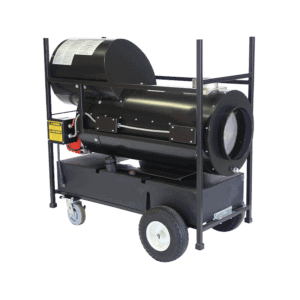
Keep your project moving through the winter months with our powerful portable heaters and industrial blowers. These units provide the…
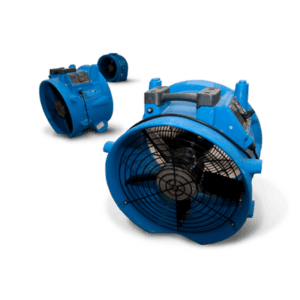
Beat the heat and maintain safe working conditions with our high-capacity portable air conditioners, evaporative coolers, and industrial fans. Ideal…
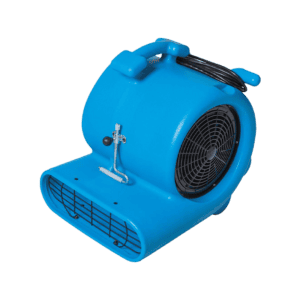
Mitigate water damage and speed up construction timelines with our professional-grade dehumidifiers and high-velocity air movers. Perfect for restoration projects…
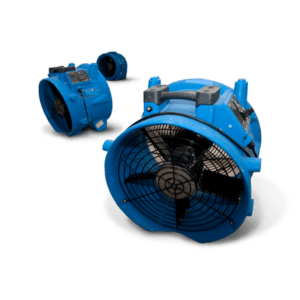
Optimize your climate control systems with our range of HVAC accessories, including ducting, thermostats, and specialized venting tools. These components…
Denver’s construction market is one of the most complex and rapidly evolving in the American West. The city’s urban core is largely built out, meaning a significant portion of construction here is renovation, repositioning, and densification of existing built fabric. Occupied retail and office buildings are being converted to residential use. Multi-family towers are rising on former surface parking lots. Healthcare facilities are expanding into adjacent structures while continuing to operate. This is what mature urban construction looks like, and it demands precise climate control planning that greenfield suburban development does not.
At the same time, the metro’s suburban perimeter continues to expand. Aurora and Parker to the southeast, Westminster and Broomfield to the north, and Lakewood and Arvada to the west are all in active residential and commercial development. Colorado Springs and Pueblo to the south add a distinct market dimension. Boulder to the northwest brings university construction, tech-campus development, and a premium residential market. The Denver Front Range is not one construction market. It is a dozen, running simultaneously.
REIC Rentals in Denver serves this corridor from our Holly Street location, with a focused climate-control equipment catalog built for the demands of one of the most active construction markets in the American West. We provide heating, cooling, dehumidification, and HVAC accessories for commercial renovations, healthcare construction, manufacturing facilities, and multi-family projects that require climate management when permanent HVAC systems are offline or when construction conditions demand it.
Our Denver location serves the full Front Range metro: Denver, Commerce City, Westminster, Thornton, Aurora, Arvada, Lakewood, Broomfield, Parker, Boulder, and the I-25 corridor south to Castle Rock, Colorado Springs, and Pueblo. For the northeast corridor and Longmont, our Denver North location in Brighton is the primary operation.
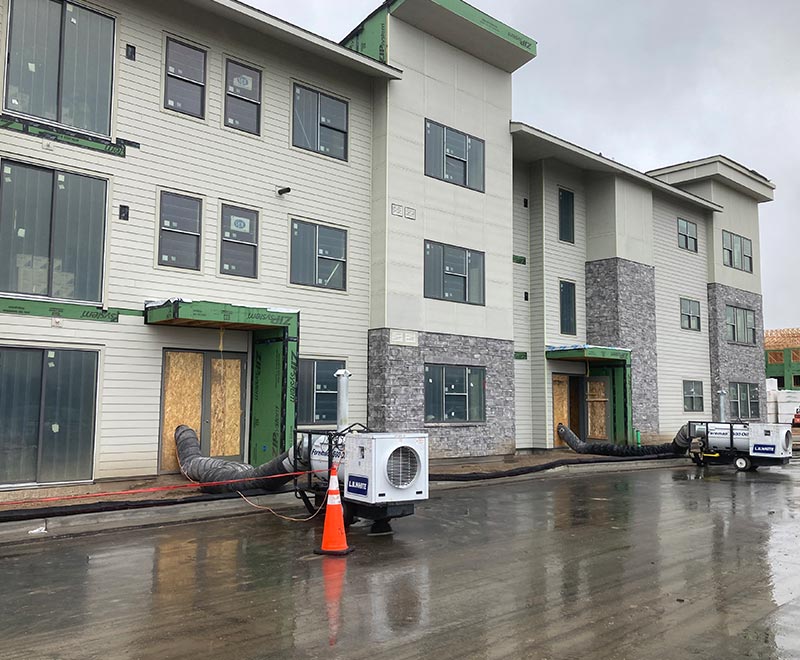
Denver’s commercial construction market includes a significant volume of work that happens in and around occupied buildings. Retail renovation in operating centers. Office repositioning in buildings that tenants have never left. Multi-family renovation in occupied residential communities. These are the projects where climate control equipment selection, placement, and operation require planning that is not needed in new construction on an empty site.
We provide temporary HVAC for commercial retail and office renovation in occupied or partially occupied buildings. When mechanical systems are disconnected during renovation, maintaining habitable temperatures in adjacent occupied spaces requires equipment that is both effective and operationally compatible with the building’s occupants. Denver’s LoDo, RiNo, and Platte Street corridors have generated years of adaptive reuse and renovation projects, and our team understands the specific climate-control demands these projects create.
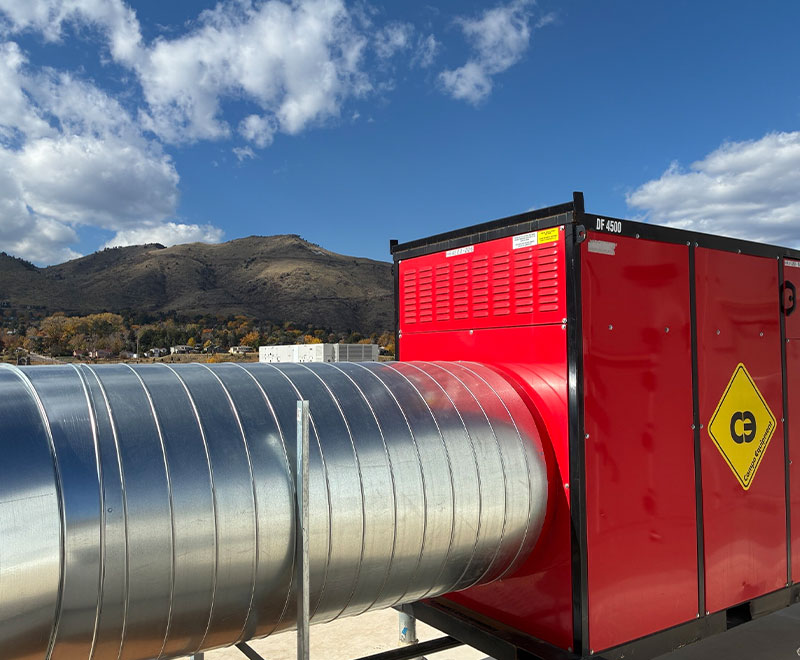
Multi-family construction is the dominant construction type in Denver’s urban core and the densifying suburban corridors. The city’s housing shortage and continued in-migration have created a market that is simultaneously active in the downtown core, in the established neighborhoods being upzoned, and in the transit-oriented development nodes created by light rail expansion. High-density residential and mixed-use construction on constrained urban sites requires interior climate-control planning, where delivery logistics and noise management are as important as equipment selection. Suburban multi-family projects along the I-25 and US-36 commuter corridors drive apartment and condominium development at scale, with climate-control requirements spanning every phase from structural enclosure to interior fit-out.
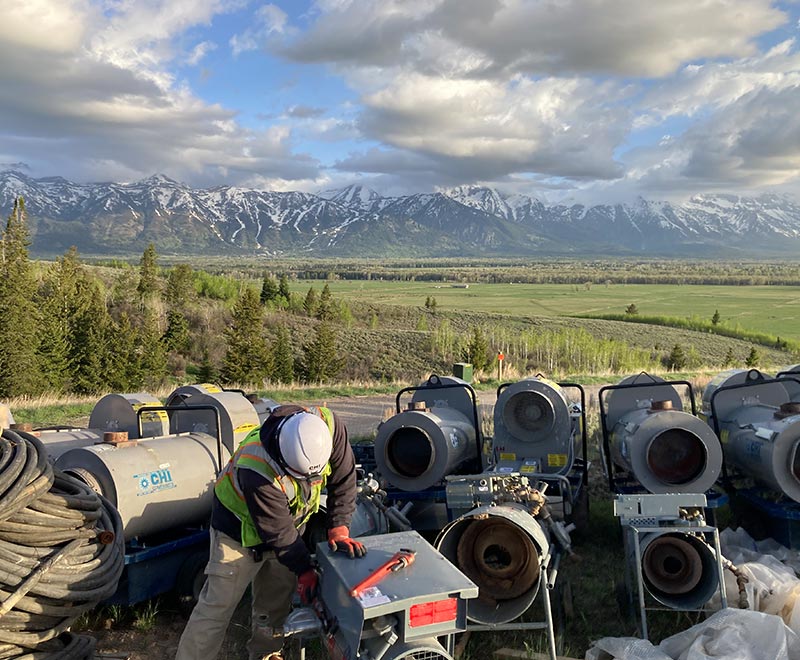
Healthcare facility construction at the Front Range’s major health systems creates sustained demand for precision climate control throughout construction. Denver is a regional healthcare center serving a large catchment area, and the facility construction that expands and improves that capacity is continuous and significant. Hospital renovation requires temperature, humidity, and air quality management in adjacent clinical areas that must remain operational while construction proceeds. We provide the heating, cooling, and HEPA filtration equipment that these projects require, and our team understands the additional coordination that construction in and adjacent to occupied healthcare environments demands.
Data center investment in the Denver metro has accelerated as the Front Range’s available power, land costs, and favorable regulatory environment attract technology infrastructure programs. These campuses require precision cooling for critical-environment construction phases where temperature and humidity tolerances are tighter than standard commercial construction, and heating for winter enclosures on programs that run through the Front Range’s cold season.
Jet Heat flameless heaters are the heating solution of choice for the Denver area’s winter construction season. The Front Range’s elevation and the weather patterns that drive through the I-70 mountain corridor create winter conditions that can drop from comfortable to seriously cold in a matter of hours. Construction in Denver and the surrounding communities from November through March requires heating that performs through those rapid changes, not just in steady cold. Cold-weather concrete curing is a particular planning challenge, as Denver’s winter temperatures regularly drop below zero and year-round construction programs require temperature management for every concrete phase from November through April.
Cooling and ventilation for spring and summer construction are equally important. Denver’s high-altitude UV intensity and rapid temperature increases mean that indoor construction sites heat up faster than in lower-elevation markets. Humidity swings between dry winter air and the July and August monsoon season create changing moisture-management requirements that active climate control addresses year-round.
Call our Denver team or request a quote online. We have the full REIC Rentals network behind this location to meet any volume or specialty requirements.
The range of project types active in the Denver metro simultaneously means that climate control requirements shift dramatically from one project to the next. The equipment for a downtown occupied office renovation is different from that for a Parker multi-family build. The requirements for a UCHealth expansion differ from those for a Cherry Creek retail repositioning. And the needs of an Aurora data center campus differ from all of them. Our Denver team understands those differences and plans equipment selection, sizing, and delivery logistics around the specific requirements of each project type, not a generic specification.
Our Denver location on Holly Street delivers throughout the metro and down the I-25 corridor to Colorado Springs and Pueblo. Colorado Springs is approximately 65 miles south on I-25. Pueblo is approximately 100 miles south. Boulder is approximately 30 miles northwest. For urban core deliveries, our team coordinates site access, delivery timing, and equipment placement logistics in advance to ensure equipment arrives on time and your project stays on schedule.
Can you support occupied commercial renovation projects in Denver’s urban core?
Yes. Temporary HVAC for occupied renovations in Denver’s commercial buildings is a primary application for our Denver location.
We provide heating, cooling, and ventilation equipment that maintains habitable conditions in adjacent occupied spaces when mechanical systems are disrupted during renovation. Our team coordinates equipment placement and operation with your project management and building management teams to minimize the impact on occupants.
What climate control equipment do you carry for Denver’s urban multi-family projects?
For multi-family construction in Denver’s urban core and transit corridors, we provide interior climate control for year-round construction programs: heating for winter concrete curing and enclosed construction phases, cooling for summer interior fit-out, and dehumidification for moisture management during finish installation. For downtown projects with delivery window restrictions, our team coordinates logistics in advance.
Can you serve Colorado Springs and Pueblo from Denver?
Yes. Colorado Springs and Pueblo are within our standard delivery territory. Both markets have active commercial and healthcare construction, which we support with our full range of climate control equipment.
Can you support data center construction in the Denver metro?
Yes. Data center construction in the Denver metro is a project type we support with precision cooling for critical-environment construction phases and heating for winter enclosures. Contact our team with your program specifications and timeline.
What healthcare facility construction equipment do you carry?
For healthcare facility construction, we provide interior climate control for construction-phase temperature and humidity management, HEPA-filtered air scrubbers for infection control during adjacent construction, and the heating and cooling equipment required for hospital and medical office construction. Our team coordinates with your safety and infection control requirements for occupied facility work.