
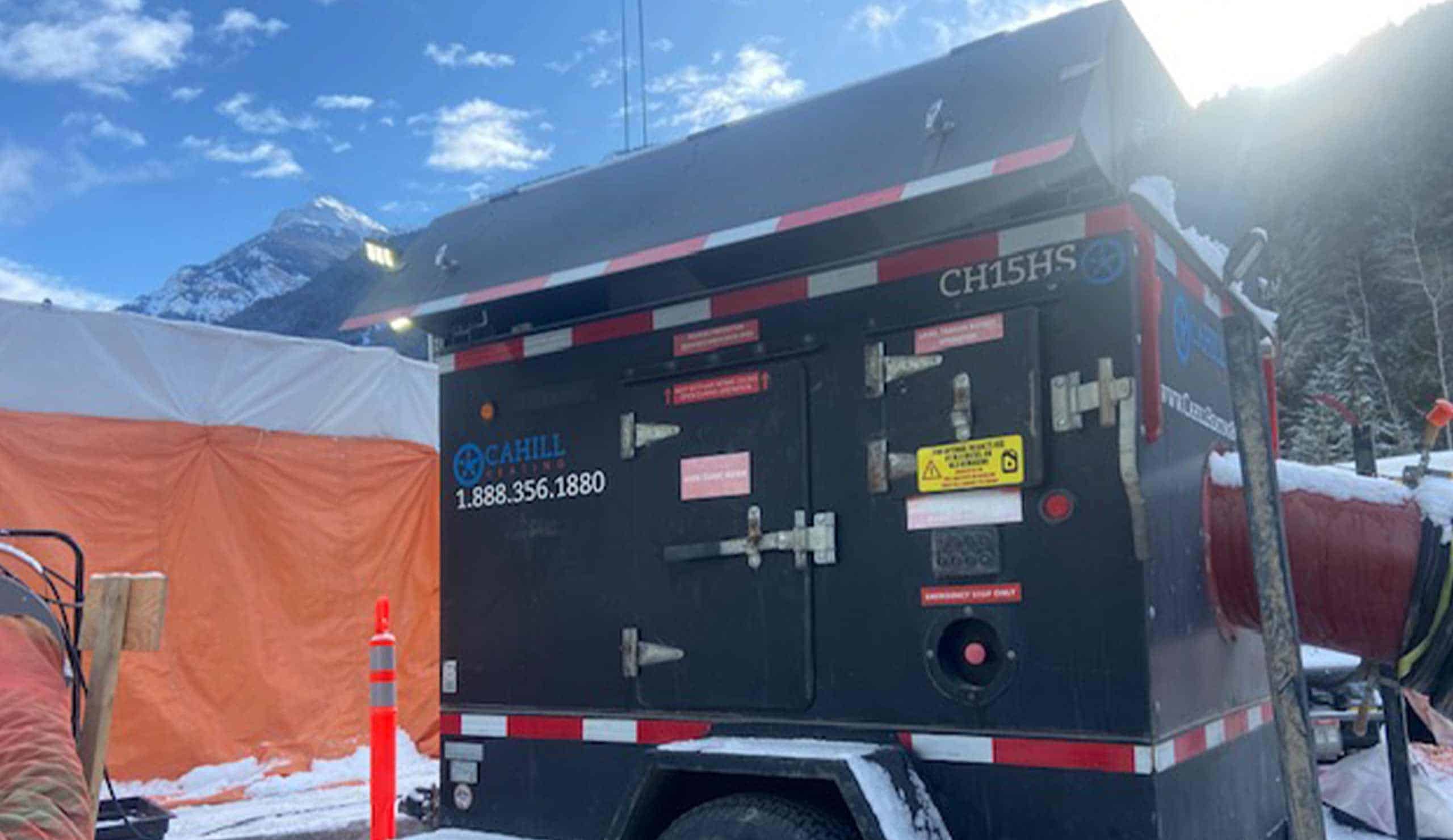
A surface mining operation in Montana in January is one of the most demanding cold-weather work environments in any industry. Crews work in open or semi-open environments at temperatures that can sit well below minus 20 for days at a time. Equipment must function reliably under conditions that push every mechanical system to its limits. And the production schedule does not pause because the conditions are difficult.
Mining operations face a version of the cold-weather productivity and safety challenge that few other industries match in severity. The combination of extreme temperatures, remote locations, physically demanding work, and continuous production requirements creates a heating-planning challenge that goes beyond pointing a standard construction heater at a work area.
REIC Rentals supports mining operations with temporary heating equipment, including indirect-fired heaters and the exclusive Jet Heat flameless system for applications requiring clean heat in remote and demanding environments. This article covers how proper heating directly improves both worker safety and operational output in mining.
Safer Working Conditions in Extreme Cold
The connection between cold conditions and worker safety incidents is well established in occupational health research. Cold stress impairs fine motor control, reduces cognitive function, and slows reaction times. In a mining environment where workers operate heavy equipment, work at height, handle blasting materials, and coordinate with moving machinery, such impairments create a real risk of incidents.
What makes mining environments particularly challenging is that physical exertion from demanding work can mask the core temperature drop that precedes cold stress. A worker performing heavy physical labor in cold conditions may not recognize that their judgment and dexterity are impaired until a mistake or a near miss makes it visible. Providing adequate heating in enclosed work areas, maintenance spaces, and equipment staging areas keeps workers within the temperature range that maintains their physical and cognitive capabilities at full function.
Hypothermia begins when core temperature falls below 95 degrees Fahrenheit. In the temperatures common to winter mining operations in the Northern Plains and Mountain West, that threshold can be reached faster than crews or supervisors anticipate, particularly when wind chill compounds the ambient temperature.
Crew Retention in a Competitive Labor Market
Mining operations in remote locations face a labor market reality that urban construction projects do not: recruiting and retaining skilled trades workers to remote sites is a persistent challenge, and working conditions on site directly affect whether those workers come back.
Providing adequate cold-weather heating is a signal. It tells the crew that the operation has considered their working conditions and invested in them. That signal affects daily performance, communication with supervision, and willingness to accept challenging assignments. Operations that provide adequate heating report better crew retention across winter seasons and greater workforce flexibility when schedule demands require extended effort.
The cost of crew turnover on a remote mining operation, including recruiting, relocation, and orientation time for replacement workers, consistently exceeds the cost of the heating that would have kept the original crew warm and productive through the winter.
Equipment Reliability in Subzero Conditions
Cold weather affects the reliability of mining equipment, compounding the challenges facing crews. Diesel engines take longer to reach operating temperature. Hydraulic systems operate less efficiently in cold fluid conditions. Battery-powered systems discharge faster. Electronic components in control systems operate outside their designed temperature ranges.
Heated equipment staging and maintenance areas reduce cold-start issues that cost production time at the start of each shift. Heated maintenance spaces allow scheduled and unscheduled repair work to proceed at full efficiency rather than slowing as mechanics work in conditions that impair both the technician and the equipment being serviced.
Choosing the Right Heating for Mining Applications
Mining applications present specific constraints on heating equipment selection that standard construction heating guides do not address. Remote locations may have limited fuel supply logistics. Areas with methane or other flammable gas risk require flameless heating equipment. Enclosed maintenance buildings have different requirements from semi-open processing areas. And the scale of some mining operations requires heating solutions that can distribute heat across large footprints without requiring equipment in every zone.
Jet Heat, REIC Rentals’ exclusive patented flameless technology, is particularly well suited to mining applications. Its flameless operation makes it appropriate for areas with gas risk. Its long-distance ducting capability allows a single unit to serve zones that conventional heaters cannot reach without being positioned directly in the work area. And its fuel efficiency reduces the refueling frequency, which creates logistics costs on remote sites. Our teams have experience deploying heating solutions in remote mining environments and understand the access, logistics, and safety constraints that standard construction heating deployments do not face.
Contact REIC Rentals to discuss your mining operation’s cold-weather heating requirements. Request a quote or find a location near you to connect with the team supporting mining operations in your area.
1.888.356.1880 | in**@**ic.com | reic.com
Service You Trust. Equipment You Need.
