
Practical Strategies for Commercial Construction Teams
The first quarter of the year is one of the most unpredictable periods in commercial construction. Winter weather, temperature swings, limited daylight, and saturated schedules all converge at once. For contractors, Q1 often determines whether a project starts the year ahead of plan or spends months recovering from early delays.
Weather doesn’t have to derail productivity. While snow, cold, and moisture are unavoidable, many of the impacts that cause delays can be anticipated and mitigated. Contractors who plan for winter realities, adjust workflows, and deploy the right temporary solutions can keep work moving while competitors wait for conditions to improve.
At REIC Rentals, we work alongside commercial construction teams across North America during the most challenging months of the year. The contractors who stay on schedule in Q1 share one thing in common: they treat weather as a variable to manage, not an excuse to stop work.
Why Q1 Is a High-Risk Period for Delays
The challenges of Q1 go beyond cold temperatures alone. Commercial construction schedules are often compressed after year-end shutdowns, with material deliveries resuming at full speed and multiple trades stacked early to regain momentum.
Common Q1 delay drivers include:
- Cold temperatures affecting concrete, coatings, and finishes
- Snow and ice limiting site access and material movement
- Moisture intrusion from freeze–thaw cycles
- Shorter daylight hours reducing workable time
- Equipment failures caused by cold-weather stress
When these factors collide, even small disruptions can create cascading delays. The key is addressing them proactively—before they stall critical path activities.
Build Weather Planning Into the Schedule, Not Around It
One of the biggest mistakes contractors make in Q1 is treating winter as a temporary interruption rather than a condition that should shape the plan.
Effective winter scheduling includes:
- Identifying weather-sensitive scopes early
- Adjusting sequencing to prioritize interior or protected work
- Allowing for realistic cure and dry times
- Coordinating trades around environmental requirements
Rather than hoping for mild conditions, successful commercial contractors design schedules that assume cold, wet, and variable weather—and still allow progress.
Use Temporary Heating to Protect Productivity
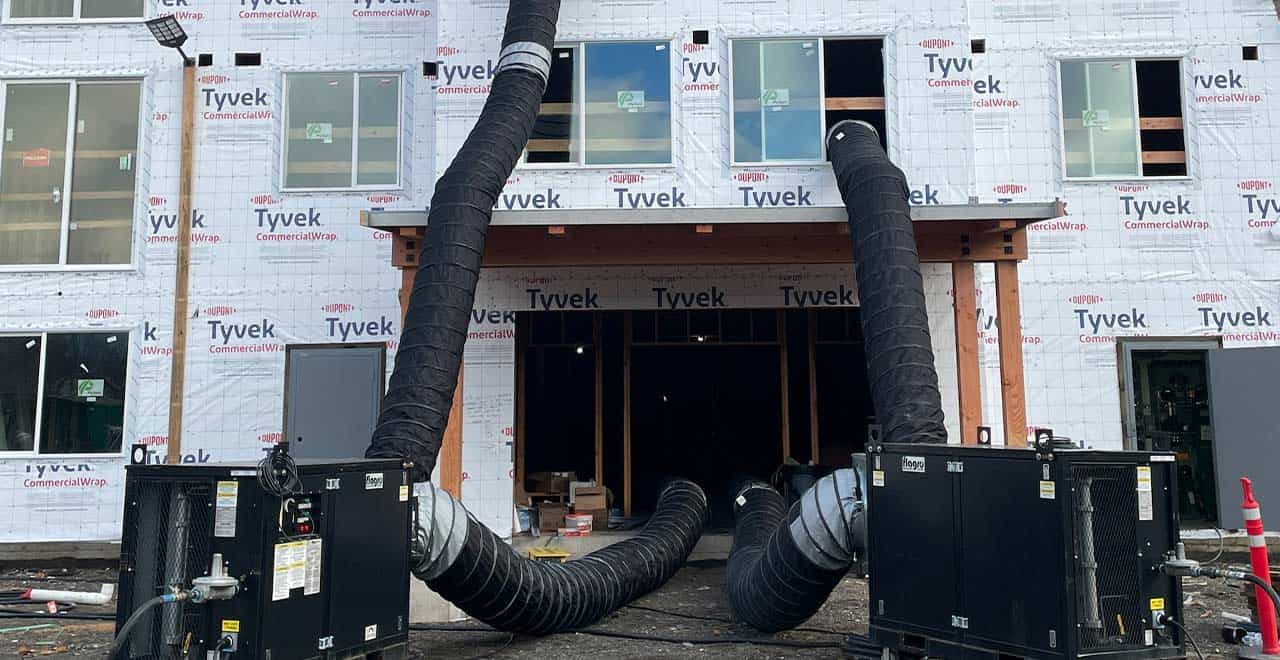
Cold temperatures can halt work fast, especially for concrete pours, masonry, interior finishes, and mechanical installations. Without proper heat, crews are forced to stop, materials fail to perform, and quality suffers.
Temporary heating helps contractors:
- Maintain proper temperatures for concrete curing
- Keep interior trades working on schedule
- Prevent freeze damage to materials and systems
- Support inspections and commissioning
The most effective heating strategies are planned, not reactive. Heating should be sized for the space, integrated with airflow and ventilation, and deployed early enough to stabilize conditions—not just respond to emergencies.
Control Moisture Before It Controls the Schedule
Moisture is one of the most underestimated causes of Q1 delays. Snowmelt, rain, condensation, and humidity can quietly stall progress long after the weather clears.
Unchecked moisture can:
- Delay flooring, paint, and finish installation
- Create rework due to adhesion or curing failures
- Trigger mold concerns and remediation work
- Complicate inspections and approvals
Temporary dehumidification and air movement allow contractors to dry spaces predictably—even when outdoor conditions are unfavorable. By actively managing moisture, teams can maintain momentum instead of waiting for buildings to “naturally” dry.
Plan for Exterior Work With the Right Equipment
Q1 doesn’t eliminate exterior scopes—it makes them harder. Roofing, façade work, steel installation, and utilities still need to move forward, often in snow, wind, and uneven ground conditions.
Reducing weather delays outdoors starts with choosing equipment designed for winter environments:
- Rough-terrain access equipment for icy or muddy sites
- Cold-weather-ready power and lighting for shorter days
- Stable platforms that allow crews to work safely in layered PPE
The wrong equipment slows progress and increases risk. The right equipment allows exterior work to continue safely and efficiently—even when conditions aren’t ideal.
Extend Work Windows With Temporary Power and Lighting
Short daylight hours are a silent productivity threat in Q1. When usable daylight shrinks, crews lose hours unless projects are equipped to operate safely beyond normal daylight windows.
Temporary power and lighting allow contractors to:
- Extend work shifts without sacrificing visibility
- Support early-morning or evening work
- Maintain productivity during overcast or stormy days
- Reduce schedule compression pressure
For projects already behind schedule, extending work windows can be one of the fastest ways to recover lost time—without adding crews or cutting corners.
Reduce Equipment-Related Downtime
Cold weather is hard on machines. Batteries drain faster, hydraulics respond more slowly, and minor issues can escalate into major failures if not addressed promptly.
Contractors can reduce downtime by:
- Using equipment rated for cold-weather operation
- Ensuring proper warm-up procedures are followed
- Scheduling proactive maintenance checks
- Working with rental partners who prioritize uptime
In Q1, equipment reliability matters just as much as availability. A single breakdown can idle multiple trades and create delays that ripple across the schedule.
Coordinate Trades Around Winter Constraints
Winter doesn’t affect every trade equally. Some scopes are highly sensitive to temperature and moisture, while others are more flexible.
Successful Q1 coordination includes:
- Sequencing sensitive trades after stabilization measures are in place
- Aligning mechanical, electrical, and finish work with climate control plans
- Communicating environmental requirements clearly to subcontractors
When trades understand how winter conditions are being managed, they can plan labor and materials with confidence—reducing stoppages and conflicts.
Stage Solutions Instead of Reacting to Problems
The fastest way to lose time in Q1 is reacting to problems after they occur. Waiting for a freeze event, moisture issue, or inspection failure almost always costs more time than preventing it.
Staged solutions may include:
- Pre-installed temporary heat before cold fronts arrive
- Dehumidification running during high-moisture phases
- Backup power available for weather-related outages
By staging solutions in advance, contractors protect critical path work and avoid scrambling when conditions change suddenly.
Choose Partners Who Understand Winter Construction
Reducing weather delays isn’t just about equipment—it’s about experience. Contractors who perform well in Q1 rely on partners who understand winter construction realities and can respond quickly when plans change.
At REIC Rentals, we support commercial construction teams with:
- Job-ready equipment maintained for winter performance
- Practical deployment strategies built around real jobsite conditions
- Fast response when schedules shift or weather worsens
- Local expertise backed by national coverage
We help contractors think through winter challenges before they become scheduling problems.
Keep Momentum Through the Toughest Quarter
Q1 will always test commercial construction projects. Weather, daylight, and site conditions won’t cooperate—but schedules still move forward.
Contractors who minimize delays don’t rely on luck. They plan for winter, actively manage conditions, and deploy the right tools to protect productivity. Temporary heating, moisture control, access solutions, and dependable support turn Q1 from a liability into an opportunity to gain ground.
With the right strategy and the right partners, weather becomes a challenge to manage—not a reason work stops.
REIC Rentals delivers the service you trust and the equipment you need to keep projects moving—no matter the season.
Ready to stay on schedule this winter?
Contact us to discuss your project timeline, site conditions, and winter challenges. Our team will help you build a practical equipment plan that keeps work moving through Q1 and beyond.
