
A Practical Guide for Concrete Contractors
Cold weather is one of the biggest variables concrete contractors face. Once temperatures drop, curing becomes harder to control, schedules tighten, and the risk of surface defects or strength loss increases. In winter conditions, success isn’t just about placing concrete—it’s about maintaining the right environment long enough for the material to perform as designed.
Indirect-fired heating has become one of the most effective tools for protecting cold-weather concrete pours. Unlike open-flame or direct-fired heaters, indirect-fired systems allow contractors to control temperature without introducing combustion byproducts or excess moisture into the curing space. When used correctly, they help stabilize conditions, protect quality, and keep pours on schedule through winter.
REIC Rentals supports concrete contractors with temporary climate control solutions designed specifically for curing and coating environments. From critical path slab pours to large-scale industrial placements, our teams help contractors create consistent conditions that support strength development and reduce rework—no matter the season.
Why Cold Weather Is So Hard on Concrete
Concrete curing is driven by temperature, moisture, and time. When any of those variables fall outside the acceptable range, problems appear quickly.
In cold conditions, contractors often face:
- Slowed hydration that delays strength gain
- Surface freezing that damages the paste structure
- Uneven curing across slabs and vertical placements
- Condensation that weakens the surface finish
- Missed cure windows that delay follow-on trades
Even brief temperature drops can compromise early-age concrete, especially within the first 24 to 72 hours after placement. That’s why environmental control isn’t optional in winter—it’s fundamental to quality.
What Makes Indirect-Fired Heat Different
Not all temporary heat is appropriate for concrete curing. The key difference between indirect-fired and direct-fired heaters lies in how heat is produced and delivered.
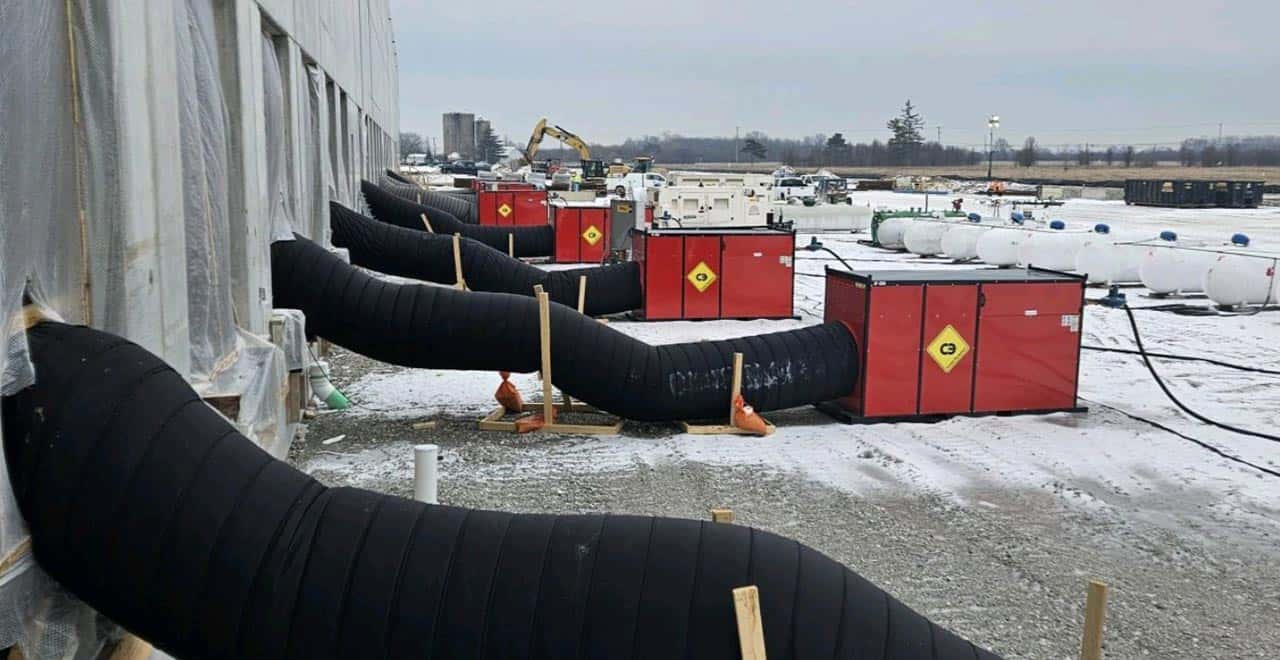
Indirect-fired heaters generate heat in a sealed combustion chamber. The warm air is then transferred through a heat exchanger and delivered to the space via ducting. Exhaust gases and moisture are vented outside the enclosure.
This design offers critical advantages for curing applications:
- Clean, dry heat with no combustion byproducts
- Reduced moisture introduction into the space
- Better control of temperature consistency
- Compatibility with enclosed or contained environments
For concrete contractors, this means more predictable curing conditions and fewer variables that can compromise results.
Temperature Stability Is the Foundation of Proper Curing
One of the most common winter-curing mistakes is chasing temperature rather than controlling it. Turning heaters on and off in response to weather swings creates wide fluctuations that stress concrete during early hydration.
Indirect-fired heating supports:
- Consistent temperature ranges across slabs and forms
- Gradual warm-up and cool-down cycles
- Reduced risk of thermal shock
By maintaining stable ambient conditions, contractors allow hydration to proceed evenly. This improves early strength gain and supports long-term durability—especially on slabs that will receive coatings, flooring, or traffic shortly after cure.
Moisture Management Matters as Much as Heat
Concrete needs internal moisture to cure, but excess ambient humidity or surface condensation can be just as damaging as cold temperatures.
Direct-fired heaters often add moisture to the air as fuel burns, increasing the risk of:
- Surface condensation
- Extended dry times
- Adhesion failures for coatings or toppings
Indirect-fired heat avoids this issue by delivering dry air. When paired with airflow or dehumidification, it allows contractors to manage humidity levels while still protecting the concrete’s internal curing process.
This balance is critical on:
- Polished concrete floors
- Slabs receiving epoxy or urethane coatings
- Industrial floors with strict surface tolerance requirements
Supporting Enclosures and Containment Systems
Cold-weather concrete work often relies on enclosures—temporary structures, tarping, or contained work zones—to isolate the pour from outdoor conditions. Indirect-fired heaters are particularly well-suited for these environments.
Because exhaust is vented outside, indirect-fired systems can be safely ducted into:
- Temporary enclosures
- Buildings under construction
- Containment zones for curing or coating
REIC Rentals works with contractors to stage heating systems that integrate with enclosure layouts, airflow paths, and access points. Proper placement ensures heat is distributed evenly, avoiding cold spots or overheated areas that can create curing inconsistencies.
Reducing Rework and Inspection Failures
In many projects, curing quality directly affects inspection outcomes. Surface defects, inconsistent hardness, or moisture-related issues can trigger delays long after the pour is complete.
Indirect-fired heat helps reduce:
- Scaling and surface dusting
- Curling caused by uneven temperature exposure
- Moisture-related coating failures
- Missed strength benchmarks
By stabilizing the curing environment, contractors increase the likelihood that concrete meets specifications the first time, saving time, labor, and material costs associated with repairs or remediation.
Protecting the Schedule on Critical Path Pours
Winter doesn’t pause schedules. Structural slabs, foundations, elevated decks, and industrial placements often sit squarely on the critical path. Delays during curing can ripple through the entire project.
Indirect-fired heating supports schedule control by:
- Allowing pours to proceed in colder temperatures
- Shortening the time to reach the required strength
- Enabling earlier access for finishing and follow-on trades
Instead of waiting for favorable weather, contractors can plan pours with confidence, knowing environmental conditions can be managed proactively.
Pairing Heat With Airflow and Environmental Control
Heating alone isn’t always enough. For many curing scopes, especially on large slabs or industrial projects, indirect-fired heat works best as part of a broader environmental control strategy.
REIC Rentals commonly supports concrete contractors with integrated solutions that include:
- Indirect-fired heaters for clean, controlled warmth
- Ventilation to improve air circulation and temperature uniformity
- Dehumidification to manage moisture and dew point
- Temporary power and lighting to support extended work windows
This approach allows teams to fine-tune conditions to project requirements rather than relying on a single tool to address multiple challenges.
Applications Where Indirect-Fired Heat Excels
Indirect-fired heating is widely used across concrete scopes where quality and consistency matter most, including:
- Structural slab pours in winter conditions
- Industrial floors requiring coatings or linings
- Bridge decks and infrastructure placements
- Contained curing environments on large sites
- Repair, rehabilitation, and maintenance projects
In these environments, small deviations in temperature or humidity can have outsized consequences—making indirect-fired heat a preferred solution.
Why Equipment Selection and Staging Matter
Even the right heater can underperform if it’s improperly sized or staged. Factors such as enclosure volume, outdoor temperature, wind exposure, and airflow patterns all affect performance.
REIC Rentals supports contractors by:
- Recommending heater capacity based on surface area and enclosure details
- Designing staging plans that distribute heat evenly
- Adjusting solutions as conditions change
This practical, jobsite-driven approach helps contractors avoid underheating, overheating, or inefficient setups that waste fuel and compromise curing.
Building Confidence Into Winter Concrete Work
Cold-weather concrete doesn’t have to mean higher risk. With the right environmental controls in place, contractors can pour, cure, and finish with confidence—even during the toughest months of the year.
Indirect-fired heat plays a central role in that strategy. By delivering clean, dry, consistent warmth, it protects concrete during its most vulnerable stages and supports the quality outcomes projects depend on.
REIC Rentals partners with concrete contractors to provide the equipment, expertise, and staging support needed to control curing conditions, reduce rework, and maintain schedules.
Need to control temperature and humidity for a concrete curing scope?
Contact us with your surface area, enclosure details, timeline, and target conditions, and our team will recommend the right equipment along with a practical plan that supports your workflow from placement through cure.
