
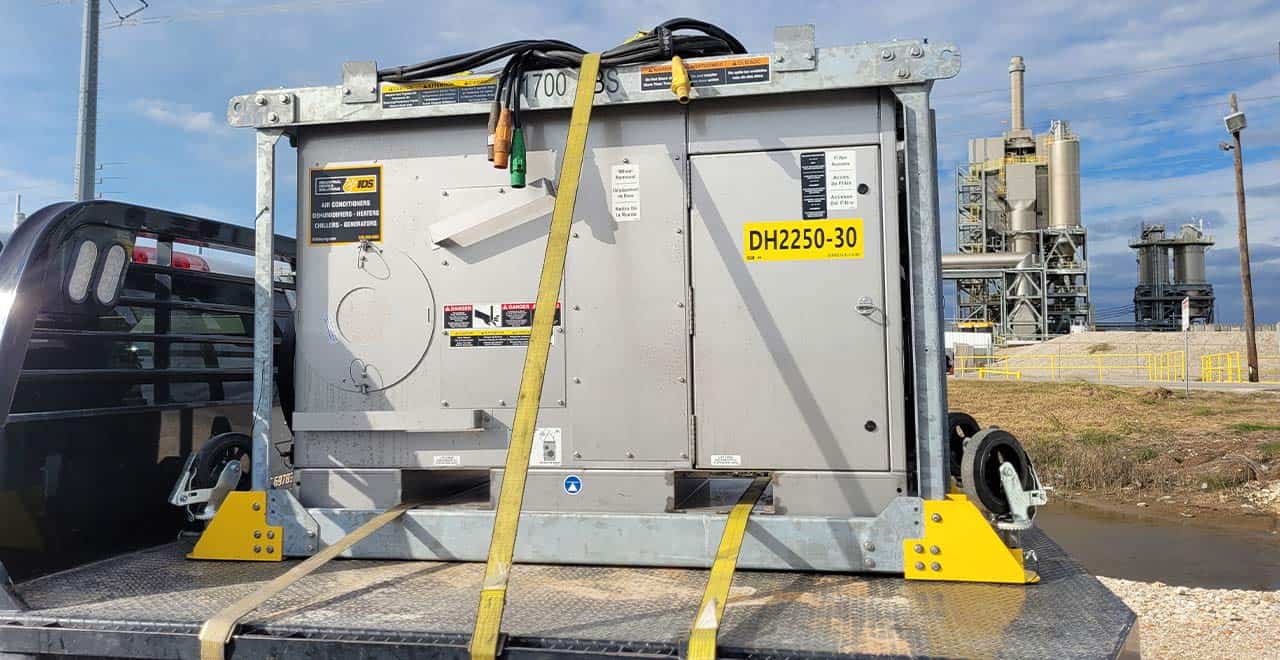
Moisture is one of the most consistent threats on industrial job sites, and one of the most overlooked. When humidity goes unmanaged in a large workspace, the consequences compound quickly: mold takes hold, materials degrade, equipment corrodes, and workers operate in conditions that affect both their health and productivity.
Industrial dehumidification addresses all of that. Not as a luxury or a precaution, but as a core requirement for maintaining a safe, compliant, and functional work environment. This article covers what industrial dehumidification actually does, where it matters most, and how REIC Rentals supports deployments across construction, industrial, and commercial settings.
What Industrial Dehumidifiers Do
Industrial dehumidifiers remove excess moisture from the air in large, complex environments. That sounds straightforward, but the impact on a job site is significant and touches nearly every aspect of operations.
Preventing Mold, Mildew, and Airborne Contaminants
High humidity creates the conditions mold and mildew need to grow. Once established, mold releases spores into the air that cause respiratory issues, allergic reactions, and in some cases, long-term lung damage for workers with repeated exposure. Controlling moisture is the first line of defense.
Beyond mold, humidity elevates concentrations of dust mites, bacteria, and other airborne particulates. Reducing moisture levels lowers the overall contaminant load in the air, which directly benefits worker health over the course of a project.
Protecting Equipment and Materials
Moisture is damaging to almost everything on a job site. Precision machinery corrodes. Electronic components fail. Structural materials absorb moisture and lose integrity. Coatings and finishes will not cure properly in high-humidity conditions, which means rework and delays.
A reliable dehumidification system running throughout a project protects the investment in equipment and materials and avoids downstream costs, such as repairs, replacements, and schedule disruptions.
Reducing Slip-and-Fall Risk
Condensation buildup on floors and equipment surfaces is a direct safety hazard. In industrial and construction environments where workers move quickly and carry loads, slippery surfaces can cause accidents. Dehumidification controls condensation at the source, reducing the likelihood of moisture accumulating where workers are active.
Supporting Regulatory Compliance
Many industries operate under strict environmental and air quality regulations. Construction projects have specific moisture requirements for coatings, adhesives, and structural work. Food processing and healthcare facilities face hygiene standards that depend on moisture control. Maintaining proper humidity levels is not just good practice; it is often a compliance requirement.
REIC Rentals can help project teams identify the right equipment to maintain the moisture levels their operations require and document conditions when that matters for regulatory purposes.
Maintaining Worker Comfort and Productivity
Excessive humidity makes physical work harder. Heat index rises, fatigue sets in faster, and concentration drops. In environments where workers are in enclosed spaces for extended periods, humidity management is a direct productivity factor. Getting it right keeps crews working effectively rather than forcing them to work through conditions that slow everything down.
Where Industrial Dehumidification Is Needed
Dehumidification requirements vary by industry, but the underlying problem is consistent: uncontrolled moisture causes damage, creates risk, and disrupts operations. Here is where we see it deployed most regularly.
Industry | Why Moisture Control Matters |
Construction | Accelerates drying of coatings, finishes, and concrete; prevents mold in new builds |
Manufacturing | Protects sensitive materials, components, and precision equipment from moisture damage |
Warehousing and Storage | Prevents moisture-related deterioration of inventory and stored goods |
Food Processing | Maintains hygiene compliance by controlling moisture and inhibiting mold growth |
Healthcare Facilities | Supports sterile, comfortable conditions for patients, staff, and sensitive equipment |
Restoration and Remediation | Removes moisture following water damage to protect structural integrity and air quality |
Restoration and remediation work deserve particular attention. After water intrusion from flooding, pipe failures, or weather events, rapid and thorough dehumidification is critical to preventing structural damage and secondary mold growth. Speed matters in those situations, and equipment availability and response time directly affect outcomes.
Choosing the Right Dehumidification Solution
Not every job requires the same equipment. Getting dehumidification right means sizing the system to the space, accounting for the moisture load, and deploying it in a configuration that actually reaches the areas that need it.
Key factors that shape equipment selection include:
- The cubic footage of the space and how air moves through it.
- The source and volume of moisture entering the environment.
- Temperature ranges during operation, since dehumidifier performance varies with temperature.
- The project’s duration and whether conditions will change over time.
- Whether the application requires continuous operation or targeted intervention.
Our team works through these factors with customers before any equipment is specified. Deploying the wrong size unit wastes time and money. Getting it right the first time keeps the project on schedule.
How REIC Rentals Supports Dehumidification Deployments
REIC Rentals provides industrial-grade dehumidification equipment as part of a full climate control rental offering that includes temporary heating, cooling, and ventilation solutions. Our fleet includes high-capacity units capable of removing significant volumes of moisture daily, sized for large-scale commercial and industrial environments.
What we bring beyond the equipment:
- Site assessment and equipment sizing. We evaluate the space, the moisture load, and the operational requirements before recommending a solution. The goal is the right equipment in the right configuration, not the nearest available unit.
- Delivery, setup, and startup support. Our team handles delivery and installation, and ensures the system is running correctly before we leave the site.
- 24/7 support during the rental period. Industrial operations do not stop at 5 PM, and neither do we. If something needs attention during the rental, our team is reachable around the clock.
- Integrated climate control packages. Dehumidification rarely works in isolation. We can build packages that combine dehumidification with temporary heating, cooling, ventilation, and airflow solutions to address the full scope of climate control for a project.
Renting dehumidification equipment from REIC Rentals means you have access to the right equipment without the capital cost of ownership, backed by a team that understands how these systems need to perform in demanding environments.
Moisture Control Is a Project Management Decision
Uncontrolled humidity is not just an air quality issue. It is a schedule risk, a safety liability, a compliance concern, and a threat to materials and equipment. Addressing it with the right equipment from the start of a project is the kind of decision that pays for itself in avoided rework, fewer incidents, and crews that can work at full capacity.
If your project involves large enclosed spaces, moisture-sensitive materials, construction timelines with curing requirements, or industries with strict environmental standards, dehumidification should be part of your equipment plan. Our team can help you determine what you need and get it on site when you need it.
Talk to our team about dehumidification and climate control solutions.
1.888.356.1880 | in**@**ic.com | Get a Quote
Service You Trust. Equipment You Need.
