
IT commissioning deadlines, interconnection milestones, and colocation lease start dates do not move because temperatures drop. A data center build with a Q1 go-live date has its most schedule-critical interior phases, MEP rough-in, white-space fit-out, and integrated systems testing, sitting directly in the coldest months of the year. Cold weather is not an excuse to move a lease start date. It is a planning variable that project teams are responsible for managing.
What makes cold weather genuinely dangerous to a data center schedule is not the cold itself. It is the collision between winter months and fixed delivery pressure. Weather-driven stoppages on foundations and structures compress the commissioning window. When integrated systems testing slips, interconnection obligations and tenant commitments are at risk. The downstream cost of those missed milestones consistently exceeds what proactive winter planning would have cost.
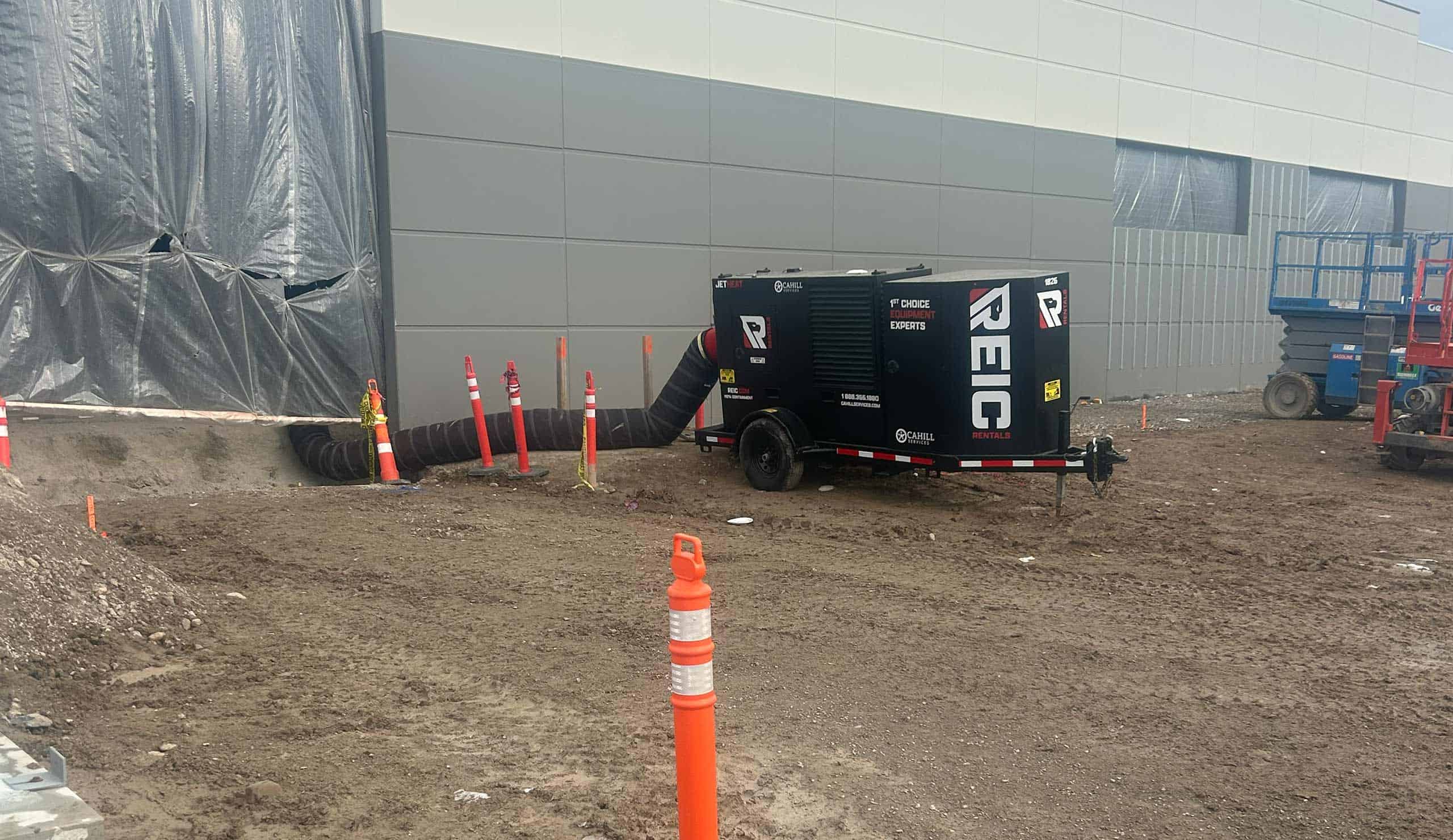
REIC Rentals supports data center construction and fit-out with temporary heating, dehumidification, generators, and power distribution equipment that keep cold-weather builds on track. This article covers schedule protection strategies from preconstruction through commissioning.
How Cold Weather Attacks the Data Center Schedule
Cold temperatures affect the data center’s critical path from both ends simultaneously. Early-phase activities, including foundations, underground utility duct banks, and structural steel, erect more slowly under freezing conditions. Late-phase activities, including integrated systems testing and carrier turn-ups, get compressed into whatever time remains. The schedule pressure compounds as the delivery date approaches.
The specific phases most vulnerable to cold weather schedule impact:
- Foundations and underground duct banks: frozen ground delays trenching for electrical and fiber infrastructure, storm lines, and under-slab conduit.
- Structural steel erection: wind chill and snow events slow setting and push dry-in milestones that drive MEP start dates.
- MEP rough-in: adhesives may not bond at low temperatures, complicating ductwork sealing and equipment mounting.
- Mechanical yard installation: exposed coils and piping on chillers and dry coolers risk freeze damage during installation and testing.
- White-space fit-out: cold and humidity cause condensation on bus ducts, switchgear, and cable trays; temperature-sensitive materials require heated storage.
The downstream effect is what matters most. Weather-driven stoppages in the early phases compress the commissioning window. If integrated systems testing slips, interconnection and colocation lease obligations are at risk. In high-demand markets where data center space is committed months before completion, those missed dates carry real financial consequences.
Building Winter Into the Baseline Schedule
Schedule protection for cold-weather data center builds starts in preconstruction, not when the first snowstorm arrives. Winter construction planning must be embedded in the baseline CPM schedule from day one, rather than added as a contingency note after the baseline is set.
Use historical climate data from NOAA 30-year normals for the specific project location to model likely temperature, snowfall, and freezing days for the December through March window. That data converts weather risk into quantifiable schedule impact: the number of days when specific activities will be restricted or impossible, and the buffer required to absorb them without compressing the commissioning window.
Integrate winter-mode calendars into the CPM schedule, applying reduced productivity factors to outdoor tasks and using explicit cold-weather activity codes. Monitor daily weather forecasts to make informed sequencing decisions and communicate adjustments to the full project team before schedule impacts accumulate.
Front-load sitework and structure in shoulder months, September through November, so that December through February focuses on enclosed, conditioned interior work. That sequencing is the single most cost-effective schedule-protection measure available in a data center build because it converts the highest-risk outdoor phases into protected interior phases before the worst cold arrives.
Align procurement of temporary heating, power distribution, and dehumidification equipment early. Letters of intent or framework agreements with REIC Rentals prevent supply chain disruptions and eliminate last-minute scrambles during the cold season. The equipment that protects the schedule must be confirmed before the schedule pressure makes it urgent.
Sequencing Strategies: Keeping Work Inside During the Coldest Months
Strategic sequencing is the most cost-effective schedule protection tool available, and it does not require additional budget. The goal is to achieve building dry-in and temporary power before the first sustained freeze so that interior crews can work through January and February regardless of outdoor conditions.
An example sequence that has worked on cold-climate data center projects:
- August groundbreaking through October: structure topped out, building enclosure advancing
- November: envelope substantially complete, critical spaces including electrical rooms and network rooms enclosed
- December through February: interior MEP rough-in and fit-out proceed in conditioned space
- March: commissioning launches on schedule
Reorder tasks so that weather-exposed work, including roofing, mechanical yard pads, exterior generators, and fuel infrastructure, targets the most temperate available windows. Early enclosure of the first data hall and electrical rooms allows interior crews to work independently of outdoor conditions throughout the winter.
REIC Rentals supports accelerated enclosure and interior readiness with temporary heat, power distribution, and moisture control, enabling project teams to flip the building into interior jobsite mode sooner and protect the project timeline through the worst of winter.
Cold-Weather Concrete, Groundwork, and Structural Protection
Early-phase civil and structural work is where schedule damage typically starts and cascades most severely. Frozen ground delays trenching for electrical and fiber duct banks, storm lines, and under-slab drainage. Concrete poured or cured below 40 degrees Fahrenheit requires protection to achieve its design strength within the schedule’s timeline.
Without achieving at least 500 psi compressive strength before exposure to freezing, concrete can lose a significant portion of its long-term design strength. Cold-weather concrete mixes, including air-entrained mixes, accelerators, and warm-batch water, maintain adequate hydration rates but require heated enclosures or insulated protection to achieve specification during the curing period.
REIC Rentals supplies temporary heating equipment and generators to run them continuously during multi-week cold snaps, helping construction teams maintain pour dates and avoid re-baselining structural milestones. Keeping crane pads, laydown areas, and access roads free of ice and snow through active clearing and temporary lighting maintains productivity for steel erection and panel installation throughout the shoulder season.
Maintaining Interior Conditions for MEP Rough-In and White-Space Fit-Out
Interior MEP rough-in and data hall fit-out require controlled environments. Typical working temperature ranges for electrical gear, low-voltage cabling, and finishes fall between 45 and 80 degrees Fahrenheit. Humidity must stay within manufacturer-specified ranges, generally 40 to 60 percent relative humidity, to protect bus duct, switchgear, and sensitive electronics from condensation.
The risks of inadequate interior climate control are direct and expensive. Condensation on bus duct and switchgear requires inspection and, if necessary, replacement before energization. Brittle cable jackets that crack during cold-weather pulling lead to rework and retesting, consuming commissioning time. Failed adhesive or caulk bonds force trades to return to completed work zones.
REIC Rentals designs turnkey temporary climate systems for large-volume data halls, including heating, dehumidification, and HVAC accessories, with fuel management and distribution ducting to maintain stable conditions across large floor plates throughout the winter production window.
Protecting Cooling Systems and Mechanical Yards in Winter
Data center cooling infrastructure, chillers, dry coolers, cooling towers, and computer room air handlers have exposed coils and piping that are vulnerable to freezing during installation and testing in cold weather. Delayed chiller startup, freeze damage to coils, and postponed integrated testing all directly affect the commissioning schedule.
Tactics that protect the cooling system schedule:
- Temporary enclosure tents over mechanical yard equipment during installation to prevent direct exposure to the weather.
- Spot heating on critical components, including coil sections and exposed pipe headers, to permit earlier functional testing.
- Glycol fill protection on newly installed chilled water systems before they are fully commissioned and temperature controlled.
- Phased commissioning brings individual cooling systems online as each reaches a protected and testable state, keeping commissioning moving in parallel with ongoing installation rather than behind a full mechanical yard completion gate.
Without reliable cooling, full-load tests, battery and UPS heat runs, and IT thermal testing slip past contractual deadlines. REIC Rentals engineers temporary systems that support phased commissioning even in January and February, keeping integrated systems testing on the calendar rather than pushed into spring.
Commissioning, Integrated Systems Testing, and Turnover Under Winter Conditions
Late-stage schedule protection is when the stakes are highest on a data center project. Commissioning phases are when cold weather poses risks, including the inability to meet heat-load targets during testing, frozen exterior piping, and limited vendor access. Planning commissioning windows that assume winter ambient conditions rather than ideal weather is what separates projects that close on time from those that absorb cost overruns in the final weeks.
Interconnection milestones, including fiber turn-ups and cross-connect testing with carriers, often tie to specific calendar dates. These deadlines can trigger liquidated damages or lost revenue if missed. They are not internal project milestones. They are contractual commitments that cold weather is not a recognized force majeure event for.
Document all weather-related disruptions against the baseline schedule throughout the project. Every weather delay, every productivity reduction, and every sequence adjustment should be logged. That documentation manages client expectations and supports any schedule-claim process if delays compound beyond what the contingency can absorb.
REIC Rentals supports commissioning by providing temporary power distribution, environmental control, and 24/7 service support, enabling integrated systems testing even during severe cold spells.
Winter Safety and Productivity: Two Parts of the Same Problem
A data center build that finishes on time but injures a crew member on an icy crane pad has not finished well. Protecting the schedule and protecting the people on it are not separate programs. They are the same program, and treating them separately produces gaps in both. Well-heated, enclosed work zones reduce cold-stress incidents and allow trades to maintain planned hours through the winter. Heated break areas positioned close to active work zones maintain the rotation frequency that keeps crews productive across the full shift without the cumulative cold exposure that slows output and increases incident risk as the day progresses. Regular snow removal and anti-slip treatment on access routes and building circulation paths maintain productivity on days when outdoor conditions would otherwise slow the site to a fraction of planned output.
Request a quote or find a location near you to build a cold-weather schedule protection plan for your next data center project before the winter window creates pressure.
1.888.356.1880 | in**@**ic.com | reic.com
Service You Trust. Equipment You Need.
