
A seltzer plant running a January production surge watches fill-room temperatures drift 10 degrees below target. Carbonation volumes go out of spec. Fill weights become inconsistent. A bakery sees its proofing room drop below the threshold where yeast activity slows, and chocolate glazes begin to seize. Neither facility can afford to stop. Both need a heating solution that can be in place and operational before the next shift starts.
Food and beverage processing plants face a version of the winter heating challenge that general manufacturing does not. Process sensitivity, ingredient behavior, and sanitation standards create a narrower margin for error when ambient temperatures drop. A temperature deviation that would be a productivity inconvenience in a warehouse is a quality event, a compliance issue, or a food safety deviation in a food plant. Getting it right requires equipment matched to the specific zone, process, and regulatory environment.
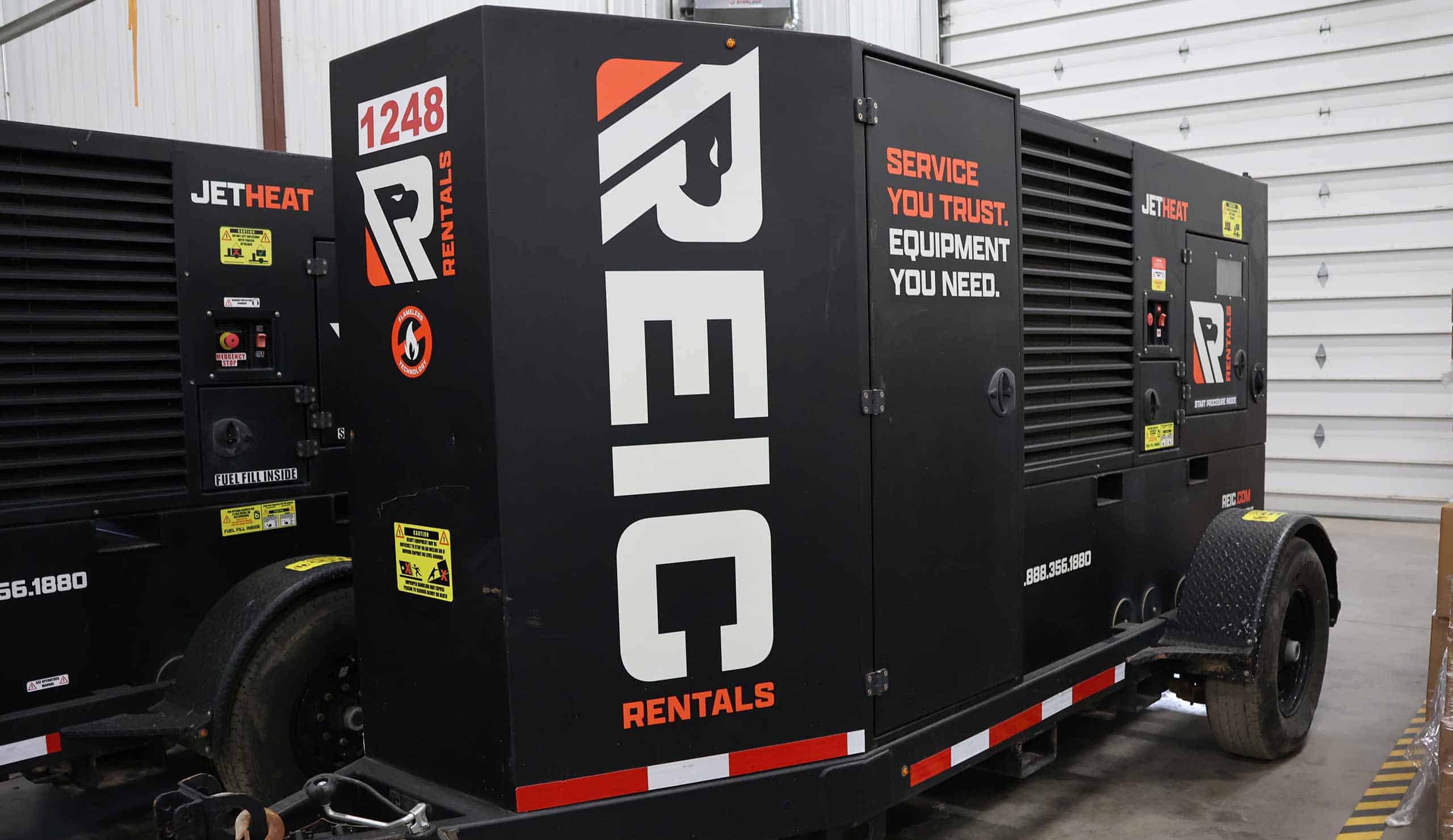
REIC Rentals provides temporary heating solutions for food processing plants and food storage facilities, including indirect-fired heaters, electric heaters, and the exclusive Jet Heat flameless system, which is suited to the environmental requirements of food plants. This article covers the specific winter challenges in food and beverage manufacturing and how to develop a heating strategy to keep production on specification throughout the cold season.
How Cold Ambient Temperatures Affect Food and Beverage Processing
Cold ambient conditions affect food and beverage production through mechanisms that are specific to the products, processes, and regulatory frameworks of each segment.
Ingredient viscosity is one of the most operationally disruptive effects. Oils, chocolate coatings, syrups, and beverage concentrates increase in viscosity significantly as the temperature drops. Sugar solutions risk crystallization below saturation thresholds, causing line blockages and product defects that require manual intervention to clear. On high-speed filling lines, even small ambient temperature drifts change flow characteristics enough to push fill weights out of specification.
Carbonation is particularly sensitive. CO2 solubility increases as liquid temperatures drop, meaning fill rooms that drift even a few degrees below target can produce over-foaming, underfilling, or off-specification carbonation in beverages with tight tolerance requirements. Fermentation and proofing rooms that lose ambient heat slow biological processes, extending batch cycles and reducing daily output.
Packaging integrity is a downstream consequence of cold conditions that is easy to underestimate. Label adhesives, shrink-wrap films, and carton gluing systems require ambient air temperatures above approximately 60 to 65 degrees Fahrenheit to cure properly. Below that threshold, reject rates climb, and rework adds labor cost that compounds across every production shift.
Sanitation effectiveness is a food safety issue rather than simply an operational one. Cold ambient conditions extend drying times for foaming agents and disinfectants and can compromise the effectiveness of sanitation cycles in ways that affect the regulatory standing of the facility, not just its throughput.
Why Temporary Heating Is the Right Tool for Seasonal Food Plant Challenges
Temporary heating provides targeted, deployable capacity to bridge the gap between existing HVAC and the actual heat demand created by winter conditions, without permanent capital investment that outlasts the seasonal need.
For food and beverage plants experiencing Q4 holiday production surges, January ready-meal demand peaks, or Valentine’s and spring-season bakery runs, the heating requirement is both time-limited and operationally specific. A carbonated beverage plant adding capacity for a January promotion window needs fill-room temperature stability for eight to twelve weeks. A dairy plant managing holiday demand does not need a permanent HVAC upgrade. It needs temporary heating that is in place, operational, and documented before the production peak begins.
The economics of temporary heating in food manufacturing are straightforward. The cost of rental equipment across a production peak is a fraction of the cost of a single quality hold, a rework cycle, or a failed sanitation inspection. The alternative to temporary heating is not simply reduced comfort. It is reduced throughput, elevated defect rates, and, in regulated food environments, potential corrective action requirements under FSMA preventive controls.
Heating Equipment for Food and Beverage Environments
REIC Rentals provides heating equipment selected for the specific requirements of food manufacturing zones. Equipment type is determined by the zone’s occupancy, ventilation conditions, proximity to food contact surfaces, and regulatory requirements for the space being served.
Indirect-fired heaters heat air through a heat exchanger, producing clean, dry air suitable for enclosed, worker-occupied spaces. For packaging halls, warehouse picking zones, and any area where workers are continuously present and where combustion byproducts cannot be tolerated, indirect-fired heaters are the standard choice. They are also appropriate for areas adjacent to food processing where air quality management is a compliance requirement.
REIC Rentals’ exclusive Jet Heat flameless technology delivers dry heat with no open flame and no combustion emissions at over 97 percent efficiency. For areas where any combustion risk or emission is unacceptable, including aseptic filling rooms, ingredient-sensitive zones, and spaces with specific regulatory air quality requirements, flameless heating is the appropriate choice. Jet Heat’s long-distance ducting capability also allows the heating unit to be positioned outside the sensitive production zone with conditioned air delivered precisely where it is needed.
Electric heaters provide clean, emission-free operation in enclosed areas where an electrical supply is available and the heating requirement is localized. They are suitable for small enclosed ingredient storage areas, control rooms, and quality lab spaces where combustion equipment of any type is not appropriate. Direct-fired heaters are appropriate for outdoor staging areas, dock approaches, and large, well-ventilated spaces where combustion byproducts can dissipate, but they are not appropriate for enclosed food processing areas where workers are present or where product is at risk of contamination from combustion products.
Right-Sizing for Processing, Packaging, and Storage Zones
Heat load calculations in food and beverage processing plants are more demanding than in general industrial settings. Tight temperature specifications, product quality requirements, and sanitation conditions that lead to cold, wet floors and elevated moisture loads all affect the sizing calculation.
Segmented zone planning is the approach that produces accurate sizing without waste. Ingredient storage may require holding above 45 degrees Fahrenheit. Packaging halls target 65-70 degrees Fahrenheit. Proofing or fermentation rooms require temperatures between 72 and 80 degrees Fahrenheit. Each zone has different temperature requirements, different occupancy patterns, and different infiltration loads from dock doors, washdown cycles, and existing HVAC capacity. Applying a single sizing rule across the entire facility results in equipment that is wrong for most of the zones it is intended to serve.
Temperature stratification is a specific sizing challenge in high-bay food plant spaces where warm air rises to the ceiling while floors remain cold. This creates both safety risks from cold, wet floor surfaces and condensation risks when cold floor-level air contacts warmer surfaces. Air movement planning, alongside heating equipment selection, addresses stratification rather than simply adding more heating capacity.
REIC Rentals conducts site assessments using facility drawings and historical temperature data for the specific project location to determine BTU requirements by zone rather than by total plant area. Request a quote to discuss a zone-by-zone heating assessment for your facility.
Fuel Supply and Food Safety Compliance
Fuel supply reliability is a critical operational requirement during winter production peaks, particularly for facilities running around the clock across the coldest months of the year.
Natural gas provides a continuous supply where utility connections exist and is the preferred fuel type for facilities with permanent gas infrastructure that can be accessed during temporary heating deployments. Diesel provides flexibility for installations where gas supply is unavailable, though cold-weather fuel quality management is required to prevent gelling during sustained freeze conditions. REIC Rentals coordinates fuel supply planning, including on-site bulk tank arrangements and scheduled delivery logistics, as part of the heating deployment.
Food safety requirements for temporary heating go beyond equipment selection. Exhaust must be ducted away from all food-processing areas and food-contact zones. Air intakes must be protected from contamination. Heaters serving areas adjacent to open food products must be positioned and ducted to prevent combustion byproducts from contacting the product or packaging.
REIC Rentals provides specification sheets, safety documentation, and layout drawings to support internal EH&S reviews, corporate quality team approvals, and third-party food safety audits. That documentation is part of every food plant deployment, not an optional addition.
Applications Across Food and Beverage Segments
Different segments of food and beverage manufacturing face distinct winter challenges that temporary heating addresses differently. Beverage manufacturing, including carbonated soft drinks, beer, and hard seltzer, requires stable fill-room temperatures to control carbonation, manage fermentation, and ensure filling accuracy. Bakery and snack production depends on controlled proofing room temperatures, mixing room stability, and warm enough conditions for chocolate and coating applications to perform correctly. Dairy and liquid food plants, including yogurt fermentation, fluid milk packaging, and aseptic lines, require ambient conditions that protect seal integrity and process stability. Frozen and chilled ready-meal facilities managing Q4 and Q1 demand peaks need controlled temperature gradients between freezer areas, refrigerated processing rooms, and ambient pack-out zones throughout the production surge.
Consumer demand for consistent year-round product availability means food plants cannot absorb the throughput and quality losses caused by unmanaged cold conditions. Temporary heating during winter production peaks is what makes that consistency operationally achievable.
Planning Ahead for Winter Production Peaks
The most effective temporary heating strategies for food and beverage plants are planned in late summer or early fall, before winter demand competes for rental equipment inventory across the region.
A practical pre-season planning process starts with reviewing prior winter incidents: line slowdowns, sanitation rework cycles, quality holds, and reject rate increases that can be traced to ambient temperature conditions. Mapping cold-risk zones and setting target temperatures by room before engaging REIC Rentals for a site assessment produces a heating plan specific to the actual production layout and schedule, rather than a generic approach applied regardless of the facility’s operations.
Share process flow information, projected seasonal production volumes, and any planned construction or retrofit work with REIC Rentals so temporary heating can be designed around the actual production schedule. Cross-functional coordination between operations, quality, maintenance, and EH&S during the planning phase ensures that temporary heating supports both productivity and regulatory compliance from the first day of the cold season. Find a location near you or request a quote to begin your winter heating plan before peak production demand arrives.
1.888.356.1880 | in**@**ic.com | reic.com
Service You Trust. Equipment You Need.
