
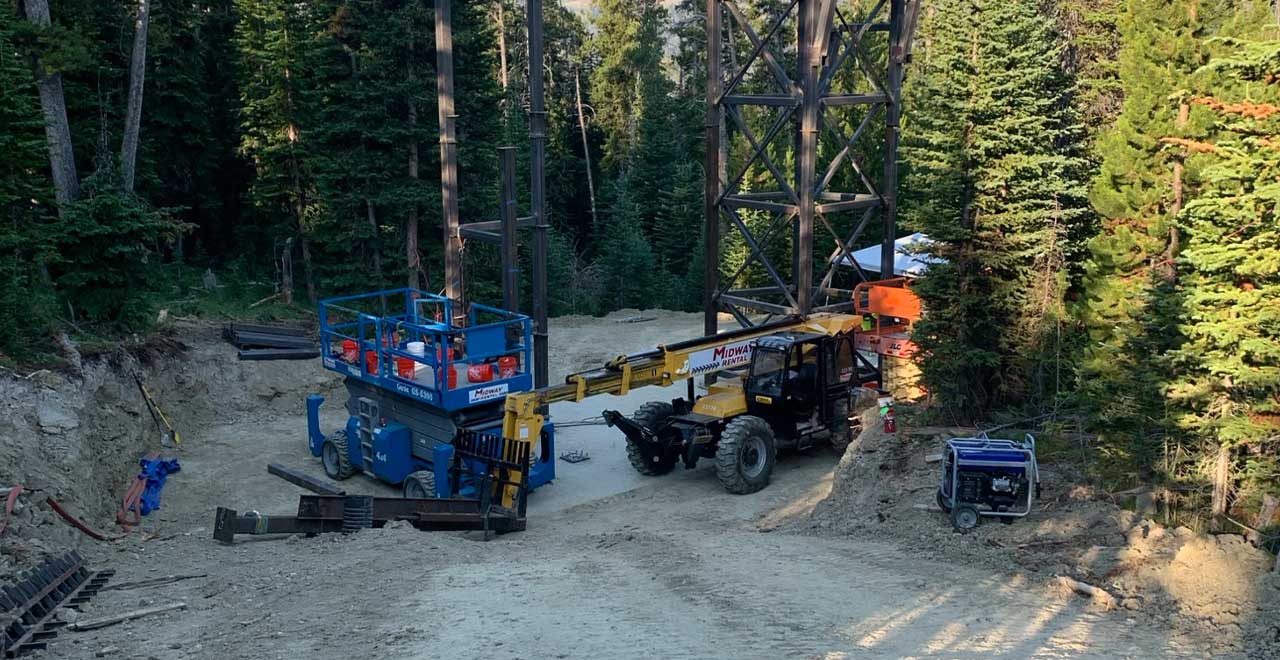
Equipment utilization measures the percentage of productive hours out of total available hours. For contractors managing owned and rented fleets across construction, industrial, and infrastructure projects, this metric separates profitable operations from those bleeding cash on idle iron. The question is straightforward: are your machines working when they should be, or are they sitting on jobsites generating costs without generating value?
Tight project margins leave no room for waste. Higher interest rates on equipment loans increase the cost of every underused owned asset. Labor shortages mean crews cannot always run machines even when they are available. Volatile material pricing has further compressed margins, forcing contractors to scrutinize every non-productive hour to protect cash flow. In this environment, utilization has moved from a nice-to-know metric to a critical management priority.
REIC Rentals works with contractors who face these challenges daily. Our approach combines planning, data visibility, and flexible rental options to help customers answer the utilization question with facts rather than guesswork. A meaningful improvement in utilization can deliver a proportional boost to profitability through reduced fixed costs per productive hour. That is not a theory. It is the difference between winning and losing on competitive bids.
This article examines how better utilization drives productivity, enables cost control, and enables scaling to larger or more concurrent projects without overinvesting in owned equipment. REIC Rentals supports utilization improvement across mixed fleets, not just the units on our rental agreements. The goal is to help the entire operation perform at a higher level.
From Idle Iron to Productive Assets: The Basics of Equipment Utilization
Consider a scenario that plays out on jobsites every week. Two excavators and a reachout forklift sit idle on one project while another crew across town scrambles to source the same machines. One project pays rental charges without generating production. Another project falls behind schedule because the equipment is not available when needed. Both situations damage the bottom line, and both stem from the same root cause: poor utilization visibility and planning.
Utilization varies by equipment category. Earthmoving machines, such as excavators and dozers, typically operate continuously throughout most of each productive shift on an active site. Aerials and lifts, including boom lifts and scissor lifts, often meet lower daily targets because their use is intermittent, tied to specific tasks like electrical or HVAC installation at height. Material handling equipment falls somewhere between, with targets depending on whether material flow is continuous or batch-oriented across the shift.
Utilization can be expressed in several ways: hours per day, days per month on rent, percentage of shift spent in active use, or percentage of total fleet currently deployed versus sitting in the yard or in transit. For owned equipment, underutilization manifests as idle iron that still generates depreciation, storage, and insurance costs whether or not it is turning hours.
The right utilization target depends entirely on the project type and duration. A reachout forklift on a short commercial interior buildout has different expectations than a wheel loader supporting a multi-year infrastructure project. REIC Rentals’ perspective is that the true goal is not simply keeping machines busy. It aligns machine usage closely with the construction schedule, crew availability, and safety requirements. Equipment that runs efficiently within the project plan delivers far more value than equipment that runs constantly but is disconnected from actual production needs.
Measuring Utilization: Turning Engine Hours into Decisions
Many contractors still rely on gut feel or paper logs to judge whether their fleet is working hard enough. That approach fails on multi-site operations where assets are spread across locations, crews change weekly, and project phases shift quickly. Without accurate data, decisions about rentals, purchases, and reallocations become guesswork, and guesswork costs money.
REIC Rentals encourages customers to track concrete utilization data points: engine hours per day, fuel consumption trends indicating abnormal machine loading, start and stop times showing actual work windows, number of days on site without recorded operations, and frequency of moves between jobs. These metrics, combined with rental reporting from REIC Rentals, create a factual picture of utilization without overwhelming field teams.
The difference between on rent and in use matters significantly. Paying daily or monthly rental charges for equipment that is not turning hours erodes project margin quickly. A machine on rent but not in use is an expense without production, and that gap can consume a meaningful percentage of what should be profit on any given phase.
A project manager who reviews a monthly utilization report and identifies a boom lift that has been on a project for six weeks but logged very few hours of runtime is facing a clear decision point: off-rent the unit or move it to another job where crews actually need it. This kind of variance analysis turns reports into actionable decisions rather than documents that get filed and forgotten.
Key Utilization Metrics That Matter on Real Jobs
Utilization rate measures the percentage of scheduled time equipment spends in active use. A skid steer running well below what the project plan called for signals a problem, either in allocation, crew planning, or project sequencing. That gap demands investigation and correction before it compounds across multiple shifts.
Idle time percentage should stay within a manageable range for most equipment categories. Telematics or operator logs showing extended periods of low activity indicate machines sitting when they should be working. On earthmoving equipment, excessive idling wastes fuel while generating zero production, which doubles the operating cost: once in fuel expense and once in lost output per hour of rental spend.
Average hours per unit per month provides a straightforward benchmark that project managers can track without complex reporting. Boom lifts and scissor lifts on active commercial projects should be logging consistent productive hours tied to specific trade tasks. Reachout forklifts handling continuous material flow should show similarly consistent patterns. Equipment that consistently falls short of reasonable expectations for the project type warrants a conversation about whether it is sized or positioned correctly, or whether it is needed at all during that phase.
REIC Rentals provides utilization data through account summaries and project-level reporting designed for review in weekly coordination meetings. The format stays practical: focus on the numbers that drive decisions, not spreadsheets that collect dust. The goal is to give project managers and operations leads the information they need to act, without adding an administrative burden to already-stretched teams.
Utilization as a Lever for Productivity on Site
Better utilization directly translates into productivity gains on construction and industrial sites. When the right REIC Rentals machine is available at the right time, crew downtime drops. A properly sized excavator matched to truck cycle times eliminates wait time that would otherwise compound across an entire earthwork phase. That schedule compression has real value on any project with a fixed completion date.
Aerial lifts demonstrate this principle clearly on commercial projects. Properly utilized boom lifts and scissor lifts eliminate manual scaffold assembly, saving significant labor on interior and exterior work. Contractors racing to open retail, healthcare, data center, or educational facilities cannot afford the production loss that comes from waiting on scaffold builds or improvised access methods when the right access equipment is available and simply not planned for correctly.
Optimal utilization also means avoiding overworking a small number of machines while others sit idle. Running earthmoving equipment or loaders at extreme utilization over extended periods increases failure risk. Equipment breakdowns at peak moments, during critical concrete pours or steel erection phases, derail schedules in ways that ripple through entire projects. REIC Rentals’ maintenance programs and unit-swap capabilities protect productivity by keeping backup resources accessible and by pulling machines for service before failures occur on the critical path.
Planned utilization connects to daily operations when crews know which REIC Rentals units they will use on each shift, for what tasks, and for how long. That clarity reduces unplanned waits and handoff delays. Project management improves because equipment becomes a predictable resource rather than a variable that changes day to day based on what is available rather than what is needed.
Project Example: Reshaping a Multi-Phase Build with Better Utilization Planning
Consider a general contractor managing a multi-phase warehousing project who approaches equipment as an insurance policy: rent more than needed to avoid shortages. On the surface, that logic feels safe. In practice, it produces a familiar set of problems. Excavators and reachout forklifts log significant idle days across the project. Rental costs exceed the budget. The schedule still slips because equipment is present but not coordinated with the actual work phases. Having machines on site is not the same as having the right machines at the right time.
A better approach starts with phasing the fleet to match the actual work sequence. Compact excavators arrive for footings and foundation work, then come off rent when that scope closes. Reachout forklifts deploy for the steel erection phase. Boom lifts are added specifically for the metal panel and roofing phase, rather than sitting on site for months before they are needed. Compaction equipment follows the same pattern, staged to match the earthwork sequence rather than held on site as a contingency against a phase that may be weeks away.
The result of that discipline is straightforward. Idle days for heavy iron decrease. Unplanned rental extensions are reduced because the plan anticipated phase transitions rather than reacting to them. Concrete pour productivity improves because the right access equipment is staged in advance rather than scrambled for at the last moment. The investment in planning pays for itself within the first phase.
REIC Rentals supports this kind of phased planning from the start of a project, not after the first invoice reveals the gap between what was rented and what was actually used. That outcome is repeatable when utilization planning is treated as a core part of project management rather than an afterthought.
Cost Control Through Smarter Fleet Utilization
Cost control starts with recognizing that every day a machine sits idle on rent, or every underused owned unit, represents lost cash flow. That money could fund labor, materials, or new bidding opportunities. Instead, it is recorded as an equipment expense with no corresponding revenue.
REIC Rentals helps customers avoid both underutilization and overinvestment. The approach involves right-sizing the mix of owned and rented equipment, using short-term rentals during peak demand, and returning machines promptly upon completion of work. Shifting non-core or occasional needs to rentals avoids the annual ownership overhead of insurance, storage, maintenance, and compliance costs that accumulate whether or not a machine turns hours.
Maintenance costs drop when service shifts from fixed calendar schedules to condition-based protocols tied to actual use. These savings flow directly to net income because they represent actual costs that do not reduce production capacity. Monthly or quarterly utilization reviews using data from the REIC Rentals account reporting feed directly into the budgeting process and job cost reports, giving project accountants and operations managers a factual basis for tracking whether equipment expenses match the original plan.
Higher utilization of rental equipment also means more predictable invoicing. Instead of sporadic, last-minute additions that disrupt cash flow, customers can forecast spend based on phased utilization plans developed with REIC Rentals in advance of project start.
Right-Sizing: Own, Rent, or Adjust the Mix?
The own-versus-rent decision hinges on utilization thresholds. Contractors typically find ownership cost-effective for equipment that achieves strong year-over-year utilization across their project portfolio. Skid steers and compact excavators, which appear on nearly every job, make sense to own. Specialized high-reach boom lifts or large dozers that only a handful of projects per year justify should come from REIC Rentals when specific work demands them.
This approach enables meaningful fleet right-sizing without capacity loss. The company avoids carrying an oversized owned fleet that sits underutilized for large portions of the year while maintaining the ability to handle variable demand during peak workloads. REIC Rentals serves as a strategic resource in fleet-mix decisions, helping contractors match equipment investments to actual utilization patterns rather than theoretical maximum demand. Browse the full equipment inventory to understand the range of categories available for right-sizing across any project type.
Scaling Projects with a High-Utilization Strategy
Contractors who understand and control utilization can confidently bid larger or more concurrent projects. They know how to deploy equipment efficiently across sites, so growth does not require a proportional capital investment. A meaningful increase in project volume may need only a proportionally smaller increase in fleet if utilization improves, because each machine is doing more productive work within the hours it is on site.
REIC Rentals supports scaling from a single large job to a regional portfolio. That means coordinating deliveries and pickups of earthmoving equipment, aerial work platforms, material-handling equipment, and power and lighting across multiple jobs within the same window. Visibility across the entire mixed fleet becomes essential: knowing where every unit is, how it is performing, and when it can be moved or taken off rent.
Poor utilization leads to equipment shortages or budget overruns that can derail large public or private projects. A contractor who runs too lean faces scrambles for new equipment when phases overlap unexpectedly. One who over-rents ties up capital in idle iron. REIC Rentals’ planning support and ready inventory across 55 locations reduces both risks, helping contractors target their margin goals on complex, multi-phase work.
Coordinating Multi-Site Fleets with REIC Rentals
A contractor with active jobs across multiple locations can work with REIC Rentals to build a coordinated utilization plan by quarter. The process starts with joint planning conversations reviewing upcoming bids, start dates, and phase overlaps. Together, the teams map which rental assets will deploy to which sites and for how long, identifying opportunities to relocate equipment between jobs rather than opening separate rental agreements for each site.
REIC Rentals supports temporary surges in equipment demand for short windows. A major concrete pour or steel erection phase might require doubling the loader or forklift availability for a week. Rather than adding owned equipment that sits unused afterward, the contractor scales up temporarily through REIC Rentals, then scales back when that phase closes. This flexibility lets organizations increase productivity during critical phases without creating permanent overhead.
How REIC Rentals Helps You Improve Utilization Across Your Fleet
REIC Rentals’ equipment lineup spans the categories that drive utilization decisions on most projects. Earthmoving equipment includes excavators, wheel loaders, dozers, and skid steers. Aerials and access equipment covers boom lifts and scissor lifts for commercial and industrial work at height. Material handling includes reachout and straight mast forklifts. Power and lighting equipment support night work and remote sites with generators and light towers. Compaction equipment rounds out the fleet for site preparation, paving, and concrete work. HVAC equipment covers heating, cooling, and drying for climate-sensitive scopes.
Beyond equipment, REIC Rentals provides services through the Expert Solutions program that enhance utilization directly. Job walk consultations help identify the right machine sizing and quantities before rental agreements start. Scheduled delivery and pickup align with project milestones so equipment arrives when needed and leaves when complete. Proactive communication as project conditions change keeps the rental plan current with actual work progress rather than letting equipment accumulate on site beyond its productive window.
REIC Rentals can share utilization context from similar project types to inform planning. Knowing what utilization patterns look like on comparable warehouse, data center, or civil infrastructure builds provides a realistic benchmark for new bids. This helps contractors avoid both over-rental and under-resourcing without having to guess from first principles on every new project.
Working with REIC Rentals: A Practical Starting Point
Starting a utilization-focused partnership with REIC Rentals follows a practical path. Initial conversations review current projects and fleet mix, identifying categories that show chronic under- or overutilization based on rental history and owned equipment logs. From there, a utilization plan covers one or two active projects, establishing targets, reporting cadences, and phase-based delivery schedules.
During projects, REIC Rentals checks in ahead of major schedule milestones to determine whether rentals should be extended, swapped for different equipment, or come off rent based on actual use versus plan. This ongoing engagement prevents coverage gaps and keeps utilization decisions up to date as conditions on site evolve.
Answering the Question for Your Fleet
Equipment utilization sits at the intersection of productivity, cost control, and responsible scaling. Contractors who improve utilization do not simply run machines for more hours. They align equipment deployment with project schedules, match machine sizes to actual tasks, and return or relocate assets at the end of each phase. That discipline protects margins and creates the capacity to take on more work without a proportional increase in owned fleet.
Signs of underutilization appear in familiar patterns: machines frequently sitting idle on jobsites, regular emergency rentals from multiple vendors because planning failed, or difficulty explaining higher equipment costs during project closeout. These symptoms indicate that equipment resources are not converting efficiently into production.
Solving utilization challenges does not require going it alone. REIC Rentals offers equipment, service, and planning support to help customers move from guesswork to structured utilization across owned and rented fleets. Explore REIC Rentals’ equipment categories and solutions, or reach out for a utilization-focused review of your upcoming projects.
1.888.356.1880 | in**@**ic.com | Get a Quote
Service You Trust. Equipment You Need.
