
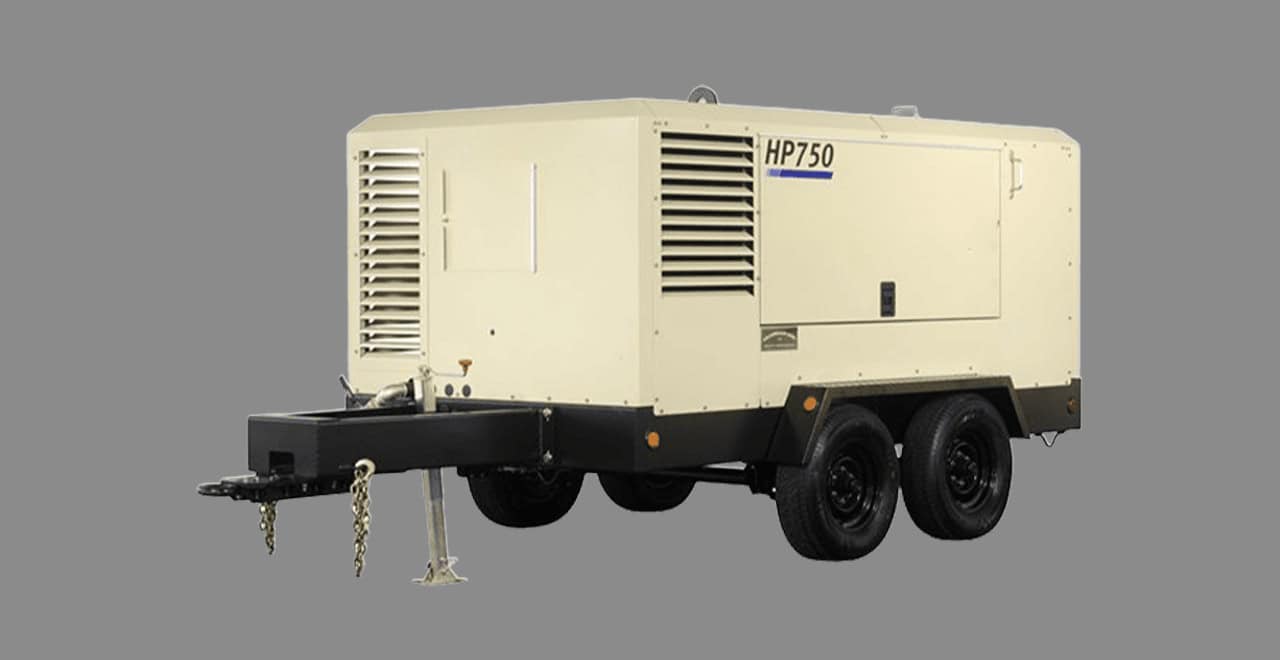
Compressed air is a fundamental utility on demanding construction and industrial sites. It powers pneumatic tools that outperform electric equivalents in weight and output, drives critical processes during industrial shutdowns, and operates reliably in environments where electricity poses hazards. The question for project teams is not whether they need compressed air. It is whether they have sized it correctly, planned for it across project phases, and sourced it from a partner who can back it up when the schedule is under pressure.
REIC Rentals provides air compressors across a range of sizes and capacities for construction, industrial, and infrastructure projects. This article focuses on three themes: how compressors support productivity on active sites, how rental planning helps control costs, and how access to the right capacity enables contractors and plant operators to take on larger and more complex project scopes.
Compressed Air Fundamentals: Powering Tools, Systems, and Processes
Industrial air compressors work by drawing in atmospheric air, compressing it to elevated pressure through rotary screw or piston mechanisms, cooling and separating oil from the air stream, and delivering the output at regulated pressure and flow through hoses and manifolds. The two key specifications for any application are CFM, which measures volumetric flow, and PSI, which measures pressure. Both must be matched to the tools and processes being powered, not just one or the other.
Portable diesel compressors are the standard for active construction sites because they move with the work, operate on uneven terrain, and require no electrical infrastructure. Smaller units are suitable for applications such as framing, concrete work, and general site cleaning. Larger units are needed for sustained high-demand operations such as sandblasting, rock drilling, or industrial valve testing. For applications requiring clean, dry air, such as abrasive blasting on steel structures or instrument calibration in process facilities, the air stream must also be treated to remove moisture and particulates before it reaches the work.
Compressed air functions as a fourth utility on complex projects alongside electricity, gas, and water. It provides safe, flexible energy in environments where electrical-spark risk is a concern and pneumatic tools offer better power-to-weight ratios than their electric counterparts. Reduced tool weight matters in sustained operations where operator fatigue accumulates across long shifts. A lighter tool that delivers the same output keeps crews productive through the full shift rather than slowing in the final hours.
Productivity: What Correct Sizing Actually Delivers
The most direct way air compressors affect productivity is through the consistency of supply. When compressed air is undersized or unstable, pneumatic tools underperform, cycle times extend, and operators compensate by applying excessive force, which accelerates fatigue and tool wear. When supply is correctly matched to demand, tools run at rated output, crews stay productive, and work advances at the pace the schedule requires.
On a commercial construction project, compressed air drives multiple applications simultaneously. Pneumatic nailers for framing, concrete vibrators for consolidation, breakers for demolition, and blow guns for site cleaning all run concurrently during peak phases. The combined CFM demand from parallel operations determines the correct compressor size, not the requirement of any single tool in isolation. Sizing to the peak concurrent demand with an appropriate buffer keeps multiple crews moving without interruption.
In industrial settings, the stakes are higher. A plant shutdown runs on a fixed window, and any extension carries costs that can dwarf the entire equipment budget for the outage. Compressed air supports valve testing, hydro-testing, instrument calibration, blow-down, and cleaning operations that often run simultaneously across multiple workfronts. Reliable air supply across that window is not a convenience; it is a production requirement on which the project plan depends.
REIC Rentals supports industrial applications, including oil and gas operations, pipelines and storage tanks, petrochemical and refinery work, and civil infrastructure projects where sustained high-capacity air supply is a prerequisite for keeping the scope on schedule.
Sizing Compressors Correctly: The Framework That Prevents Problems
Correct sizing starts with a complete tool list, not an estimate. Every pneumatic tool on site has a CFM rating and a PSI requirement. Aggregating those requirements across all tools that will run concurrently, applying a realistic duty cycle rather than assuming every tool runs at maximum demand simultaneously, and adding a buffer for surge events and future scope additions produces a sizing target that reflects actual conditions rather than a theoretical worst case or an optimistic undercount.
The choice between a single large unit and multiple smaller compressors running in parallel affects both reliability and flexibility. A parallel configuration using multiple compressors allows one unit to carry the load while another is serviced, provides redundancy that a single unit cannot offer, and makes it straightforward to add or remove capacity as project phases change. For large sites or multi-workfront operations, this approach consistently outperforms the single-unit alternative in both uptime and adaptability.
Hose and manifold layout matters as much as the compressor itself. Pressure drops across undersized or excessively long hose runs can significantly reduce tool output, even when the compressor is correctly sized. REIC Rentals advises on distribution layout as part of the planning conversation, not as an afterthought, because a well-designed distribution system is what converts correct compressor sizing into consistent tool performance across the full site.
The operating environment adds further considerations. High-altitude sites require adjustments for reduced air density. Extreme heat demands enhanced cooling to protect the compressor and maintain output. Dusty environments require upgraded filtration to protect both the compressor and downstream pneumatic tools. REIC Rentals factors these conditions into recommendations rather than applying a standard configuration regardless of where the equipment will operate.
Project Example: Multi-Workfront Bridge and Civil Infrastructure Work
Consider a bridge rehabilitation project with simultaneous demolition, abrasive blasting, and structural fastening workfronts. Each workfront has distinct air requirements: breakers for concrete demolition, sandblasting equipment for steel surface preparation, and pneumatic torque tools for bolted connections, all operating in different zones of the same structure simultaneously. That scenario illustrates exactly why sizing for concurrent demand matters more than sizing for any single tool or task.
The combined CFM requirement across those workfronts determines the total supply needed. Sizing to that combined peak, achieved through manifolds that maintain consistent pressure across each zone, allows all three crews to work at full output rather than competing for available air. When one workfront throttles back during a transition, available capacity shifts to the others without manual adjustment. The system responds to the work rather than forcing the work to respond to the system.
Without that planning, the alternative is predictable. Crews in one zone pull pressure away from another. Tools underperform. Operators compensate with technique rather than output. The workfront that should be finishing falls behind the one that just started, and the resulting schedule compression is difficult to recover from.
REIC Rentals configures manifold setups for multi-workfront operations and advises on hose routing to maintain pressure integrity throughout the entire distribution system. The result is a stable supply at each tool, regardless of what the other crews on site are doing at that moment. Browse the full compressor range and air tools to identify configurations suited to your site.
Cost Control: Making Compressed Air a Managed Expense
Compressed air is often treated as a fixed background expense on construction and industrial projects, which is precisely why it so frequently runs over budget. Fuel consumption, tool wear from inconsistent pressure, labor lost to air shortages, and rework from contaminated air streams are all controllable costs that go unmanaged when no one tracks them.
Right-sizing compressors is the most direct cost control lever. A unit operating at its efficient operating point consumes less fuel per unit of useful output than one running too light or cycling under stress due to being undersized. On a project running for multiple months, the fuel difference between a correctly sized unit and an oversized one compounds into a meaningful number at closeout. Modern compressors designed for construction and industrial applications deliver better fuel efficiency than older equipment, and REIC Rentals’ fleet reflects current standards.
Rental flexibility adds another dimension to cost control. Compressor demand changes as projects phase through different scopes. A large earthworks phase may require significant air capacity for drilling and compaction support. Interior finishing phases require far less. Renting allows the fleet to scale with actual demand rather than holding unused capacity. Units that are no longer needed come off rent. Additional units stage in when demand peaks. That flexibility is what keeps rental expense aligned with the work rather than front-loaded against the full project duration.
Renting also avoids the ownership costs that accumulate regardless of how much a compressor is used: maintenance programs, storage, insurance, registration, and depreciation on capital tied up in equipment that may only be needed for specific project windows. For contractors and plant operators whose compressor requirements are periodic or variable, rental consistently produces a lower total cost per productive hour than ownership.
Monitoring and Planning: Treating Compressed Air as a Controllable Cost
The most effective way to manage compressed air expense is to treat it as a tracked cost center rather than a background utility. That means documenting expected tool counts, CFM requirements, and operating hours during the planning phase, then comparing actual consumption against those benchmarks during the project.
On-site tracking does not require sophisticated systems. Logging compressor run hours, fuel consumption by shift, and tool usage by workfront identifies idle time that represents avoidable expense. Compressors running through periods when crews are not using pneumatic tools are burning fuel without generating output. Establishing run schedules that align compressor operations with actual work windows and shutting down units during extended breaks or between shifts can yield meaningful fuel savings over a multi-month project without affecting production.
REIC Rentals contributes to better planning beyond equipment delivery. Our team assists with load calculations, phased rental structures, and distribution layout recommendations during the pre-project planning conversation. On larger projects managed through REIC Rentals Expert Solutions, compressor planning integrates with the broader equipment strategy so power, air, and site services are coordinated rather than sourced independently. That coordination reduces the gaps and overlaps that inflate cost on complex multi-phase jobs.
Scaling Project Scope with Rental Air Capacity
The ability to access additional compressed air capacity quickly is one of the practical advantages of renting over owning. A contractor who owns a compressor fleet and is fully committed to active projects cannot easily add capacity for a new scope without a capital decision. A contractor working with REIC Rentals can stage additional units against a new project window without that constraint.
Large-scale operations, including industrial turnarounds, multi-building construction programs, and major infrastructure rehabilitation projects, often require more compressed air capacity than any single owned fleet can provide. Running multiple simultaneous workfronts across a large footprint means aggregating CFM requirements that exceed what most contractors carry on their books. Renting that capacity for the duration of the intensive phase, then scaling back as the scope reduces, is how project teams pursue work at that scale without overinvesting in equipment they cannot sustain at full utilization year-round.
Remote and challenging environments present similar requirements. Oil and gas sites, mining operations, wind farm installations, and pipeline projects in remote locations all depend on portable diesel compressors that can operate independently of site infrastructure. REIC Rentals manages maintenance, service, and backup capacity across our network of 55 locations, enabling project teams in remote locations to access support without relying entirely on on-site capability. That coverage allows organizations to confidently bid on complex, remote, or large-scale work that their owned fleet alone could not support.
Seasonal and Specialized Applications
Seasonal demand peaks create short windows of intense compressed air need that are well-suited to rental rather than ownership. Summer roadwork programs, year-end plant outages, and fiscal-year capital projects all concentrate large-scale pneumatic operations into limited time windows. Owning equipment to cover those peaks means carrying capacity that sits underutilized through the rest of the year.
Specialized applications require short-duration access to high-capacity air. Large-scale surface preparation using sandblasting equipment on storage tanks or structural steel, mass concrete demolition using heavy breakers, and simultaneous multi-process industrial testing all create demand spikes that are impractical to own for. Short-term rental of the right capacity at the right time is the direct solution, and it is what REIC Rentals is designed to support.
This flexibility directly supports business growth. Contractors and operators who can access the compressed air capacity a job requires, without that capacity being constrained by what they own, can pursue work they would otherwise decline. Each project taken on with rented capacity builds the track record and revenue that justify future investment decisions based on demonstrated utilization rather than projected need.
Selecting the Right Compressor for Your Site
Selection starts with the required CFM and pressure, sized to peak concurrent demand with an appropriate buffer. Duty cycle matters because intermittent construction tool use differs from the continuous, sustained demand of an industrial process. Power source selection between diesel and electric depends on site infrastructure, environmental requirements, and whether the compressor needs to move with the work or stay fixed in one location.
Operating environment factors include dust levels that require upgraded filtration, high temperatures that demand enhanced cooling capacity, and altitude that reduces air density and, in turn, compressor output. Downstream air quality requirements add further considerations for applications that need dry, clean air: dryers and filtration must be specified alongside the compressor rather than added later when quality problems surface in the work.
REIC Rentals supplies complete compressed air packages that include compressors, distribution manifolds, hoses, and air treatment components, as a coordinated system rather than leaving project teams to integrate equipment sourced from different vendors.
Safety, Compliance, and Equipment Standards
Correctly sized and maintained compressors contribute directly to site safety. When the air supply is stable, pneumatic tools operate as designed. When supply is inadequate, operators apply excessive force to compensate, which accelerates fatigue and increases the risk of tool failures and injuries. Consistent, correctly pressured air is a safety input, not just a productivity one.
Emissions and noise regulations have tightened in many jurisdictions, particularly in urban environments and near occupied spaces. Modern diesel compressors that meet current Tier 4 Final emissions standards significantly reduce NOx and particulate emissions compared to older equipment, and sound-attenuated configurations are available for noise-sensitive sites. REIC Rentals’ fleet meets current equipment standards, so rental customers do not need to manage emissions compliance as a separate concern when working with current-generation equipment.
Proper hose management, correct coupler selection, relief valve settings, and clearly marked isolation points are practices REIC Rentals recommends as part of equipment delivery, rather than leaving them to chance. Safe compressed air operation protects both the crew and the project timeline. Preventable incidents carry costs in delays, investigations, and project disruption that far exceed the value of any shortcut in setup or maintenance practice.
Compressed Air as a Strategic Resource
The contractors and plant operators who manage compressed air as a strategic resource rather than a background utility consistently produce better project outcomes. They size equipment to actual demand, plan phased rental structures that match supply to workload, track consumption as a controllable cost, and access additional capacity when the scope requires it without being constrained by what they own.
REIC Rentals provides the compressors, air tools, distribution equipment, and planning support to make that approach practical on projects of any scale. Explore the compressor inventory, review the full pumps and air range, or request a quote to start the conversation early enough to build a plan that fits your project timeline, budget, and site conditions.
1.888.356.1880 | in**@**ic.com | Get a Quote
Service You Trust. Equipment You Need.
