
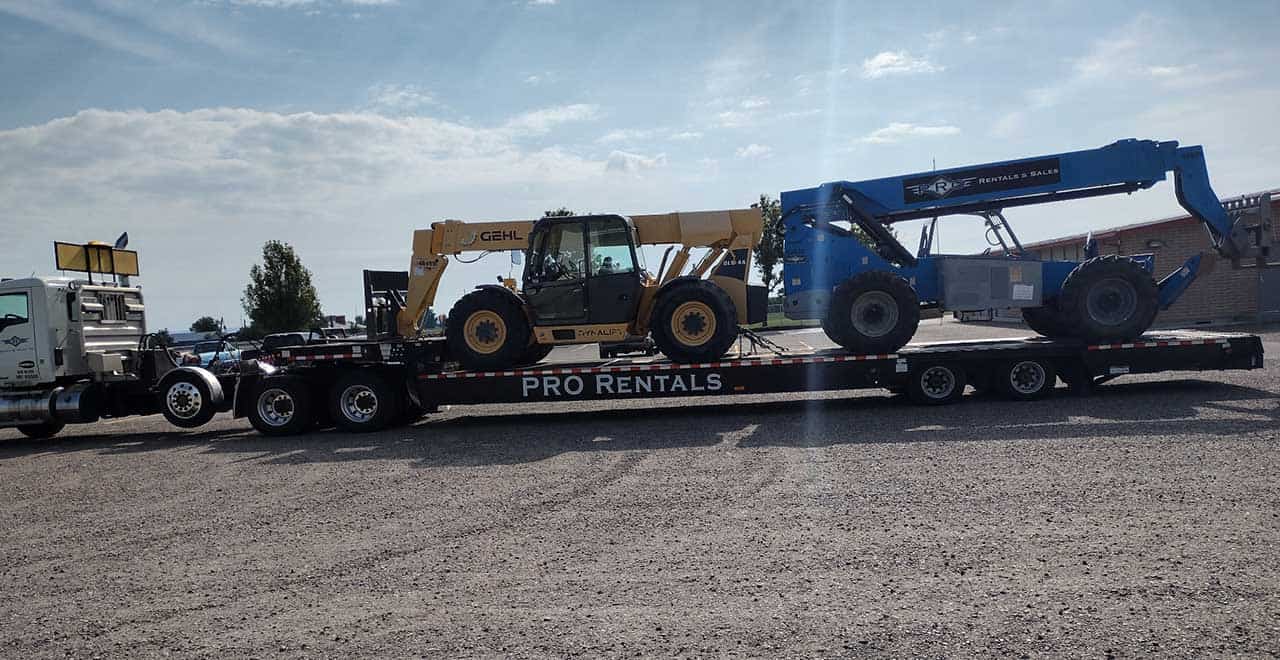
Turnaround season puts construction and industrial sites under conditions that expose every weakness in equipment planning. Multiple trades working simultaneously, 24/7 shift schedules, compressed timelines, and daily material throughput measured in hundreds or thousands of tons: when schedules are tight, and crews are stacked, the equipment keeping material moving cannot hesitate. An undersized telehandler, poorly configured for the site, or one that is unavailable when needed, does not just slow one crew. It creates a bottleneck that ripples across every trade waiting on material.
On high-volume jobsites, a telehandler serves as a central hub for execution. From unloading delivery trucks at dawn to feeding elevated scaffolding mid-day and supporting demobilization at night, the right machine keeps material flowing and schedules intact. REIC Rentals supplies telehandlers and material handling equipment for seasonal construction peaks and industrial turnarounds across North America, helping project teams match machine capabilities to the actual demands of the work, not just the nameplate specifications.
Why Telehandlers Work Differently on High-Volume Sites
On a high-volume site, a telehandler is not sitting idle between occasional lifts. These machines run hard, often logging 12 to 16 hours of runtime per day across multiple crews and tasks. Understanding how a telehandler operates in that environment determines whether the machine selected is an asset to the scheduling process or a recurring constraint.
The defining characteristic of a telehandler is its extensible boom, which provides forward reach of up to 40 feet and maximum lift heights of 19 to 56 feet, depending on the model. That reach and height capability allows one machine to handle tasks that would require multiple specialized units on a conventional site: positioning heat exchanger bundles at elevated pipe racks, moving palletized consumables to scaffolding crews, and grappling pipe spools in congested plant alleys, all within a single shift. Attachment versatility extends that capability further, and changeover speed between attachments matters as much as rated capacity on sites where task variety is constant.
Duty cycle is the variable that most separates adequate performance from genuine jobsite productivity on high-volume work. A machine that can efficiently transition between attachments in under ten minutes with quick-attach systems, maintain consistent cycle times through a full shift, and sustain performance across multiple shifts without unplanned downtime delivers more schedule value than a unit with marginally higher specifications but slower or less reliable operation.
Specifications That Actually Drive the Equipment Decision
Rated load capacity is the starting point, not the complete picture. Common ranges run from 5,500 pounds for compact models through 8,000 to 12,000 pounds for mid-size and standard units to 15,000 pounds and above for heavy-duty machines used on industrial and refining turnarounds. Selecting based on the heaviest load in the scope without accounting for the reach at which that load needs to be placed is the most common sizing error on complex sites.
Reading and Applying Load Charts Under Real Job Pressures
The load chart is the operational document that governs every pick on a high-volume site. A 10,000-pound class telehandler might safely lift only 4,000 to 5,000 pounds at maximum reach around 45 feet, and as little as 1,900 pounds at full forward extension. Running the heaviest, longest-reach pick scenarios against the load chart before confirming rental reservations is what prevents the situation where a machine arrives on site capable of the average lift but undersized for the critical one. REIC Rentals addresses these scenarios with project teams during the planning phase, ensuring equipment sizing reflects actual lift requirements rather than assumptions.
Maximum lift height determines whether a machine can reach the work zone. Models range from 19 to 26 feet on compact units, suitable for low-level scaffolding feeds and single-story structures, up to 42 to 56 feet on high-reach models required for multi-story construction and elevated pipe racks. Maximum forward reach, critical when working over pipe racks, scaffolds, or laydown obstacles, runs from 20 to 40-plus feet on high-reach configurations. Machine size and wheelbase affect both stability and maneuverability: larger frames carry more and reach higher, but reduce the ability to navigate congested plants, while compact units with wheelbases under 10 feet access spaces that full-size machines cannot.
Matching Telehandler Size Class to Project Phase and Site Type
Not all telehandlers perform equally on refineries, petrochemical plants, or large commercial construction projects during peak season. Choosing the right size requires matching machine capabilities to actual throughput demands across the full project schedule. REIC Rentals maintains multiple size classes to allow right-sizing by phase, with a primary telehandler handling the main material flow alongside support units covering specialized or constrained tasks. For petrochemical and refinery turnarounds where work zones, access, and load profiles shift daily, the flexibility across machine classes is a practical operational advantage.
Compact Telehandlers for Constrained, Busy Work Areas
Compact telehandlers with 5,000 to 6,000-pound capacity and 19 to 26-foot lift heights excel in tight corridors, congested pipe alleys, and urban infill projects where larger units cannot comfortably operate. These machines feed scaffolding inside existing process units, move pallets through gates as narrow as 10 to 12 feet, and work within structures during active turnarounds without the clearance conflicts that standard-size units create. During spring, when rain and thaw cycles create muddy access conditions, compact machines navigate where larger units bog down or cause ground damage that requires repair.
Standard and High-Reach Telehandlers for Primary Material Flow
Standard and high-reach telehandlers in the 8,000 to 12,000-pound range with 42 to 56-foot lift heights serve as the primary material-handling workhorses on high-volume jobs. These machines support the main flow of steel, pipe, formwork, and bulk construction materials from laydown to point of use. Forward reach exceeding 30 to 40 feet allows placing loads behind barricades, over ditches, or onto elevated platforms without repositioning the machine, reducing cycle time and keeping crews productive throughout the shift. For large turnarounds where vertical access and long-radius picks are part of daily operations, REIC Rentals high-reach models deliver the capacity and geometry the work demands.
High-Capacity Telehandlers for Heavy, Critical Lifts
Some turnarounds and industrial builds require machines in the 12,000 to 15,000-plus-pound class, with specialized units reaching capacities above 26,000 pounds for large valves, exchanger bundles, structural modules, and bundled materials where standard telehandlers are undersized. High-capacity units on high-volume sites are typically shared across trades, making scheduling around them essential and ground condition verification critical. Confirmed ground bearing capacity of 200 to 300 psi under travel paths and working pads is a planning requirement for these machines, not an afterthought.
Ground Conditions, Site Access, and Spring-Specific Challenges
Spring rain-thaw cycles degrade ground conditions faster than most site plans account for. A telehandler weighing over 25,000 pounds empty and 35,000-plus pounds loaded creates significant ground pressure that soft or saturated subgrades may not support. Assessing haul roads, laydown yards, gate widths, turning areas, and overhead obstructions before equipment arrives is the difference between a smooth mobilization and a first-day ground failure that damages the machine and the access road simultaneously.
Mitigation approaches for soft ground include using outriggers when equipped, wider flotation tires to reduce point loading, limiting travel speed to 10 miles per hour on soft surfaces, and coordinating with civil crews to reinforce key travel paths and working pads before heavy equipment begins cycling. REIC Rentals reviews site plans before delivery, recommends telehandler models and tire configurations suited to the ground conditions of the specific deployment, and advises on reinforcement measures to prevent ground condition problems from becoming mobilization delays.
Space Constraints, Congestion, and Traffic Management
Congestion management on refinery and plant turnarounds requires planning that accounts for machine length, turning radius, and boom overhang in environments where multiple contractors operate in close proximity. Designated telehandler routes and one-way traffic systems, spotters for complex picks and tight maneuvers, exclusion zones around active lift areas, and the deliberate assignment of compact versus standard machines to different site zones all reduce the near-miss incidents and traffic conflicts that consume time and create safety exposure on compressed turnaround schedules.
Attachments That Multiply Productivity Across the Shift
The right attachments transform one telehandler into multiple specialized tools throughout the day. Pallet forks handle palletized consumables and materials as the baseline configuration. Buckets in the 2- to 4-cubic-yard range support debris removal and backfill operations. Lifting hooks and jibs handle rigged components up to 5,000 pounds. Pipe grapples move pipe bundles and spools without manual sling rigging on each pick. Work platforms provide personnel with a position where permitted under applicable regulations.
Standardizing attachment setups across shifts minimizes changeover time and reduces confusion during crew handoffs, which slows the first hour of each shift on a busy site. REIC Rentals supplies compatible attachments alongside telehandler rentals and configures attachment kits tailored to the specific scope of the turnaround or construction project, rather than delivering a machine and leaving attachment selection to the site team.
Operator Capability, Safety, and Compliance on High-Volume Sites
High-volume schedules increase operational risk in direct proportion to the pace of the work. Telehandlers fall under powered industrial truck and Class VII rough-terrain forklift regulations and must be operated only by qualified, certified personnel. Operators must hold current certification under applicable OSHA and local requirements and must be familiar with the specific make and model rented, not just generic telehandler operation. A machine operated by someone certified for a different class or configuration creates liability exposure that no schedule pressure justifies.
Site-specific orientation should cover overhead line clearances with a minimum 10-foot standoff, pipe rack and structure clearances, exclusion zones around active lift areas, and communication protocols with spotters and riggers. Daily safety huddles that include telehandler path review, lift priorities for the shift, and handoff communication between operators at shift changes keep operational discipline intact during compressed turnaround windows, when fatigue and schedule pressure create conditions for incidents.
Operator comfort matters more than most equipment plans account for. Extended shifts of 12-plus hours in a telehandler cab gradually affect both sustained productivity and safety behavior over a long turnaround, rather than all at once. Modern telehandler cabs with ergonomic controls, climate control, suspension seats, and intuitive joystick operation support operator performance through the shift. Good cab visibility, cameras, and lighting packages are particularly important in congested industrial environments during night shifts, where sightlines are compromised. REIC Rentals advises on which models suit the shift structure, ambient conditions, and visibility requirements of the specific project.
Daily Inspection and Rental Fleet Reliability
Heavy usage during the turnaround season underscores the importance of consistent pre-use inspections and responsive service when issues arise. Daily operator checks should cover tire condition and pressure, typically 80 to 100 psi, fork and attachment condition for bends or cracks, hydraulic system for visible leaks, lights and safety devices, and brake function. These checks take minutes and prevent the mid-shift failures that halt entire work fronts on a site where every hour of productive time counts toward a fixed completion date.
REIC Rentals equipment arrives inspected, serviced, and ready for long shifts. When issues arise, field service response and swap-out options prevent schedule slippage that can occur when a machine goes down without a clear resolution timeline. Logging equipment deliveries, pickups, and service windows into the turnaround execution plan treats the rental fleet as a managed asset rather than a background utility, which is what high-volume seasonal work requires.
Planning Telehandler Rentals Before Peak Season Demand
Regional demand for telehandlers spikes during turnaround season. The availability of the specific size class and configuration a project requires narrows as more sites compete for the same equipment during the same window. Securing equipment well before peak dates is not a scheduling preference. It determines whether the right machine is available when the work begins or whether the team is forced to make a different machine work in conditions it was not designed for.
Phase-based equipment planning provides the framework for reservation timing. Early site prep and mobilization are typically suited to compact units for initial material staging. Peak construction or maintenance phases require high-reach primary units alongside support telehandlers sized for the concurrent task mix. Demobilization can often run on a scaled-down fleet as throughput requirements decline. Mapping those phases to the project schedule and reserving equipment at each transition point prevents the gaps that occur when availability is assumed rather than confirmed.
Share site drawings, lift requirements, and turnaround schedules with REIC Rentals early. We review the scope, propose the most efficient machine mix across the project phases, and build in flexibility to accommodate scope growth or schedule extensions that are common in turnaround work. REIC Rentals also supplies the complementary equipment that spring mobilization demands, alongside telehandlers: light towers, generators, aerial lifts, and compressors, so the project team does not have to coordinate multiple suppliers within the same mobilization window. Tell us your project type, site layout, lift requirements, and schedule. We will build a plan that keeps your jobsite productive from first mobilization through final demobilization.
1.888.356.1880 | in**@**ic.com | Get a Quote
Service You Trust. Equipment You Need.
