
A Facility Management Guide to Protecting Comfort, Continuity, and Critical Operations
In winter, HVAC problems in healthcare environments are rarely “just inconvenient.” A boiler failure can quickly become a patient safety concern. A rooftop unit shutdown can threaten temperature-sensitive medications. A loss of ventilation in a wing can disrupt care delivery, compromise infection-control protocols, and force facility teams into difficult operational decisions.
Hospital and healthcare facility managers live in a world where uptime is the standard. When a mechanical issue hits, it doesn’t simply create discomfort. It can trigger complaints, disrupt clinical workflows, and put critical areas—such as operating suites, isolation rooms, and labs—at risk. That’s why emergency HVAC planning isn’t optional. It’s an essential part of winter readiness.
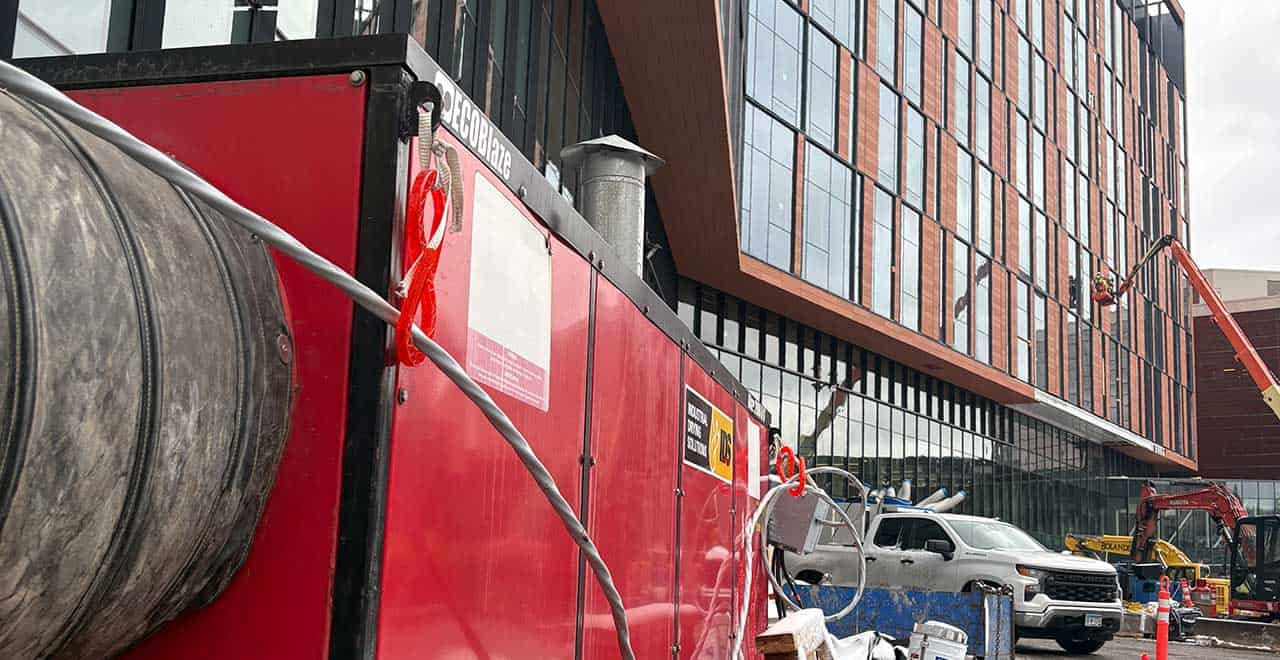
REIC Rentals supports facility managers, building engineers, and service providers with temporary heating, cooling, dehumidification, and ventilation solutions designed for occupied buildings and high-stakes environments. When permanent systems go offline—whether unexpectedly or during planned work—our teams help deploy practical, targeted solutions that keep healthcare spaces operational while repairs progress.
Why Winter HVAC Failures Hit Healthcare Harder
Winter puts added pressure on every HVAC system. Demand rises as temperatures drop, and the margin for error shrinks. In healthcare settings, the consequences of a failure are amplified because:
- Patient comfort is clinical comfort. Temperature swings can affect patient recovery and overall experience.
- Indoor air quality is mission-critical. Many areas require specific airflow patterns, filtration standards, and pressure relationships.
- Certain spaces cannot “pause.” Emergency departments, inpatient units, and critical care areas operate continuously.
- Downtime is expensive—and complicated. Relocating patients, shutting down wings, or rerouting services creates cascading costs and staffing strain.
For facility managers, the question isn’t if winter will test systems. It’s how quickly you can stabilize conditions when it does.
Start With a Rapid Triage: What’s Affected, What’s Critical
When an outage happens, the fastest path to control is a clear triage process. Before selecting emergency HVAC equipment, facility teams should define three things immediately:
- Building type and use: Acute care hospital, long-term care, specialty clinic, and outpatient surgical center—each has different risk points.
- Affected zones: Is it one floor, one wing, a mechanical room that feeds multiple areas, or a whole-building issue?
- Timeline and constraints: Is this a same-day emergency response, a 48-hour repair, or a multi-week replacement project? Are there access limitations, loading dock restrictions, or noise sensitivities?
REIC Rentals works from this same framework: share the building type, impacted areas, and the expected schedule, and we’ll recommend the right equipment along with a practical deployment plan built around occupied healthcare spaces.
Zone-First Temporary Heating: Maintain Comfort Where It Matters Most
In winter outages, the goal is rarely to condition the entire building at once. Healthcare buildings are complex, and many emergencies are localized: one air handler down, one wing losing heat, one RTU offline. The most effective response is often staged, targeted support.
Temporary heating can help facility teams manage:
- Boiler maintenance or unexpected shutdowns
- Rooftop unit failures during cold snaps
- Air handler repairs and replacements
- Controls upgrades, commissioning, or balancing work
- Partial-building issues where only certain areas need support
A zone-first approach allows facility managers to keep patient rooms, waiting areas, and administrative zones usable while prioritizing high-acuity spaces and protecting vulnerable populations. It also reduces the logistical burden of conditioning areas that aren’t affected.
Emergency Cooling Still Matters in Winter—Here’s Why
It sounds counterintuitive, but healthcare facilities can need cooling even in winter. Many clinical and IT-intensive environments produce significant internal heat loads. If a cooling component fails—especially in areas like imaging, server rooms, or equipment-heavy labs—temperatures can rise quickly regardless of outdoor conditions.
Temporary cooling support can be essential for:
- Data closets and critical IT infrastructure
- Imaging suites and support rooms
- Pharmacies and medication storage areas
- Labs with strict temperature requirements
- Spaces where occupant density and equipment generate heat
Facility management teams often need a fast, contained solution that stabilizes temperatures without disrupting patient care. REIC Rentals can deploy targeted temporary cooling for specific rooms or zones—without forcing a whole-building strategy.
Ventilation and Air Movement: Supporting Safer Work Zones
Healthcare maintenance work often occurs in tight mechanical spaces, corridors, or partitioned areas where airflow is limited. During remediation, repairs, or equipment changeouts, ventilation is a key factor in both worker safety and operational continuity.
Temporary ventilation and air movement rentals can support:
- Improved air exchange in enclosed work zones
- Controlled airflow in restricted or partitioned areas
- More stable conditions for contractors and service crews
- Better comfort management during active repair work
For facility managers, this isn’t just about comfort—it’s about creating workable, safer environments while minimizing disruption to nearby clinical areas.
Humidity Control and Drying: Prevent Secondary Damage
A winter HVAC event can sometimes coincide with water problems, such as burst pipes, sprinkler activation, roof leaks, or condensation issues caused by uneven heating. Once moisture enters an occupied building, the clock starts ticking. Secondary damage can spread quickly, and healthcare environments have low tolerance for mold risk, odor issues, or compromised finishes.
Temporary dehumidification and drying help facility teams manage:
- High humidity complaints and chronic moisture challenges
- Dry-out needs after leaks, pipe breaks, or sprinkler events
- Protection of interior finishes, flooring, and sensitive spaces
- Long-duration repair scopes that require stabilized conditions
When paired with air movement and ventilation, drying strategies support faster recovery and reduce the risk of rework—especially in spaces where downtime isn’t feasible.
Power, Lighting, and Pumps: The Support Systems Behind the Response
Emergency HVAC is rarely “just HVAC.” In outages, the equipment that keeps response moving often includes temporary site support—especially when utility constraints limit what can be deployed quickly.
Common facility-response rentals include:
- Generators to support temporary power during electrical work or outages
- Jobsite lighting for night work, basements, and low-light mechanical areas
- Pumps and water management for drainage, extraction, and changing conditions
For facility managers coordinating after-hours repairs or weekend windows, these rentals can be the difference between a controlled, efficient response and a prolonged disruption.
Access and Logistics: The Hidden Challenge in Occupied Healthcare Buildings
Hospitals weren’t designed for large equipment to move casually through public corridors. Emergency HVAC deployments require careful planning—especially around patient privacy, infection control, noise restrictions, and staff workflows.
Facility teams often need:
- A staged plan by floor or department
- Clear delivery paths (loading docks, service elevators, back corridors)
- Secure placement that keeps public areas clear
- Efficient movement of equipment and materials
REIC Rentals supports facility productivity with access and logistics rentals—including aerial lifts for roof work and material handling options for staging and placement—so response teams can work efficiently without turning occupied spaces into bottlenecks.
What Strong Emergency HVAC Support Looks Like
In healthcare, the best emergency partner isn’t the one who drops off equipment and leaves. It’s the one that understands uptime, occupied buildings, and the need for practical deployment—especially when repairs change midstream.
Facility teams choose REIC Rentals because we deliver:
- Uptime-first support built around keeping buildings operational
- Fast deployment for urgent situations and scheduled maintenance windows
- Full-scope climate control: heating, cooling, dehumidification, ventilation
- Job-ready fleet maintained for reliable, continuous use
- North America coverage to support multi-site systems and regional networks
Whether your need is one wing, one floor, or a critical room that can’t go down, the right temporary strategy is targeted, responsive, and grounded in real building conditions.
Winter Readiness Starts Before the Outage
The most effective emergency HVAC response begins long before an issue occurs. Facility managers can strengthen winter resilience by:
- Identifying critical zones and defining temperature and airflow priorities
- Pre-planning equipment staging locations and delivery routes
- Aligning internal stakeholders, including clinical leadership, safety, and engineering teams
- Establishing a response partner who understands healthcare environments and operational constraints
When an outage occurs, speed matters—but precision matters just as much. The objective isn’t simply to add heat. It’s to stabilize the environment in a way that protects patients, supports staff, and allows care delivery to continue without disruption.
REIC Rentals is ready to support both planning and response, providing the equipment, expertise, and deployment strategies required for winter HVAC emergencies in healthcare facilities.
Ready to strengthen your winter preparedness?
Contact us to keep your building operational during planned maintenance or an unexpected outage. Share your building type, affected areas, and timeline, and our equipment experts will develop a targeted solution and a practical deployment plan designed around your facility’s needs.
