Between May and October, equipment strategy becomes one of the most consequential decisions a construction company makes. This article examines the rent-versus-own decision from the perspective of peak-season operations, focusing on productivity, cost control, and the ability to scale when opportunity demands it.
Peak season concentrates pressure on every part of a construction operation. Labor shortages make every productive hour even more valuable. Material prices shift faster than budget estimates can track. Project schedules compress, and a single day of downtime can trigger contract penalties that erode months of margin. Equipment availability is one of the fastest levers to pull when schedules tighten and crew counts expand. The rent-versus-own decision carries much greater weight in June than in December.
REIC Rentals serves contractors managing these conditions across earthmoving, aerials and lifts, power generation, HVAC, and material handling. The sections below compare owning and renting within high-pressure seasonal windows, examining how each approach affects productivity, actual costs, and the ability to scale operations when the work is there to be won.
How Peak Season Changes the Rent vs Own Equation
A contractor managing four active jobs in the spring can find themself running ten projects between June and September. Suddenly, the business needs additional excavators, reachout forklifts, and light towers simultaneously across highway expansions, commercial pads, and industrial shutdowns. Owned fleets strain under that load, and the company faces a choice between overcommitting existing machines or turning down work.
Equipment demand spikes during peak months while schedules compress and downtime becomes significantly more expensive. Owning works well at a steady-state workload where machines run at strong utilization year-round. Renting works better when timelines, crew sizes, and site counts all increase simultaneously, and the cost of a coverage gap is high.
REIC Rentals plans fleet availability around regional peak seasons, positioning rental as a deliberate strategy rather than a last-minute fix when machines fail or project scope expands. The goal is to give contractors access to the right equipment at the right time, without the carrying costs of owning machines during the slow months that bracket every busy season.
Productivity: Keeping Crews Moving When Every Hour Counts
During the peak summer window, a single day of lost production on a road or utilities job can push completion into bad weather, trigger contract penalties, or force overtime that was never budgeted. Productivity during these months determines whether projects finish profitably or erode margins through schedule overruns.
Owning supports productivity through familiarity. Crews achieve faster cycle times on machines they know well, and project managers understand exactly how to plan around each unit’s capabilities and maintenance schedule. That advantage is real and measurable on any given jobsite.
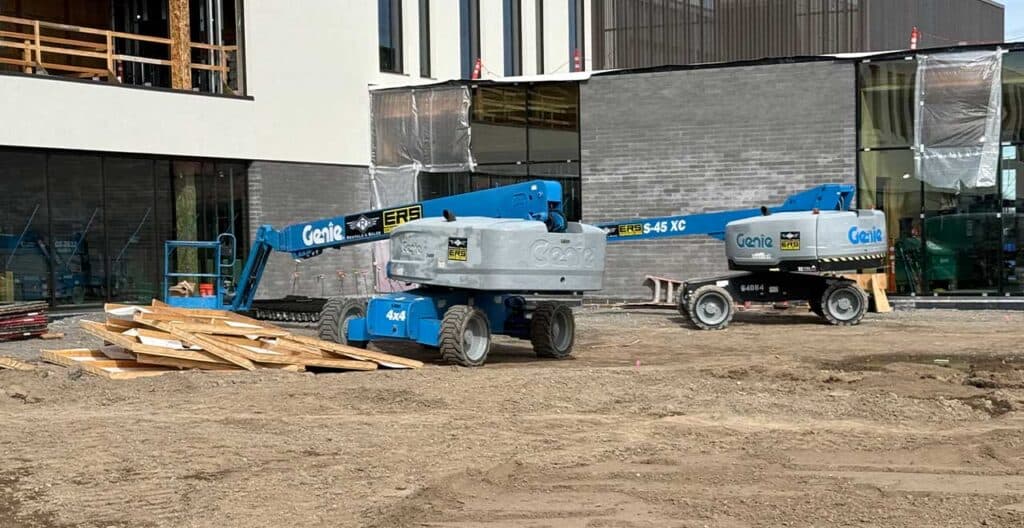
Renting from REIC Rentals elevates productivity during peak windows by providing access to well-maintained, low-hour equipment from a fleet kept job-ready. Contractors can swap a smaller skid steer for a larger model during an intensive site prep phase, boosting material movement rates without a capital commitment. They can add boom lifts to enable parallel trades on a warehouse build, compressing the project schedule without purchasing machines that will sit idle once the structural phase closes.
Service response during peak season is where rental partnerships and ownership burdens diverge most sharply. In-house mechanics face backlogs during busy months, and sourcing parts for owned equipment during a peak demand period can cost days of production. REIC Rentals supports active rentals with field service and unit swaps when repairs would otherwise stop work, keeping output moving on jobs where delays have real financial consequences.
Matching Equipment to Fast-Changing Job Requirements
Owning locks contractors into static inventories, creating risk when requirements shift mid-season. Excavators sit idle while boom lifts are needed for a precast install phase. Oversized dirt movers deploy on tight sites where compact equipment would achieve faster progress. Mismatch between what is owned and what the job actually requires is a consistent source of efficiency loss that rarely surfaces clearly in project accounting.
Renting from REIC Rentals allows project managers to refine the equipment mix as work evolves. Add compact track loaders during intensive grading phases, then transition to rough-terrain scissor lifts when interior finishing begins. Swap generators and temporary HVAC units in as different trades require different site conditions. This precision delivers real efficiency gains compared to forcing the available owned fleet to fit every phase regardless of fit.
A contractor running concurrent school renovations can rent additional aerials, generators, and climate-control equipment so that different trades can work in parallel rather than in sequence. REIC Rentals reviews project schedules, manpower plans, and site constraints to recommend the most productive configuration for each phase. Having the right equipment at the right time is the difference between compressing a schedule and watching crews wait on resources.
Downtime, Repairs, and Who Carries the Risk
Equipment failures during peak months cascade quickly. A broken loader on a Saturday site prep day idles an entire crew, and if subcontractors are waiting on that work, the losses compound by the hour. Owning means the contractor carries full risk: sourcing parts amid shortages, managing shop backlogs, and absorbing routine maintenance costs year over year.
REIC Rentals shifts that burden. Rental agreements cover scheduled maintenance, most repairs, and replacement units when repairs would take too long to keep the job moving. When a rented boom lift fails a morning safety check during a critical steel phase, REIC Rentals dispatches a technician and swaps the machine if needed, preserving the day’s production rather than incurring a loss.
Offloading repair risk to a rental partner is most valuable during the months when downtime hurts most. The carrying costs of ownership, including maintenance, storage, insurance, and compliance, become harder to justify when the alternative eliminates those variables entirely and provides a response guarantee in the event of a failure at the worst possible time.
Cost Control: What Ownership Really Costs During Peak Season
Equipment decisions involve more than comparing a daily rental rate against a monthly finance payment. Total cost of ownership includes maintenance, which runs a significant percentage of the purchase price annually; storage; insurance premiums; registration; compliance; and the opportunity cost of capital tied up in depreciating assets. The budgeting process must account for all of these, not just the acquisition line.
Owning is cost-effective for core machines that run at high utilization year-round. At the point where a machine is working most available hours across most of the year, cumulative rental costs would eventually exceed the purchase price. The calculation is straightforward for equipment that defines a contractor’s core capability and rarely sits idle.
Peak season exposes the ownership costs that erode that calculation: mechanic overtime, rush parts premiums, extra trucking to relocate machines between sites, and equipment sitting idle on the wrong job while another site needs it. These costs rarely surface clearly in simple rent-versus-buy comparisons, but they hit cash flow hard during the months when every dollar matters. REIC Rentals delivers predictable expenses tied directly to actual project use, which protects cash for payroll, materials, and contingencies when the budget is under pressure.
Utilization Rates: When Ownership Starts to Make Sense
Utilization measures the percentage of time a machine actually earns revenue on a job, rather than sitting in the yard or waiting for an operator. That ratio determines whether ownership pays off. The threshold at which rental costs equal ownership costs is generally understood to be around 60 percent of available hours annually. Below that threshold, renting typically results in a lower total cost per productive hour.
A contractor keeping a primary excavator in heavy use throughout a full year of site development work sees ownership pay off through avoided rental costs over time. The accounting on that decision is straightforward when utilization stays high year after year across a consistent workload.
Contrast that with specialized equipment needed only for a few months. Renting pumps for a stormwater job, compactors for a trench backfill phase, or light towers for a short-duration night shift produces a lower cost per productive hour than owning machines that will sit idle for the majority of the year. Analyzing job logs from the past two seasons reveals realistic utilization rates for each equipment category and identifies where the rent-versus-own threshold actually falls for a given operation.
Hidden Ownership Costs That Surface During Peak Season
Storage costs accumulate steadily but become visible during peak season when contractors lease temporary yard space, pay rush shipping fees, and scramble for short-notice operator training after hiring a new crew in a tight labor market. Insurance scales with fleet size. Registration and compliance carry per-unit costs. Backup holdings tie up capital in machines that sit idle waiting for a failure that may never happen.
Renting from REIC Rentals eliminates several of these burdens. Equipment is stored and maintained centrally across 55 locations. A contractor can avoid purchasing specialized equipment for a single project phase, skip the ongoing storage and insurance costs that follow that purchase, and redirect that capital toward growth, bonding capacity, or the next opportunity. The total cost comparison, done honestly, often favors renting for more equipment categories than contractors initially expect.
Project Scale: Using Rentals to Take on More Work
Project scale expands dramatically during peak season. Public agencies award larger infrastructure packages in Q3. Developers push multiple sites simultaneously. Industrial owners compress shutdown windows to minimize production impact. These opportunities test the limits of any fixed owned fleet.
Owning can cap a company’s ability to scale. A contractor may decline a second major project because its excavators and lifts are fully committed elsewhere. Turning down significant revenue due to equipment constraints is a real drag on growth, and it compounds over time if the pattern repeats each peak season.
REIC Rentals’ fleet functions as an on-demand extension of a contractor’s own resources, allowing more aggressive bidding on peak-season work. A contractor that typically runs two units of a given machine can temporarily add more for a time-sensitive structural phase, completing work before the weather closes the window. Lining up aerials, dirt movers, power equipment, and forklifts in advance positions contractors to say yes when opportunities arise rather than turning work away because the fleet is already at capacity.
Multi-Site Operations and Geographic Reach
Peak season often brings opportunities across a wider area: infrastructure packages in neighboring regions, industrial work near emerging logistics hubs, or multiple concurrent jobs within a 100- to 200-mile radius. Hauling owned equipment between locations is expensive in fuel, labor, and permits, and that expense repeats with every relocation.
A contractor winning three projects within a regional area faces a choice between shuttling the same machines between sites or renting dedicated units for each location during the peak window. Renting from the nearest REIC Rentals branch reduces logistics costs and enables parallel progress across all sites. It also simplifies compliance with local permit requirements and transportation regulations that REIC Rentals already manages for its fleet.
With 55 locations across the US and Canada, REIC Rentals has the geographic reach to support multi-site operations without the logistics overhead of moving owned equipment over long distances. That network is one of the practical advantages of treating REIC Rentals as a planning partner rather than a transaction vendor.
Testing New Equipment Without Long-Term Commitment
Peak season is also an opportunity to evaluate new technology under real production conditions. More fuel-efficient earthmoving equipment, hybrid or electric lifts for indoor or emissions-sensitive work, and equipment with integrated grade control or telematics all offer potential gains in productivity and operating cost. Investing in unproven equipment carries risk. Renting it does not.
REIC Rentals allows contractors to introduce newer units on specific work packages, measure actual results, and gather feedback from operators and foremen without committing to a purchase decision. A dozer equipped with grade control on a summer sitework project can achieve efficiency gains by making fewer passes than a conventional machine. That kind of real-world data builds a defensible business case for future equipment investment, rather than relying solely on manufacturer specifications.
How REIC Rentals Supports Peak-Season Operations
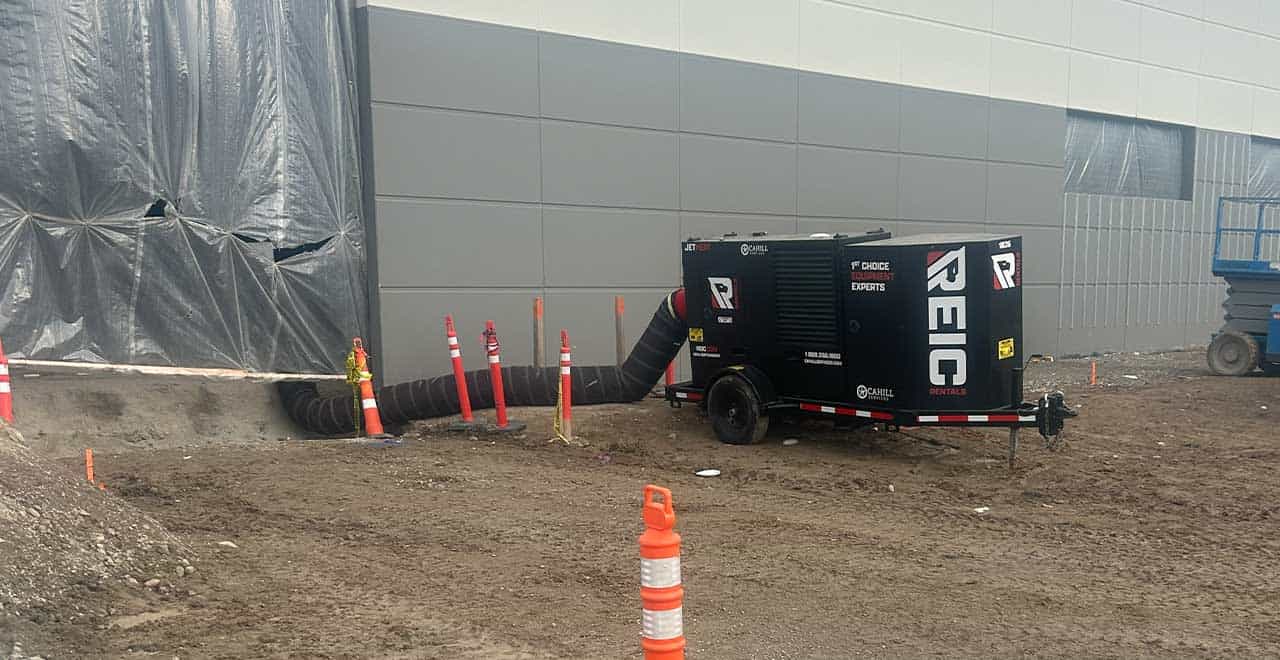
REIC Rentals provides the equipment categories contractors depend on during peak season. Earthmoving equipment, including excavators and dozers, drives site preparation and keeps earthwork on schedule through spring ground conditions. Aerials and lifts, including boom lifts and scissor lifts, support access across every phase of construction and turnaround work. Material handling equipment, including reachout forklifts, keeps laydown yards organized and supply lines moving. Generators and light towers deliver the power and visibility that 24/7 shift schedules require. HVAC equipment covering heating, cooling, and drying maintains the environmental conditions that protect work quality and crew safety across seasonal extremes. Compaction and concrete equipment supports site preparation and finishing through the full construction cycle.
REIC Rentals works with clients ahead of peak season to map project pipelines, identify likely bottlenecks, and reserve or stage critical equipment, so machines arrive when crews are ready. Scheduled deliveries, on-site service coordination, and machine swap options support operations when job requirements change mid-season. That planning process is what separates a rental partner from a rental vendor.
Blended Fleet Planning: Owning and Renting Together
REIC Rentals recommends a blended approach for most contractors. Maintain a core-owned fleet for high-utilization tasks that define the company’s base capability. Layer on rentals for seasonal peaks, specialized work, and schedule-critical phases where a gap in coverage would be costly.
A typical blended plan involves owning primary excavators and loaders while renting additional aerials, compaction equipment, pumps, and backup units for the peak construction window and year-end push work. REIC Rentals can review historical job data and upcoming bid calendars to suggest which categories make sense to own and which to treat as rental-first, revisiting the mix annually as the project pipeline evolves.
Contractors ready to evaluate their fleet strategy before the next peak season can start the conversation with REIC Rentals and connect with a team that understands the operational demands of peak-season work.
When to Rent, When to Own, and What to Do Next
The decision framework is straightforward in principle: own the machines that work nearly year-round and define core capability. Rent the equipment needed to surge capacity, add specialized tools, cover new geographies, or protect project schedules during peak season. The difference between profitable growth and overextended operations often comes down to getting that balance right.
Equipment decisions should be based on real utilization data, honest total cost analysis, and the strategic value of being able to say yes to more and larger projects. A practical starting point is listing current and projected projects for the next 12 to 18 months, identifying peak periods, and flagging where owned equipment will be over-committed or mismatched to requirements.
Bring that project list to REIC Rentals through the quote request page to build a rental strategy aligned with growth goals and project requirements. The contractors who plan their equipment approach before peak season arrives will be better positioned to hit production targets, control costs, and take on the work that builds the business. REIC Rentals is built to support that planning, from the first conversation through the final pickup.
1.888.356.1880 | in**@**ic.com | Get a Quote
Service You Trust. Equipment You Need.