
In a Class 1 cleanroom, the allowable particle count is one particle per cubic foot at 0.5 microns or larger. A human hair is roughly 70 microns in diameter. A particle invisible to the naked eye, drifting from a compromised barrier or an improperly filtered air supply during construction or maintenance work, can contaminate a wafer worth tens of thousands of dollars and invalidate an entire production run. In semiconductor fabrication, air quality is not a supporting condition. It is the production variable.
That reality changes how environmental control is planned during facility construction, expansion, and planned maintenance work. The tolerances are not approximate. The consequences of missing them are not recoverable after the fact. And the equipment that maintains those conditions during the vulnerable windows of construction and system transitions must be specified to the actual requirements of the space, not to a general construction ventilation standard.
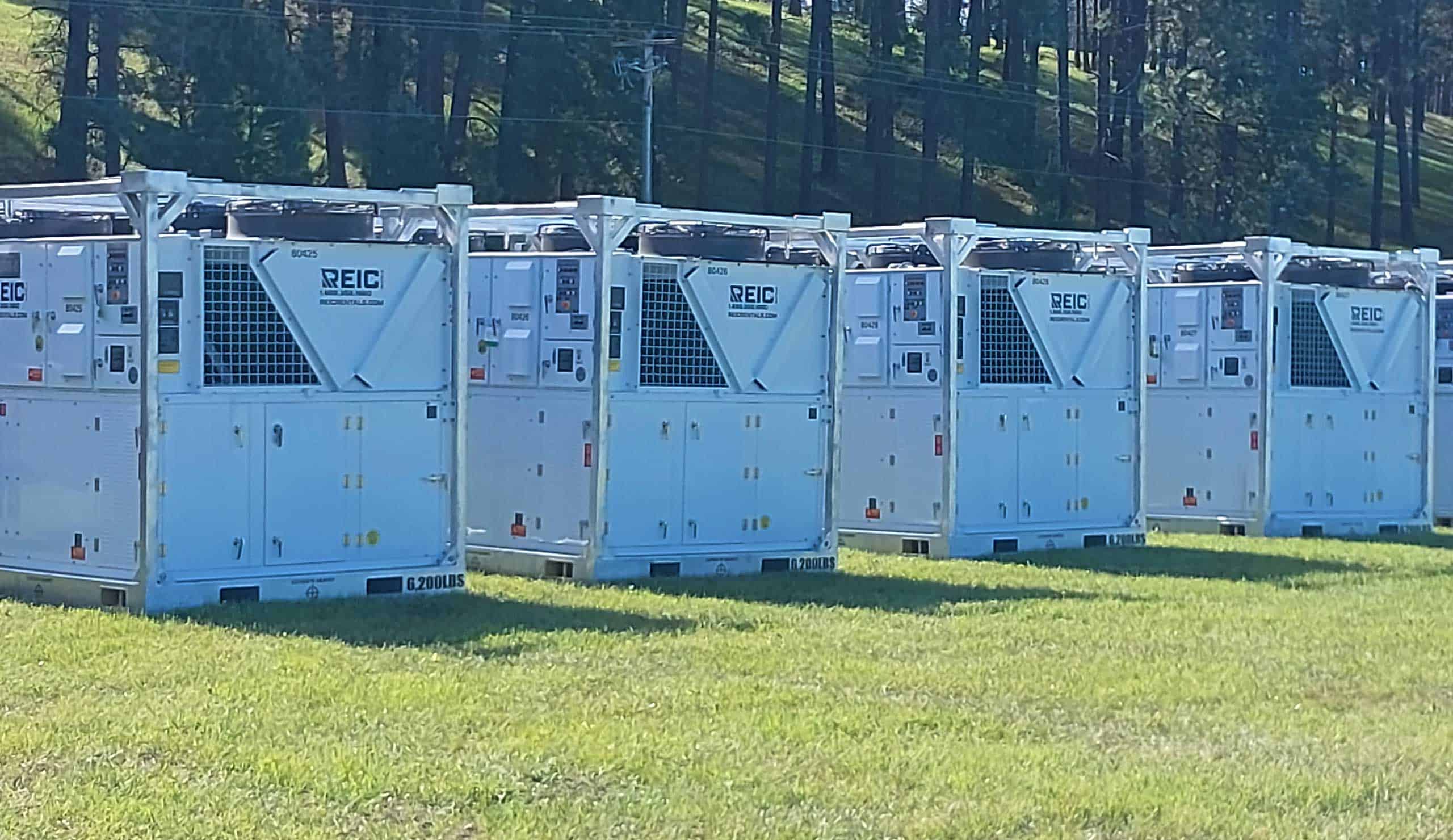
REIC Rentals provides temporary climate control and air filtration for semiconductor fabrication facilities and cleanroom environments, including precision dehumidification, cooling, heating, and HVAC accessories sized to cleanroom-adjacent construction requirements. Our team coordinates with environmental control engineers before specifying equipment, ensuring the solution reflects the facility’s particulate and humidity specifications rather than a generic industrial approach.
Why Semiconductor Facilities Require a Different Approach
Most facilities manage environmental control to comfort or general process standards. Semiconductor fabrication facilities manage it to particle counts, ISO classifications, and molecular contamination thresholds that require a level of precision that general construction ventilation standards were not designed to meet.
ISO 14644 defines the maximum allowable particle concentrations for each cleanroom class. ISO Class 1, used in the most sensitive lithography and deposition processes, allows fewer than ten particles per cubic meter at 0.1 microns. Even at ISO Class 8, the requirements are orders of magnitude more demanding than a standard commercial environment.
Humidity is equally critical. Static discharge in low-humidity conditions can instantly destroy sensitive components. Condensation in high-humidity conditions contaminates surfaces and compromises process chemistry. A temporary climate deployment that cannot hold the required ranges is not a workable solution, regardless of how quickly it arrives on site.
One challenge our teams regularly help semiconductor facility engineers navigate is the transition between permanent and temporary environmental control. That transition must be seamless in both physical conditions and documentation continuity. A gap in the environmental record during a cleanroom qualification period can require re-qualification from the beginning.
The Construction Phase: Protecting Cleanroom Environments During Facility Expansion
Semiconductor fabrication facilities continue to expand as demand for capacity grows. New fab bays, tool installations, and utility corridor construction all happen in close proximity to operating cleanroom areas, and managing that interface is one of the most complex environmental control challenges in any industrial sector.
Construction activity generates particulate levels incompatible with cleanroom operation, even at the most permissive ISO classifications. Concrete dust, drywall particulates, and tool installation debris must be completely isolated from operating areas rather than diluted through filtration. The construction zone must be maintained at negative pressure relative to the operating cleanroom, with HEPA-filtered exhaust routing contaminated air out of the building rather than toward production.
REIC Rentals provides HEPA filtration systems and negative air machines for cleanroom-adjacent construction zones, sized to the construction area’s volume and the air change rate required by the contamination control plan. Pressure differential monitoring confirms that the containment barrier is functioning throughout all active phases, not only at setup and inspection points.
Precision dehumidification during construction goes beyond general moisture control. New concrete and wet trades introduce moisture loads that must be managed to prevent condensation on sensitive surfaces, corrosion of installed process equipment, and humidity levels that affect the adhesives and sealants used in cleanroom assembly. REIC Rentals reviews these requirements from the construction and environmental control drawings before any equipment is specified.
Tool Qualification and Commissioning: The Critical Transition Window
When a new process tool is installed in a semiconductor fabrication facility, it undergoes a qualification sequence before it is released for production. That qualification confirms that the tool meets its specifications under actual facility conditions. Environmental conditions during qualification, including temperature, humidity, and particle count, must be within the facility’s defined ranges throughout the qualification period.
When the permanent HVAC serving the new tool bay is not yet operational or has not yet been confirmed to meet the qualification requirements for that process area, temporary climate control bridges the gap. The temporary system must achieve and maintain the conditions required for a valid qualification, and it must be monitored and documented to the same standard as the permanent system will be once operational.
Our teams support semiconductor facility qualification windows by deploying precision climate equipment that holds the required temperature and humidity ranges within the tolerances the process requires, not within general commercial HVAC tolerances. The documentation from the temporary system deployment integrates with the facility’s qualification records rather than creating a separate, incomplete environmental history for the qualification period.
Planned Maintenance: Maintaining Cleanroom Integrity During System Downtime
Planned maintenance on the HVAC and air handling systems serving a semiconductor cleanroom requires taking permanent capacity offline while maintaining the cleanroom environment within its operating specifications. A cleanroom that warms, humidifies, or accumulates particles during a maintenance window may require requalification before production can resume, potentially resulting in days of lost output.
The pre-staging approach that REIC Rentals uses for pharmaceutical environments applies equally in semiconductor facilities, with the precision requirements tightened further. Temporary equipment is installed and commissioned to demonstrate compliance with the required environmental specifications before permanent systems come offline. Environmental monitoring is continuous across both systems during the transition. The permanent system comes down only after the temporary system is confirmed to hold conditions within specification.
Precision desiccant dehumidifiers are the appropriate choice for the low-dew-point requirements of many semiconductor process environments. Refrigerant systems cannot achieve the humidity levels required by the most sensitive process areas. Desiccant systems maintain low dew points consistent with the cleanliness demands of cleanroom processes and operate across the temperature ranges encountered in different areas of a semiconductor facility.
Emergency Response: When Permanent Systems Fail in a Cleanroom Environment
An unplanned HVAC failure in an operating semiconductor cleanroom initiates an immediate production response. Sensitive tools protect themselves by alarming and suspending operation when environmental conditions go out of specification. Production loss begins the moment the HVAC failure is confirmed, rather than when temperatures or humidity levels reach critical thresholds.
The speed of temporary equipment deployment in a semiconductor facility emergency is determined almost entirely by whether the planning work was done in advance. Access to a semiconductor fabrication facility requires credentialing, escort procedures, and, in some cases, security clearances that cannot be expedited under emergency conditions. Staging areas, equipment connection points, and environmental control interface details all require pre-planning that cannot happen quickly when production is already stopped.
REIC Rentals supports semiconductor facility operators through pre-incident site assessments that document power connection points, equipment staging locations, access and credentialing requirements, and the environmental control interfaces to which temporary equipment must connect. When the emergency call comes, the logistics begin immediately because that documentation already exists.
Scenario: Tool Bay Expansion in an Operating Semiconductor Fabrication Facility
Consider a semiconductor fabrication facility adding two new deposition tool bays adjacent to an operating lithography area. Construction must proceed without affecting particle counts or humidity levels in the nearby operating area.
The environmental control strategy begins at preconstruction, with the construction and environmental control drawings. The construction zone is designated for negative pressure containment relative to the operating cleanroom corridor. HEPA-filtered negative air machines establish the required pressure differential and route exhaust to the facility exterior. Particle monitoring in the adjacent corridor confirms containment is effective throughout demolition and rough-in phases.
Precision dehumidification manages the moisture load from concrete and wet trades, preventing humidity infiltration into the operating cleanroom. When tool qualification begins, the temporary climate equipment transitions from construction support to qualification support, maintaining the temperature and humidity ranges required by the qualification protocol until the permanent HVAC is confirmed operational and within specification.
REIC Rentals adjusts the equipment configuration as the project phases change, providing continuous environmental support from the first day of construction through the final day of qualification. The operating fabrication facility does not experience the construction process as an environmental disruption because the climate control strategy accounts for every transition before it occurs.
Planning Cleanroom Environmental Control with REIC Rentals
Semiconductor fabrication and cleanroom environmental control planning is most effective when REIC Rentals engages during the design phase of any construction, expansion, or planned maintenance activity. The equipment specifications, monitoring requirements, and documentation standards that apply in cleanroom environments require more planning lead time than general industrial or commercial applications.
REIC Rentals coordinates with environmental control engineers and facility teams to review specifications, confirm that equipment meets particulate and humidity requirements, and develop the monitoring and documentation approach that supports qualification records and ongoing facility compliance. Our Marysville location in Ohio serves the central Ohio semiconductor corridor, including the Intel New Albany campus, with the full REIC Rentals network available to semiconductor facilities across our North American footprint.
Request a quote or find a location near you to connect with the team supporting semiconductor and cleanroom facility projects. Engaging during the design phase produces an environmental control strategy that protects production throughout construction, expansion, and maintenance, rather than one assembled under the pressure of an active contamination risk.
1.888.356.1880 | in**@**ic.com | reic.com
Service You Trust. Equipment You Need.
