
Cold weather accounts for a significant share of preventable construction delays each winter. The projects that stay on schedule are not the ones that got lucky with the weather. They are the ones who planned their heating strategy before the temperature dropped.
Choosing the wrong heater is not just an equipment mistake. It means compromised concrete, failed adhesives, damaged finishes, lost production hours, and potential safety incidents. Getting it right requires understanding what you are trying to heat, what the site conditions allow, and what the full operating cost looks like over the duration of the project.
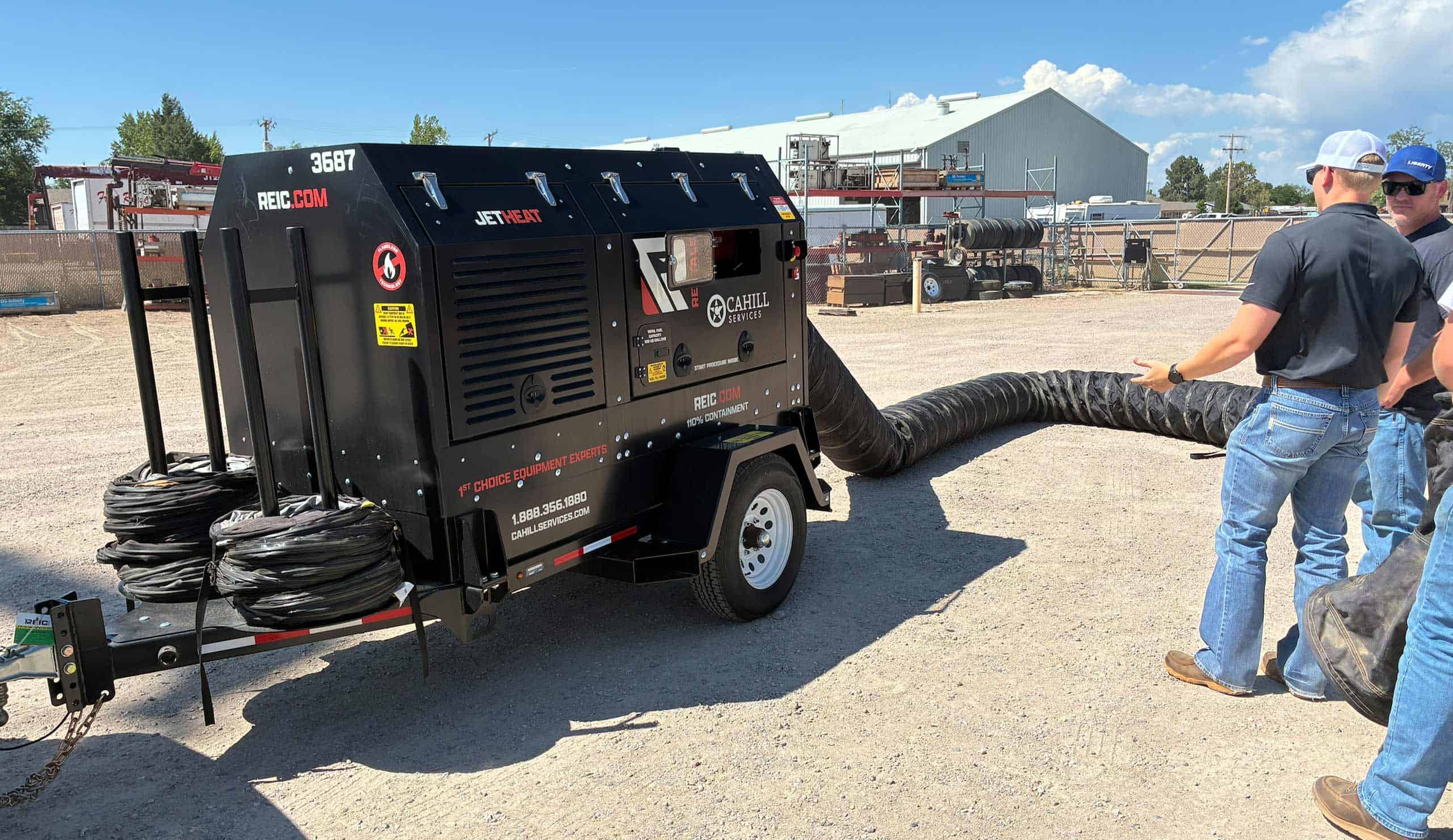
REIC Rentals provides temporary heating for active construction sites, including indirect-fired heaters, direct-fired units, and the exclusive Jet Heat flameless system. Here are the six factors that determine which solution is right for your site.
1. Define Your Heating Goals
Before selecting equipment, define what you are actually trying to achieve. Frost protection for a concrete pour has different requirements from maintaining sustained warmth across an enclosed multi-story floor plate. A temporary break area has different needs from a drywall finishing phase.
Each goal has different temperature thresholds, different durations, and different equipment implications. Defining the goal first prevents the two most common mistakes: over-specifying equipment that costs more than the job requires and under-specifying equipment that fails to meet the actual need.
2. Fuel Type and Heat Delivery
Fuel type and heat delivery method are the two variables that most directly determine which equipment is best suited to a specific application.
Direct-fired heaters use an open flame to heat air and push it into the workspace. They are highly efficient for outdoor and well-ventilated applications. They are not appropriate for enclosed spaces where combustion byproducts accumulate or where materials are sensitive to moisture from combustion.
Indirect-fired heaters pass combustion gases through a heat exchanger and discharge clean, dry air into the workspace. Combustion byproducts exit separately, making them the standard choice for enclosed interiors, occupied buildings, hospital construction, and any application where air quality and moisture control matter.
Jet Heat, REIC Rentals’ exclusive patented flameless technology, delivers dry heat with no open flame and no combustion emissions at over 97% efficiency. It handles long duct runs that conventional heaters cannot consistently serve and is the right choice for hazardous environments, including oil and gas sites and refineries, as well as for any application where emissions restrictions apply.
3. Safety
Every heating decision on a construction site is also a safety decision. Carbon monoxide accumulation from direct-fired equipment in inadequately ventilated spaces is a serious risk. Carbonation of concrete from combustion byproducts can compromise structural integrity. An open flame near combustible materials poses a fire risk.
Indirect-fired heaters eliminate the risk of combustion byproducts in the heated space. Jet Heat eliminates the risk of open flame entirely. Cold weather itself is also a safety hazard: hypothermia begins when core body temperature falls below 95 degrees Fahrenheit, and the impairments that precede it affect judgment and dexterity before either the worker or supervisor recognizes the problem.
4. Regulatory Compliance
Temporary heating equipment is subject to local permit requirements, fire code restrictions, and, in some jurisdictions, specific rules governing fuel types in particular building types. Requirements vary by jurisdiction and project type.
Confirm permit requirements with your local fire marshal before equipment arrives on site. Noise limitations at urban or occupied sites may also affect equipment selection. REIC Rentals works with contractors to identify equipment that fits the specific regulatory environment of each project.
5. Ventilation
Direct-fired heaters require adequate ventilation to prevent carbon monoxide accumulation and to manage the moisture and carbon dioxide produced by combustion. In a concrete curing enclosure, carbon dioxide from poorly ventilated direct-fired heaters can carbonate the surface, compromising structural strength.
Understanding the indoor-versus-outdoor rating of every heater on site and confirming that ventilation is genuinely adequate for the equipment being used are basic operational requirements that affect both safety and work quality.
6. Total Cost, Not Just Rental Rate
Rental rate is a small fraction of the total cost of temporary heating. Fuel consumption typically accounts for the majority of total operating costs over the duration of a rental. A unit with a higher daily rate but significantly better fuel efficiency frequently produces a lower total project cost than a cheaper unit that burns more fuel.
Operating costs also include delivery, fuel logistics, and any service requirements during the rental period. Equipment requiring more frequent refueling incurs logistics costs that are not reflected in the base rental rate. REIC Rentals advises on the total cost of use, not just the rental line item, because that is where the real money is.
Contact REIC Rentals to discuss the heating requirements of your next construction project. Request a quote or find a location near you to connect with the team supporting construction sites in your area.
1.888.356.1880 | in**@**ic.com | reic.com
Service You Trust. Equipment You Need.
