
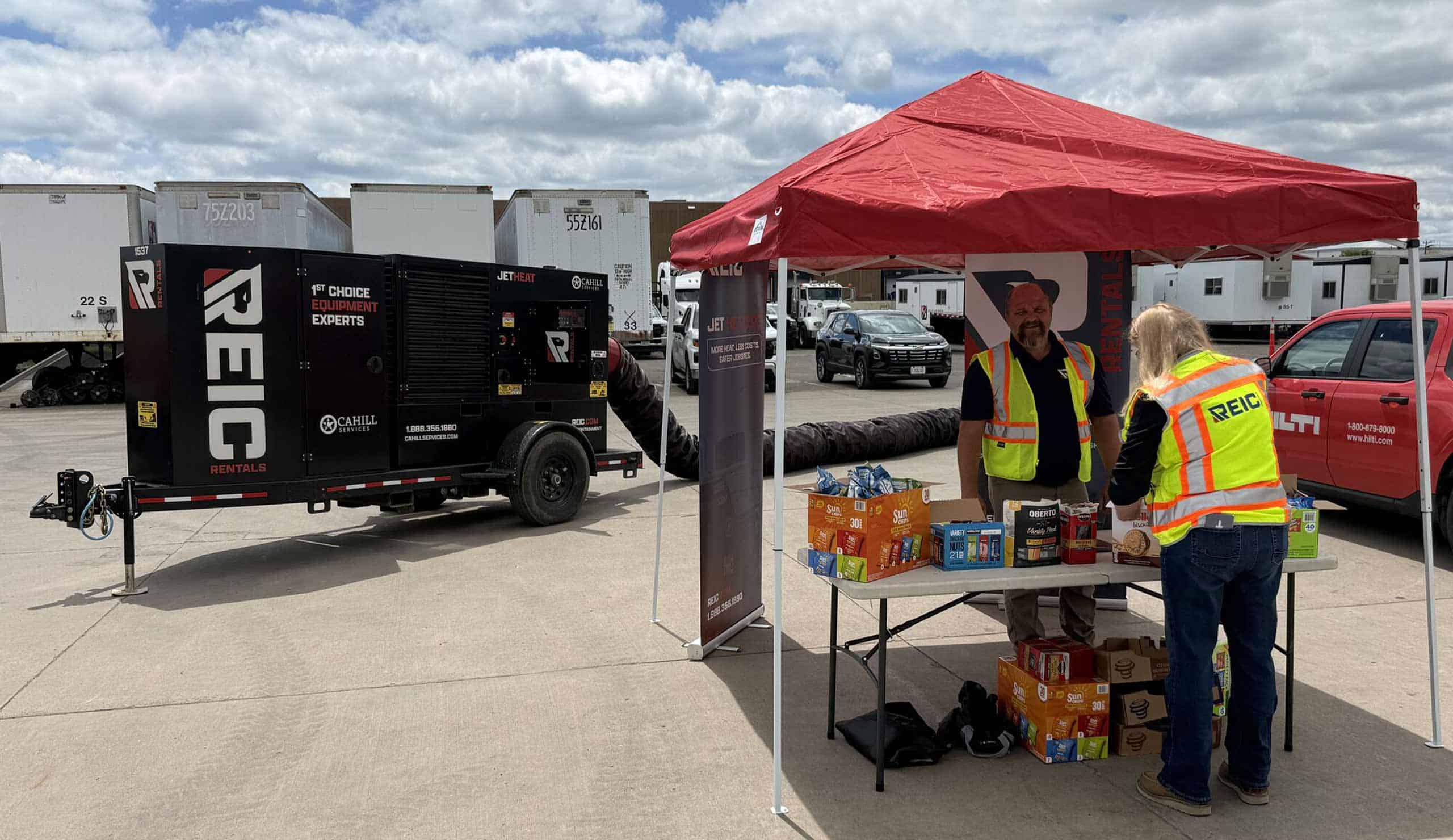
A Cornell University study found that productivity peaks at around 71.6 degrees Fahrenheit. For every degree above that threshold, error rates increased by 2.5 percent. The same research found that workers were less willing to cooperate with teammates when temperatures fell outside the optimal range. The implications for commercial and warehouse operations are direct: temperature is not a comfort variable. It is a performance variable.
In commercial offices, warehouses, and distribution centers, the connection between ambient temperature and worker output is measurable and consistent. Employees working in environments that are too cold make more errors, work more slowly, and disengage from collaborative tasks at higher rates than those in thermally comfortable spaces. During winter, when permanent heating systems may be undersized, under-maintained, or temporarily offline, that performance gap becomes an operational and financial problem.
REIC Rentals provides temporary heating equipment and HVAC accessories for commercial offices, warehouses, and distribution centers. This article covers how temperature affects employee performance and what you can do about it when permanent systems fall short.
How Temperature Affects Cognitive and Physical Performance
Cold conditions affect employee performance through two distinct mechanisms that compound each other. The first is physical: manual dexterity declines measurably as hand and finger temperature drops below comfortable levels. Tasks that require fine motor control, including keyboard work, data entry, packing, and precision assembly, all slow down and become more prone to error as ambient temperature falls.
The second is cognitive. Research consistently shows that cold thermal stress diverts cognitive resources toward the body’s thermoregulation effort, reducing the mental capacity available for the actual work. Employees in cold environments report higher fatigue, lower concentration, and reduced motivation to engage with team members. The Cornell research captured this directly: below-optimal temperatures produced measurable reductions in both individual output and cooperative behavior.
In a warehouse or distribution center context, those effects translate into picking errors, slower processing rates, increased rework, and supervisor time spent on quality issues that comfortable conditions would have prevented. In a commercial office, they manifest as lower-quality output, more revision cycles, and reduced initiative on tasks that require sustained attention.
When Permanent Heating Falls Short
The gap between what a building’s permanent HVAC system was designed to deliver and what it can actually deliver during a cold snap or a maintenance outage is the most common driver of temporary heating demand in commercial and warehouse environments.
Older commercial buildings may have heating systems sized for the design conditions of a prior decade, before additional tenant loads, densified occupancy, or expanded warehouse operations increased thermal demand. A system that maintained comfortable conditions ten years ago may struggle to reach setpoint during extended cold periods today, not because it has failed, but because the building it serves has changed.
Planned maintenance and equipment replacement create predictable gaps. A boiler replacement in January is a necessary capital investment. Without temporary heating bridging the downtime, it is also a guaranteed productivity event affecting every occupied floor in the building.
Practical Steps for Keeping Employees Comfortable
Several practical interventions can maintain comfortable working conditions when permanent systems are insufficient or offline.
Portable heating equipment positioned in high-occupancy areas, individual offices, and common spaces provides targeted temperature control without requiring permanent infrastructure changes. Indirect-fired heaters deliver clean, dry air without combustion byproducts, making them appropriate for enclosed office and warehouse spaces where air quality matters alongside temperature.
Natural air circulation through open interior doors can distribute warm air from heated zones to adjacent cooler spaces without adding equipment. Fans positioned to move air horizontally across open warehouse floors disrupt thermal stratification, which concentrates warm air near the ceiling while leaving the floor level where workers operate cold.
For temporary or leased spaces without permanent heating infrastructure, HVAC rental equipment provides the climate-control capability that a permanent installation would require months and significant capital to achieve. REIC Rentals’ team advises on equipment type, sizing, and placement before delivery so the solution matches the actual space and occupancy rather than being sized generically.
The Business Case for Comfortable Working Conditions
The financial return on investment in temporary heating for commercial and warehouse environments is straightforward to calculate. If a 10-person team working in a cold commercial office operates at reduced efficiency for even a portion of their shift, the productivity cost accumulates quickly against the relatively modest expense of rental equipment that restores comfortable conditions.
Beyond raw productivity, thermal comfort directly affects error rates. In a warehouse picking or packing environment, a cold-weather accuracy decline that increases reject processing by even a small percentage represents real labor cost compounding across every shift. That cost does not appear as a single line item. It is distributed across rework hours, return processing, and customer service activities that would not have existed if the environment had been adequately heated.
Our teams regularly help operations managers in commercial office and warehouse environments identify the right equipment for the specific space and use case. One challenge we commonly help customers solve is determining whether portable air conditioners or heaters are better suited to a specific space, given the layout, occupancy, and ventilation conditions, before committing to a rental configuration.
Contact REIC Rentals to discuss the climate-control requirements for your commercial space or warehouse. Request a quote or find a location near you to connect with the team supporting commercial and warehousing operations in your area.
1.888.356.1880 | in**@**ic.com | reic.com
Service You Trust. Equipment You Need.
