
Preventive maintenance costs a fraction of reactive repairs. Emergency HVAC failures, burst pipes, and roof leaks that appear in January almost always had warning signs in September that a structured fall inspection would have caught. For commercial property managers overseeing multi-tenant office towers and retail centers, fall is the last realistic window to prepare buildings before winter demand peaks.
A structured fall maintenance checklist is a core planning tool for any commercial property. It coordinates vendor schedules, controls costs, protects tenant operations, and prevents emergency call volumes from peaking in the coldest months of the year. The buildings that perform best in January are those prepared in September.
REIC Rentals supports commercial properties with temporary cooling, heating, generators, and drying equipment for planned maintenance windows, HVAC failures, and seasonal transitions. This checklist covers the critical fall preparation tasks for multi-tenant commercial properties.
How to Use This Checklist
This checklist is designed for multi-tenant commercial properties, including office towers and retail centers. Start in late August through early October to allow time for sealant curing, capital approvals, and weather-dependent exterior work.
Assign each task to a responsible party with a target completion date. Map items to in-house staff, specialty contractors, or a rental partner such as REIC Rentals, as appropriate. For property owners with multiple buildings in different climates, prioritize colder zones first.
Exterior: Roof, Drainage, and Building Envelope
Fall exterior maintenance is fundamentally about water management and envelope integrity. Every failed seal or clogged drain becomes a liability once October storms and early freezes arrive.
Roof tasks:
- Schedule professional roof inspections by late September.
- Check membrane seams, flashing around HVAC curbs, skylights, and parapet walls.
- Document ponding water (areas where water remains 24 or more hours after rainfall).
- Complete minor repairs, including patching, resealing flashing, and replacing damaged membranes, before November.
Drainage and envelope:
- Flush roof drains and scuppers; clear catch basins and parking lot drains of leaves and debris.
- Inspect sealant joints at windows, curtain walls, and expansion joints for cracking or failed adhesion.
- Check the weather stripping around doors and windows for drafts.
- Trim back trees to prevent damage from heavy snow or ice against the building envelope.
Parking Lots, Walkways, and Site Safety
As daylight shortens and surfaces get wet, fall site maintenance reduces slip-and-fall risk and preserves curb appeal through peak retail traffic.
- Patch potholes and seal major cracks before freeze-thaw cycles begin.
- Repaint high-wear markings, including crosswalks and fire lanes, while temperatures allow proper curing.
- Inspect all exterior lighting at dusk and adjust timers for shorter daylight hours.
- Inspect sidewalks and stairways for heaving slabs, loose handrails, and uneven pavers.
- Review snow removal contracts and confirm equipment availability by September 30.
HVAC and Boiler Readiness
HVAC complaints are among the most frequent tenant issues from November through February. Fall is the critical window for inspections because contractors are available, equipment is accessible, and emergency premiums are avoidable.
Central heating and boilers:
- Schedule annual combustion analysis by a licensed technician.
- Inspect burners and heat exchangers for corrosion or cracks.
- Test all safety controls, including pressure relief, temperature limits, and low-water cut-offs.
Rooftop units and heat pumps:
- Replace or clean filters; inspect belts, pulleys, and bearings.
- Verify economizer dampers seal correctly when transitioning from cooling to heating.
- Test supplemental heat in loading docks, server rooms, and vestibule heaters before temperatures drop below 45 degrees Fahrenheit.
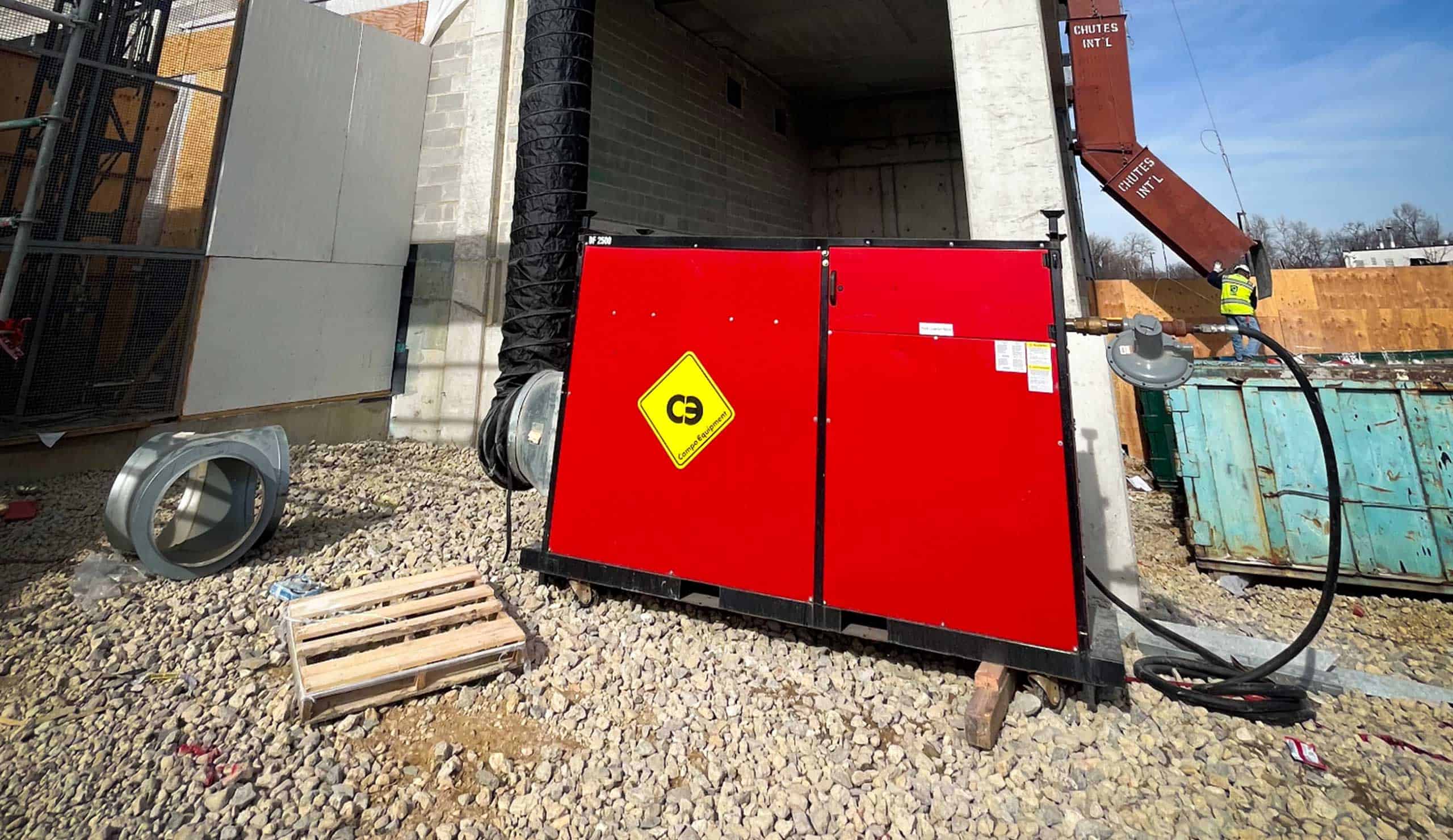
When planned HVAC maintenance requires systems to go offline, REIC Rentals provides temporary heating and cooling equipment to maintain tenant conditions throughout the maintenance window. One challenge our teams regularly help property managers address is bridging the gap between system shutdowns and restarts without disrupting occupied floors.
Interior: Plumbing, Finishes, and Life Safety
Fall interior maintenance protects against cold-weather failures and keeps common areas and tenant spaces in presentable condition through year-end traffic.
Plumbing:
- Insulate exposed pipes in garages, mechanical rooms, and exterior walls.
- Test freeze protection on backflow preventers.
- Exercise isolation valves to confirm they operate correctly.
- Blow out exterior irrigation lines and shut off exterior hose bibs.
Life safety:
- Test emergency lighting and exit signs; verify battery backups meet code requirements.
- Coordinate annual fire alarm and sprinkler inspections in accordance with NFPA requirements.
- Test carbon monoxide detectors in enclosed parking structures and mechanical rooms.
When HVAC failures or water intrusion events create emergency conditions in occupied commercial buildings, REIC Rentals’ heating, drying, and generator equipment enables rapid response, ensuring tenant operations are not interrupted.
Electrical Systems and Emergency Power
Increased lighting use, tenant space heaters, and holiday loads strain circuits that may already have aging components.
- Conduct infrared thermography scans of the main switchgear and critical panels to detect hot spots.
- Service emergency generators, transfer switches, and UPS systems before storm season.
- Verify that fuel tanks are full, filters are clean, and coolant levels are adequate.
- Test and verify automatic transfer switches under load before winter.
A generator that has not been tested under realistic load before winter may fail at startup during the grid event that demands it most. Fall is the time to confirm it will not.
Tenant Communication and Business Continuity
Successful fall maintenance in multi-tenant buildings depends on early communication and coordination of access.
- Send a fall maintenance memo by early September outlining planned HVAC shut-downs, water shut-offs, and parking lot work.
- Request updated emergency contacts and after-hours access instructions from each tenant.
- Review severe-weather protocols with tenants and clarify responsibilities for base building systems versus tenant-maintained spaces.
- Remind tenants about safe use of space heaters to avoid overloading circuits.
REIC Rentals works with commercial property managers to pre-qualify emergency equipment needs before winter arrives, so response time during an actual event is measured in hours rather than days. Request a quote or find a location near you to establish a fall readiness plan for your commercial property or portfolio.
1.888.356.1880 | in**@**ic.com | reic.com
Service You Trust. Equipment You Need.
