
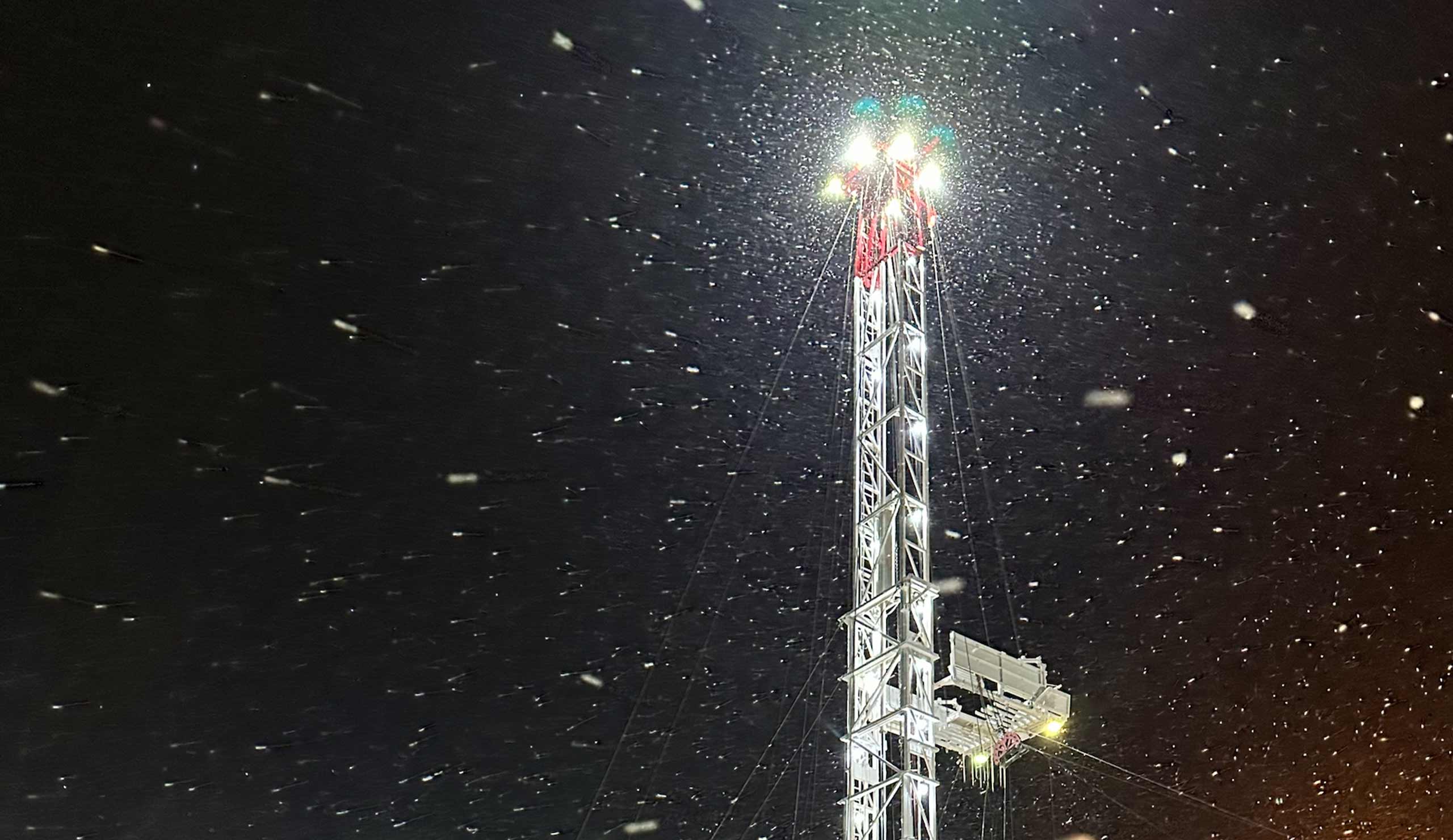
Wind and solar farm construction schedules do not stop when October arrives. Tax credit deadlines, power purchase agreement milestones, and interconnection queues push utility-scale renewable energy builds deep into fall and winter every year. Missing an energization date on a large solar or wind project can carry significant financial consequences. The temporary power strategy that keeps crews working through cold, dark months while those milestones hold is as important as any other element of the construction plan.
Fall and winter construction of renewable energy projects presents temporary power challenges that differ fundamentally from those in urban building projects. Sites are remote, often far from existing grid infrastructure. The terrain is exposed: ridgelines for wind, open plains for solar. Temperatures can reach minus 4 to minus 22 degrees Fahrenheit or lower in the Mountain West and Western Canada markets, where large renewable installations are active. And the power demands evolve continuously as the construction front moves across sites spanning tens of miles.
REIC Rentals provides temporary power solutions for utility-scale renewable energy projects, including generators, power distribution equipment, lighting, and heating equipment, configured for harsh winter environments and remote-site logistics.
Why Temporary Power Is Mission-Critical for Wind and Solar Farm Construction
Temporary power is the first system to arrive on a renewable energy construction site and often the last to leave. On remote wind projects spanning large areas across the Mountain West and utility-scale solar farms in open country, construction starts miles from the nearest distribution line or substation. Diesel generators provide the power that supports every activity from the first day of mobilization through final commissioning.
The demand goes well beyond hand tools. Foundation drilling rigs and concrete batch plants, tower cranes and hydraulic torque tools for wind turbine assembly, tracker and racking installation equipment for solar, SCADA trailers and communications gear, and construction site lighting and security all depend on reliable temporary power throughout the build.
During fall and winter, when daylight is limited and weather interruptions are frequent, the reliability of that power supply directly affects schedule adherence. A well-designed temporary power plan enables parallel work fronts across multiple turbine pads or tracker strings simultaneously, compressing timelines that cold weather would otherwise stretch.
Cold-Season Challenges Specific to Remote Renewable Energy Sites
Cold-season renewable energy construction faces conditions that differ sharply from accessible construction sites. Remote sites on ridgelines and open plains are fully exposed to wind, snow, and temperature extremes without the shelter that urban or suburban building sites provide.
Sub-freezing temperatures that persist for extended periods place specific demands on temporary power equipment. Batteries can lose significant cranking capacity below zero degrees Fahrenheit, meaning generators must be rated and maintained for cold-weather starting. Standard diesel fuel can form wax crystals near its cloud point in cold conditions, and gelling at the cold filter plugging point prevents starting entirely. Cold-weather diesel blending or fuel treatment, and fuel line heat tracing on generator systems, are operational requirements rather than optional precautions.
Condensation inside temporary panels and cable connections poses a risk of failure not present under milder conditions. Cold-weather-rated cables that remain flexible and resist cracking at low temperatures, weatherproof distribution boxes, and cable routing above the probable snow accumulation are all design requirements for fall- and winter-temporary power systems at renewable energy sites. REIC Rentals engineers these requirements into temporary power designs from the planning phase rather than treating them as field modifications.
Logistically, long supply lines to remote sites mean fuel deliveries can be delayed or stopped by storms. Repositioning equipment across sites spanning multiple miles takes longer in cold, snowy conditions than in favorable weather. Early planning that accounts for these constraints, rather than discovering them after mobilization, is what keeps temporary power reliable through the full construction season.
Designing a Cold-Weather Temporary Power Strategy
Effective temporary power for fall and winter renewable energy builds starts with engineering during the planning phase, well before equipment arrives on site.
Load estimation for utility-scale wind and solar sites must account for cold-weather startup loads from heating equipment, welders, GPS pile drivers, tracker motors, temporary HVAC systems for inverter and SCADA buildings, and site lighting. Diversified temporary loads across a large project site can range from several hundred kilowatts to multiple megawatts, depending on the number of simultaneous work fronts and the cold weather heating requirements.
System architecture for large renewable sites typically includes generator banks feeding primary distribution at medium voltage with step-down transformers delivering standard voltages for large equipment and general power. Temporary power distribution panels manage loads across work zones spread over large areas.
Cold-weather design features that REIC Rentals incorporates include oversized conductors to account for voltage drop across long cable runs, cold-weather-rated cables that remain flexible in sub-freezing conditions, heat tracing on fuel lines and critical cable runs, and extra capacity for de-icing systems and heating equipment that activate during cold events.
Phased distribution that allows the power front to expand as new turbine pads come online or tracker strings extend, while earlier-completed zones are demobilized, matches power delivery to the construction schedule rather than committing full infrastructure to areas that will not need it for weeks.
Powering Wind Farm Construction Through Cold Months
Onshore wind energy projects present unique power requirements that evolve through each construction phase. Early work on access roads, batch plants, rebar fabrication, and laydown area setup demands power before any turbine components arrive. As construction advances, power-intensive work escalates: tower crane operation at hub heights above 330 feet, hydraulic torque and tensioning tools for tower bolt-up, nacelle assembly equipment, and control cabinet installation inside nacelles all draw significant loads.
Generators for crane and hydraulic applications during cold weather must be rated for the higher inrush currents that cold ambient conditions produce when systems are activated after overnight temperature drops. Foundation pour phases require temporary power for heaters and concrete blankets that maintain curing temperatures above the threshold required by applicable cold-weather concreting standards. Without that heated curing support, concrete integrity is compromised in ways that affect structural performance and inspection outcomes.
Wind farms spanning large areas require multiple generator banks distributed geographically to reduce cable losses and provide redundancy across the construction front. REIC Rentals configures mobile generator farms and modular distribution systems that move with the construction front as it advances through sequential strings of turbine pads, maintaining power coverage without over-investing in infrastructure for areas not yet active.
Powering Utility-Scale Solar Farms Through Fall and Winter
The growth of utility-scale solar has pushed construction schedules into fall and winter to meet project finance and commercial operation date commitments. Site grading, pile driving, tracker and racking assembly, DC wiring, inverter skid and substation installation, and final commissioning all require reliable power through conditions that October through February regularly produce in the regions where large solar projects are active.
Seasonal tasks add specific loads: running electric ground-thaw mats under inverter pads in frozen ground conditions, operating dewatering pumps during snowmelt events, and maintaining temporary HVAC in inverter stations and SCADA buildings during late-season construction phases. Temporary power systems must adapt to these loads as they appear rather than being sized only for the primary construction activities.
Long string lengths and dispersed DC collection areas require careful placement of generators, transformers, and distribution equipment to minimize cable runs and voltage drop across the site. REIC Rentals supports solar projects with distribution designs that account for the full layout of tracker strings and inverter pad locations rather than applying a standard configuration regardless of site geometry.
Safety, Lighting, and Worker Infrastructure
In fall and winter, temporary power supports worker safety as directly as it supports production output. Poor visibility is among the leading causes of site injuries, and with daylight ending as early as 4:30 p.m. in November through January across much of the Mountain West and Western Canada, lighting becomes a safety requirement rather than a productivity option.
REIC Rentals’ light towers provide high-lux illumination rated for cold-weather operation across laydown yards, turbine pads, string roads, and junction box locations. Electric heaters in site trailers, first-aid stations, battery storage enclosures, and switchgear rooms maintain conditions that allow workers and equipment to function through cold snaps.
Code-compliant temporary power installations require GFCI protection on distribution equipment, weatherproof connections that protect against snow and moisture ingress, cable routing above probable snow and mud accumulation, and grounding systems that remain effective in frozen ground conditions. REIC Rentals integrates backup and redundancy so that critical safety systems, including lighting, communications, and emergency heating, remain online even if a primary generator trips during a storm.
Planning Before the Cold Season Arrives
Early engagement with REIC Rentals, ideally before summer or early fall for projects with fall or winter construction windows, allows time for load studies, equipment procurement, delivery logistics planning, and cold-weather preparation of generator and distribution equipment before site mobilization begins.
For projects with milestone dates tied to interconnection agreements, tax credit eligibility, or power purchase agreement commercial operation dates, a temporary power gap is not a logistics inconvenience. It is a financial event. REIC Rentals works directly with EPCs, developers, and renewable energy contractors to integrate temporary power planning into construction schedules and interconnection milestones from the earliest phases of project development, so the power front moves with the construction front rather than chasing it.
Contact REIC Rentals to build a customized temporary power plan for your renewable energy project. Request a quote or find a location near you to connect with the team that can engineer a cold-weather-ready power system for your specific site, schedule, and load profile.
1.888.356.1880 | in**@**ic.com | reic.com
Service You Trust. Equipment You Need.
