
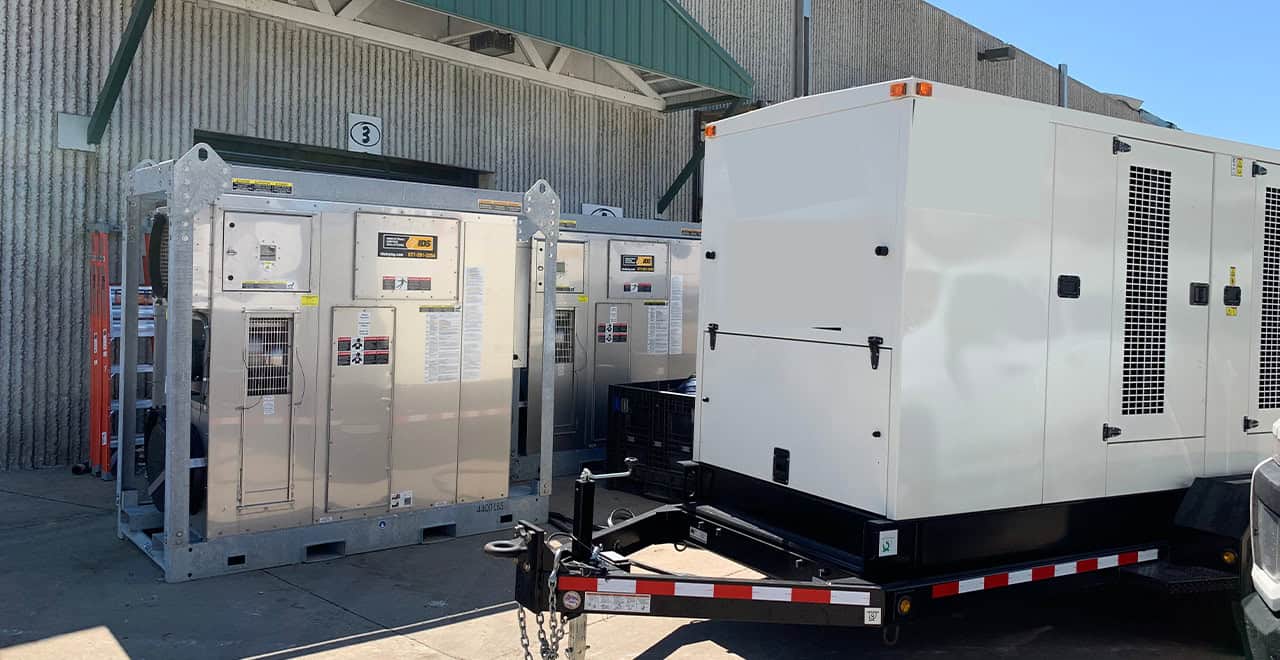
Every construction project, active facility, and emergency response operation shares one non-negotiable requirement: reliable power. Without it, schedules slip, critical services stop, and costs compound in ways that are difficult to recover from. The decision is rarely whether power is needed. It is about how quickly it can be made available, how flexibly it can be scaled, and whether the timeline and budget support a permanent solution or require a temporary one.
REIC Rentals delivers temporary and portable power solutions for construction sites, facilities managing planned or unplanned outages, and emergency response operations. This article covers when temporary power is the right answer, how it compares to permanent installation across the factors that matter most, and how to plan before the situation makes the decision urgent.
What Portable Power Is and When It Is Used
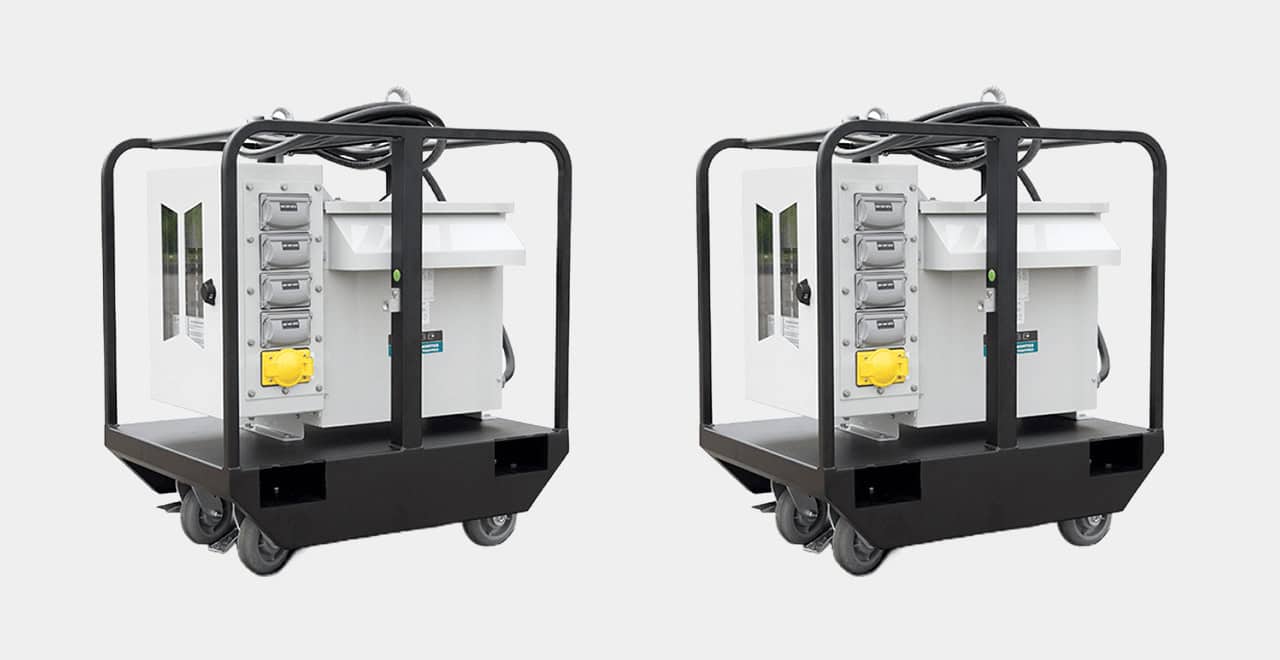
Portable power refers to rental-based, modular equipment designed for rapid deployment and short- to medium-term use. It covers a range of assets from compact single-phase generators suited to job trailers and light construction loads through large three-phase systems for heavy industrial and commercial applications. Temporary power distribution equipment, including distribution panels, cabling, and accessory routes, delivers power from generation to the specific loads and zones that require it.
The defining characteristics of portable power are speed and flexibility. Equipment can be on site within hours to a few days, depending on logistics and distance. It can be scaled up as load grows, repositioned as work progresses across a site, and removed when the project closes or permanent infrastructure comes online. It does not require permanent wiring, utility coordination, or the permit and inspection process that a permanent installation demands.
Portable power is the appropriate solution when a site needs electricity before permanent utility service is available, when a facility needs backup coverage during a planned maintenance window or an unplanned outage, when budget or timeline uncertainty makes a capital commitment impractical, or when a remote or temporary location makes permanent infrastructure disproportionately expensive relative to the duration of use. In all of those scenarios, the characteristics that make portable power different from permanent installation are exactly the characteristics the situation requires.
What Permanent Power Involves
Permanent power refers to fully engineered, code-compliant, utility-connected electrical systems plus any fixed backup generation designed for the operational life of a facility. Permanent installations are hardwired into the building’s electrical infrastructure and are intended to provide reliable, continuous power without the logistics of fuel delivery, equipment placement, and temporary wiring that portable systems require.
The process from decision to energization on a permanent installation is measured in months, not days. Design, permitting, utility coordination, construction, inspection, and commissioning all require time that a project waiting on power simply does not have. For commercial and industrial facilities, the process routinely takes several months from initiation to completion, and delays at any phase extend the overall timeline.
The financial investment in permanent power is also substantially higher than the equivalent temporary capability. Engineering, utility fees, switchgear, site preparation, fuel infrastructure, and installation all contribute to a total cost that makes permanent solutions cost-effective only for facilities with long operational timelines and stable, predictable load requirements.
The strengths of permanent power are significant for facilities that meet those criteria. Automated transfer between grid and standby power eliminates the manual intervention required by portable systems. Permanent infrastructure integrates with the facility’s electrical management systems and operates without the ongoing logistics of a rental relationship. For a facility that will occupy a site for years, those advantages justify the upfront investment and timeline.
The practical reality is that most construction projects and many facility operations benefit from both: temporary power as the default starting point, and permanent installation as the long-term solution that temporary equipment bridges toward.
Construction Sites: Temporary Power as the Default Starting Point
Commercial and infrastructure construction projects begin on sites with no live utility connection, grid power, or permanent electrical infrastructure. From the first day of earthwork, crews need electricity to power tools, pumps, compressors, site trailers, lighting, and security systems. That makes temporary power the operational default on virtually every construction site from day one.
A typical temporary power setup on a construction site includes generators sized to the current phase load, temporary power distribution equipment, such as distribution panels and cabling routed to active work areas, and lighting in areas where natural light is insufficient for safe work. The configuration changes as the project progresses through phases, with load profiles shifting from heavy equipment during earthwork and structure to mechanical and electrical rough-in, then to interior finishes and commissioning.
The distinction between mobile and fixed temporary power configurations reflects those phase changes. Mobile configurations use towable generators that move with crews as work progresses across the site, suited to phased earthwork, foundation pours, and exterior framing, where the location of peak load shifts week to week. Fixed temporary configurations position stationary generators with distribution routed to serve a defined area for an extended phase, suited to interior finishes, mechanical rough-in, and commissioning, where the work stays in one location for long enough to justify a more permanent temporary setup.
REIC Rentals designs job-specific temporary power layouts rather than delivering standard equipment and leaving configuration to the site team. That includes sizing generators to the actual load profile of the current phase, routing distribution to minimize trip hazards and maintain access routes, planning fuel logistics to avoid production interruptions, and scaling capacity as the project moves from one phase to the next. The goal is power available from day one that adapts to the project rather than requiring the project to adapt to it.
Planned Outages and Maintenance Windows
Facilities with permanent power infrastructure still require temporary power for planned maintenance and upgrade work that takes primary systems offline. Chiller replacement, switchgear maintenance, generator service, and utility coordination windows all create periods where permanent systems are unavailable, and operations must continue with temporary support.
Pre-staging temporary power equipment before planned maintenance work begins eliminates the gap left by unplanned outages and allows the maintenance work to proceed on schedule rather than under pressure to restore permanent power as quickly as possible. REIC Rentals supports planned outages with pre-delivery coordination that aligns equipment arrival with the maintenance schedule, confirms electrical connection logistics in advance, and tests the temporary system before permanent systems come offline.
Commissioning of new building wings or systems creates similar temporary power requirements in reverse. Areas under commissioning may require power before they are connected to the permanent electrical distribution system. Temporary power bridges the gap while commissioning proceeds, rather than waiting for the permanent connection to be complete before testing can begin.
Emergency Response: Temporary Power as the First Available Option
Grid outages from severe weather, equipment failures, and infrastructure events leave facilities without power, with restoration timelines for permanent supply measured in days rather than hours. In the first 24 to 72 hours after a major grid failure, portable power is frequently the only available option for maintaining critical operations while permanent infrastructure is assessed and repaired.
REIC Rentals’ generators and distribution equipment can be mobilized on short notice for emergency response across the range of applications affected by power outages: facilities that must maintain operations regardless of grid status, critical loads that cannot tolerate interruption, and temporary operations established in response to the emergency itself.
The characteristics that make portable power valuable in construction, such as speed of deployment, flexibility of placement, and independence from permanent infrastructure, are the same characteristics that make it valuable in emergency response. A site that requires power and cannot wait for a permanent solution to be engineered, permitted, and installed needs equipment that can be on site and operational within hours. REIC Rentals is built around that capability.
Facilities in REIC Rentals’ markets across the Pacific Northwest, Rocky Mountain region, and Great Plains face severe weather risks, including winter storms, derechos, and extended freeze events that can damage grid infrastructure and leave facilities without power for extended periods. Pre-positioning temporary power equipment before those events, rather than initiating the process after the outage, allows critical operations to continue without the gap that reactive procurement creates.
The Cost and Risk Comparison
Choosing between temporary and permanent power is ultimately a financial and risk management decision. The factors that determine the right answer include project duration, load predictability, budget certainty, and the operational flexibility the situation requires.
Temporary power has a lower upfront cost than a permanent installation. There is no engineering process, no permitting timeline, no utility coordination, and no site infrastructure to build. The ongoing cost per hour of operation is higher for temporary power than for permanent installation when the latter is amortized over years of service. That comparison inverts when the duration of use is short, when the load profile is unpredictable, or when relocating equipment as the project evolves, and is worth more than the cost differential.
Permanent power’s cost advantage grows with duration and stability. A facility that will occupy a fixed location for many years with a stable, predictable electrical load will find the total lifecycle cost of a permanent installation lower than that of equivalent temporary coverage over the same period. The crossover point where permanent installation becomes more cost-effective than ongoing rental depends on the specific load, duration, and infrastructure requirements of the installation. REIC Rentals can work through that analysis with customers considering either approach.
Budget uncertainty shifts the calculation toward temporary power regardless of duration. When capital expenditure authorization is uncertain, a project timeline may change, or the scope of permanent infrastructure required is not yet fully defined, the pay-as-you-go rental model protects against the risk of committing to permanent infrastructure that the project may ultimately not need in the originally planned configuration.
Maintenance responsibility is a meaningful factor in the total cost comparison. Rental agreements through REIC Rentals include maintenance, which removes the ongoing cost and operational burden of keeping equipment in service from the customer’s responsibility. Permanent installations place maintenance responsibility on the owner, with predictable costs for well-maintained systems but costs that can escalate significantly when maintenance is deferred.
Hybrid Approaches: Temporary and Permanent Together
Most real-world power strategies combine temporary and permanent elements rather than relying exclusively on one. A construction project that starts with temporary power and transitions to permanent utility service as the project progresses uses both in sequence. A facility with permanent standby generation that supplements with rental equipment during peak periods or major maintenance uses both simultaneously.
The phased approach is the most common pattern for large construction projects. Temporary power from REIC Rentals covers the project from initial earthwork through the phases where permanent utility service is not yet available. As the project approaches completion and permanent service comes online, temporary equipment is scaled back and eventually removed. That transition is planned rather than improvised, with REIC Rentals coordinating the reduction of temporary capacity in line with the confirmed timeline for energization of permanent service.
The hybrid approach also applies to emergency preparedness. A facility with permanent standby generation sized for essential loads supplements that capacity with pre-arranged rental equipment for scenarios where the permanent standby system is itself affected by an event or where load exceeds standby capacity during an extended outage. Having that arrangement confirmed in advance with REIC Rentals means the supplemental capacity is available without the procurement delay that emergency conditions create.
Scenario: Temporary Power on a Commercial Construction Project
Consider a large commercial project breaking ground in spring, where the local utility’s permanent service connection is estimated to take several months to complete. The project needs power immediately for site security, site trailers, earthmoving equipment, and the tools and pumps that support foundation work. Waiting for permanent service is not an option. Every day without power is a day the project cannot start.
In that scenario, temporary generators and distribution equipment deployed on day one of site work would keep the project moving from the first shift. As work progresses from earthwork into structural framing, the temporary power configuration adjusts to serve the changing load profile. When mechanical and electrical rough-in begins, the distribution layout is extended and reconfigured to serve interior work zones. By the time permanent utility service is energized several months later, the project has run on temporary power through multiple phases without a day of lost production attributable to power unavailability.
The total cost of temporary power through that window would be a fraction of what permanent service infrastructure would cost, and it would be available immediately rather than at the end of a months-long permitting and installation process. With REIC Rentals managing fuel logistics, load monitoring, and equipment scaling throughout, the site team focuses on construction rather than power management.
That is the practical case for temporary power as the default starting point on construction projects: not a compromise while permanent infrastructure catches up, but a deliberate operational choice that keeps the schedule moving from day one.
Planning Temporary Power with REIC Rentals
REIC Rentals approaches temporary power as a project planning engagement rather than a transaction. The process begins with a site assessment and load calculation that reflects the current project phase and the phases that follow, rather than sizing equipment for a single static load.
Equipment selection follows from that assessment, matching generator capacity and distribution configuration to the site’s actual requirements rather than defaulting to standard configurations that may be over- or undersized for the specific application. Delivery, installation, and commissioning are coordinated to align with the project schedule. Ongoing support, including fuel management, load monitoring, and equipment scaling, continues through the active rental period. Decommissioning and removal are planned in advance rather than initiated reactively when permanent power is ready.
Request a quote or find a location near you to start the conversation about temporary power for your next project or facility requirement.
When Temporary Power Is the Right Answer
Temporary power is the right answer when speed, flexibility, and budget certainty dominate the decision. Permanent power suits stable, long-term facilities with predictable loads and secured capital. Most real-world projects require both in some combination, with temporary equipment bridging the gap while permanent infrastructure is developed.
The scenarios that consistently favor temporary solutions are new construction before utility service is available, facility operations during planned maintenance and upgrade windows, and emergency response, in which portable power is the only option within the required timeline. REIC Rentals supports all three with equipment, planning, and ongoing service across our network.
Explore the full range of power and lighting solutions, including generators, lighting, and power accessories, or request a quote to build a power plan before the project demands it.
1.888.356.1880 | in**@**ic.com | reic.com
Service You Trust. Equipment You Need.
