
How Commercial Construction Teams Stay Productive When Temperatures Drop
Winter is one of the most challenging seasons for commercial construction. Cold temperatures, snow, wind, and shortened daylight hours all work against productivity. Materials behave differently, equipment requires extra care, and crews face conditions that can slow progress or stop work entirely. Yet projects don’t pause for winter. Schedules, budgets, and milestones still move forward.
Temporary heat plays a central role in keeping commercial construction projects on track through cold weather. When planned and deployed correctly, it protects materials, supports crews, and stabilizes environments, allowing work to continue safely and efficiently. For contractors, understanding how to use temporary heat effectively is the difference between managing winter conditions and losing weeks of progress.
REIC Rentals supports commercial construction teams with temporary heating and site support solutions built for winter performance. This guide breaks down how temporary heat fits into winter construction planning and how contractors can use it to maintain momentum throughout the coldest months.
Why Temporary Heat Is Essential in Winter Construction
Cold weather affects nearly every phase of commercial construction. Concrete curing slows, finish failures occur, and mechanical systems become more vulnerable to damage. Even when temperatures hover just above freezing, cold surfaces and wind exposure can create conditions that stall work.
Temporary heat helps contractors:
- Maintain workable temperatures for materials and installations
- Protect building systems from freeze-related damage
- Keep interior trades productive
- Reduce weather-related downtime
Instead of waiting for favorable conditions, contractors use temporary heat to create them.
Understanding the Different Types of Temporary Heat
Not all heating solutions are created equal. Selecting the right type depends on the space, occupancy, ventilation, and duration of use.
Common temporary heating categories include:
- Indirect-fired heaters for clean, controlled interior heat
- Flameless heaters for large-scale, outdoor, or industrial work areas
- Electric heaters for small or enclosed spaces
Each option has advantages and limitations. Choosing correctly ensures safe operation and efficient performance throughout winter.
Interior Heating: Supporting Trades and Finishes
Interior work often becomes the focus during the winter months. Framing, drywall, painting, flooring, and MEP installations all depend on stable temperatures to meet quality standards.
Temporary heat supports interior work by:
- Maintaining consistent ambient conditions
- Preventing moisture-related issues
- Allowing finishes to cure and dry properly
Without adequate heat, interior trades are forced to delay work or risk rework—both of which impact schedules and budgets.
Exterior Heating and Enclosures
While interior work can often be protected, exterior scopes don’t disappear in winter. Structural work, façade installation, and roofing frequently continue through cold months.
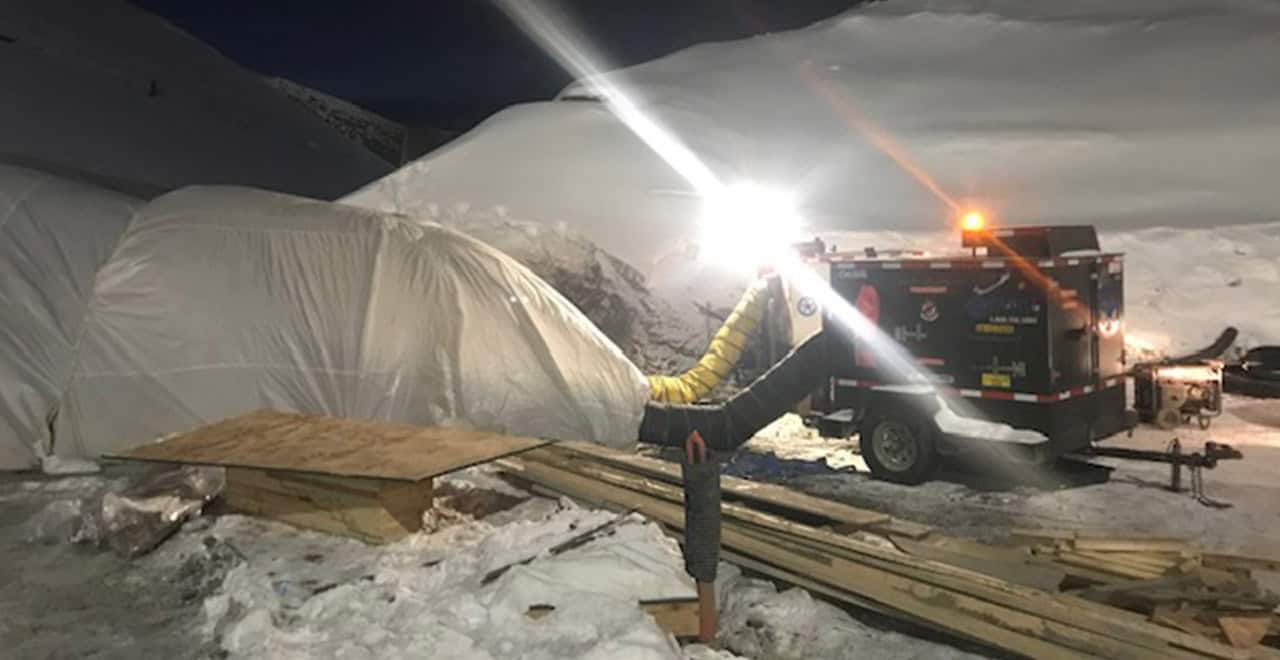
Temporary heat is commonly used alongside enclosures to:
- Shield work areas from wind and snow
- Maintain temperature thresholds for materials
- Extend work windows during cold snaps
Proper enclosure design and heater placement are critical to achieving consistent conditions and avoiding heat loss.
Moisture Control Goes Hand in Hand With Heat
Heating alone doesn’t solve every winter challenge. Cold air holds less moisture, but when heated without ventilation, humidity can build up inside structures. This can lead to condensation, delayed dry times, and finish failures.
Effective winter strategies often combine:
- Temporary heat to raise ambient temperatures
- Air movement to circulate warmth evenly
- Dehumidification to manage moisture levels
This balanced approach helps contractors protect both materials and workmanship.
Planning Temporary Heat Into the Schedule
One of the biggest mistakes contractors make is treating temporary heat as an afterthought. Successful winter projects plan for heating early, well before temperatures drop.
Key planning steps include:
- Identifying temperature-sensitive scopes
- Calculating heat load based on space and exposure
- Coordinating fuel supply and power needs
- Allowing time for setup and monitoring
When heat is integrated into the schedule, winter work becomes predictable rather than reactive.
Safety Considerations in Heated Work Zones
Temporary heat introduces additional safety considerations on commercial jobsites. Proper setup and monitoring are essential to protect crews and buildings.
Best practices include:
- Ensuring adequate ventilation where required
- Keeping heaters clear of combustible materials
- Using equipment designed for occupied spaces
- Regularly inspecting heaters and fuel systems
Working with experienced rental professionals helps ensure heating solutions are deployed safely and in compliance with jobsite requirements.
Protecting Building Systems and Infrastructure
Winter construction isn’t just about completing new work—it’s also about protecting what’s already in place. Plumbing, fire protection, and mechanical systems are vulnerable to freezing during construction phases.
Temporary heat helps:
- Maintain above-freezing temperatures in critical zones
- Protect installed systems prior to commissioning
- Reduce the risk of burst pipes and water damage
Preventing freeze-related issues avoids costly repairs and keeps projects on track.
Temporary Power and Fuel Logistics
Heating systems often require supporting infrastructure. Power availability, fuel storage, and access all affect how temporary heat performs over time.
Commercial projects may require:
- Generators to support electric or fuel-fired heaters
- Planned fuel delivery schedules
- Monitoring systems for long-duration heating
REIC Rentals helps contractors plan these logistics so heating systems run reliably throughout winter.
Adapting to Changing Weather Conditions
Winter weather is rarely consistent. Temperatures fluctuate, storms roll in, and wind exposure changes as buildings take shape.
Flexible heating strategies allow contractors to:
- Scale heating capacity as conditions change
- Adjust airflow and ventilation
- Reposition equipment as work zones shift
This adaptability is critical to maintaining productivity without overspending on unnecessary heat.
Where Temporary Heat Delivers the Most Value
Temporary heat is widely used across commercial construction applications, including:
- New building construction
- Tenant improvements and interior build-outs
- Renovations and additions
- Parking structures and mixed-use developments
In each case, the goal is the same: stabilize conditions so work can proceed despite winter challenges.
Why Commercial Contractors Partner With REIC Rentals
Temporary heat is only as effective as the planning and support behind it. Contractors rely on partners who understand winter construction realities and can respond quickly when conditions change.
REIC Rentals supports commercial construction teams with:
- Job-ready heating equipment maintained for winter use
- Practical recommendations based on real jobsite conditions
- Fast response and reliable service
- Coverage across North America for regional consistency
This approach allows contractors to focus on building rather than reacting to weather conditions.
Turning Winter Into a Productive Season
Winter construction doesn’t have to mean lost time. With the right temporary heating strategy, commercial contractors can maintain schedules, protect quality, and keep crews working safely through the coldest months.
Temporary heat transforms winter from a barrier into a manageable condition. When paired with thoughtful planning and experienced support, it becomes one of the most valuable tools on the jobsite.
REIC Rentals delivers the service you trust and the equipment you need to keep commercial construction projects moving—no matter how low the temperatures fall.
Ready to plan for winter success?
Contact us to work with experienced rental professionals who can help you design, deploy, and maintain temporary heating solutions that support productivity all season long.
