
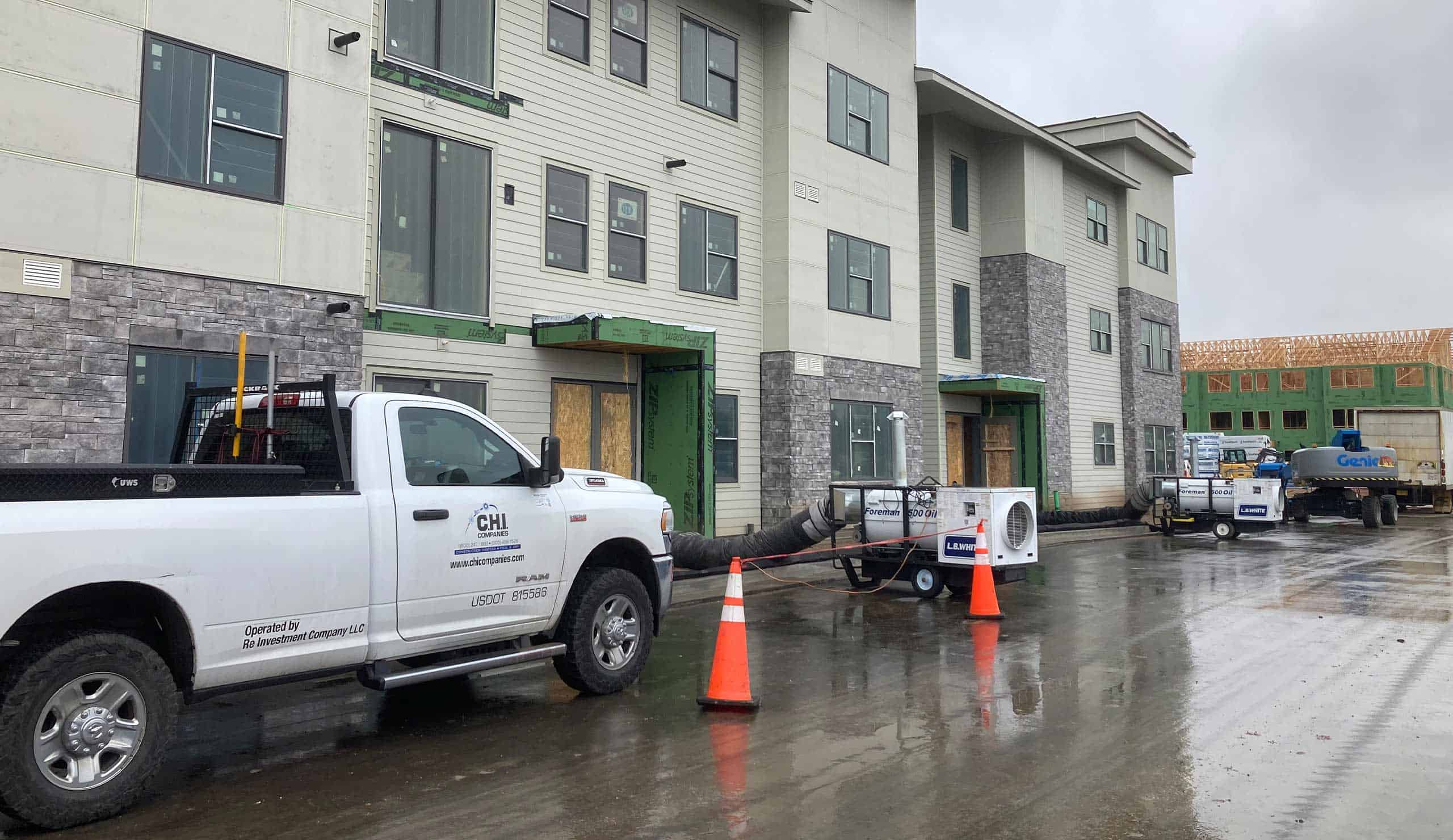
On a live petrochemical plant or an active pipeline right-of-way, a heater is not simply a piece of equipment that produces warmth. It is an ignition source management decision. The choice between a direct-fired and an indirect-fired heater determines whether a piece of equipment can be placed near process equipment carrying hydrocarbons, whether it can legally operate under a hot work permit, and whether it introduces moisture and combustion byproducts that compromise coating cure on fresh pipeline welds.
Getting that choice wrong has consequences that go beyond comfort. An open-flame heater positioned too close to a classified area containing volatile hydrocarbons poses an ignition risk that plant EH&S departments treat as a process safety event. Combustion byproducts from a direct-fired unit inside a weld tent elevate humidity and CO2 levels, which slow the cure of fusion-bonded epoxy coatings and can compromise the integrity of girth welds. And a heater that fails a hot work permit review delays the work it was meant to enable.
REIC Rentals is a specialist provider of direct-fired heaters, indirect-fired heaters, and flameless Jet Heat technology for petrochemical and refinery operations, oil and gas sites, and pipeline and storage tank construction. This article defines both heater types, compares them with respect to hazardous-area requirements, and provides guidance on selecting the appropriate approach for specific petrochemical and pipeline applications.
How Direct-Fired Heaters Work and Where They Apply
A direct-fired heater burns fuel, typically diesel, natural gas, or propane, and directs the flame and combustion products into the air stream supplied to the heated space. Because there is no separate exhaust path to divert heat, these units achieve very high thermal efficiency. Almost all of the combustion energy is transferred to the supply air.
That efficiency comes with a fundamental limitation: direct-fired heaters mix combustion gases, CO2, water vapor, carbon monoxide, and NOx with the heated air delivered to the work area. In petrochemical and pipeline applications, those byproducts create three categories of risk.
First, elevated CO2 and moisture in enclosed weld tents and curing enclosures directly affect pipeline coating cure rates and quality. Fusion-bonded epoxy coatings are sensitive to elevated humidity during application and cure. The moisture produced by direct combustion chemistry can push relative humidity in a sealed enclosure to levels that compromise coating adhesion and slow cure times on a schedule that does not allow for either.
Second, the open flame itself is restricted near or within Class I Division 1 and Division 2 or Zone 1 and Zone 2 areas that apply around process equipment carrying volatile hydrocarbons. Plant safety regulations and hot work permit standards typically prohibit the use of open-flame equipment within classified zones. During a refinery turnaround or a compressor station build, that restriction forces direct-fired heaters into unclassified areas with long duct runs that increase heat loss and logistics complexity.
Third, in confined or semi-enclosed spaces, the accumulation of CO from direct combustion without adequate ventilation poses a life-safety hazard that requires continuous monitoring and defined fresh-air rates to manage.
Direct-fired heaters are appropriate for large, open tented weld enclosures on unclassified rural pipeline rights-of-way, thawing frozen ground and equipment laydown yards, and large, well-ventilated fabrication spaces where combustion byproducts dissipate quickly.
How Indirect-Fired Heaters and Flameless Systems Work
An indirect-fired heater features a sealed combustion chamber and a heat exchanger that keeps the flame and combustion gases completely separate from the air delivered to the work area. Combustion occurs in the burn chamber. Hot gases pass through the exchanger tubes, and a separate fresh-air stream flows over them, picking up heat without contact with the flame or combustion products. The exhaust exits through a separate flue stack routed away from the heated space.
The air delivered to the work area is clean and dry, free of combustion byproducts. That characteristic makes indirect-fired heaters appropriate for applications where direct-fired units are restricted or counterproductive, such as enclosed spaces adjacent to process equipment, weld tents where coating cure quality depends on dry air, confined space applications under bridges or within vessel entries, and any location where air quality and moisture control matter alongside temperature.
REIC Rentals’ exclusive Jet Heat flameless technology goes further. These units use enclosed reaction chambers with no visible flame, reducing open flame exposure, sparks, and hot surface temperatures below the thresholds that ignite flammable vapors in hydrocarbon atmospheres. This design allows placement closer to or within classified zones where standard open-flame equipment is prohibited, subject to owner approval and verification of area classification. Flameless units carry temperature classifications and group ratings compatible with hydrocarbon atmospheres and are the appropriate choice for the most sensitive petrochemical and pipeline heating applications.
Hazardous Area Classification: The Deciding Factor on Live Sites
For live or partially live petrochemical sites, refinery turnarounds, and compressor station builds, hazardous area classification often overrides all other factors when selecting heaters.
Class I Division 1 areas, where flammable gases or vapors are present under normal operating conditions, prohibit open flame ignition sources, including direct-fired heaters. Class I Division 2 areas, where flammable atmospheres exist only in abnormal conditions, may permit indirect-fired or flameless equipment that meets the required temperature and group ratings. The applicable OSHA regulations, NFPA 30 and NFPA 70 National Electrical Code, and plant-specific safety requirements define what is permissible in each zone.
Since approximately 2018, many plant EH&S departments have significantly tightened temporary equipment standards. Turnaround planners now require documented heater-selection rationale, area-classification compatibility records, and ventilation plans before authorizing hot work permits for heating equipment. REIC Rentals supports this documentation requirement with technical data sheets, area classification compatibility records, ventilation and air-change calculations, and emissions information for every heater in our fleet.
One challenge our teams regularly help petrochemical contractors navigate is the interaction between heater placement requirements and the logistics of long duct runs from unclassified staging areas to the actual work zone. A heater that must be positioned 200 feet from the work it is heating loses significant capacity due to duct losses that must be accounted for in the sizing calculation. Getting that right during the planning phase prevents the field discovery that the heating system is undersized for the actual conditions.
Pipeline Construction Applications: Matching Heater to Task
Pipeline construction activities each carry specific heating demands that determine the appropriate heater type.
Girth-weld enclosures on rural rights-of-way in unclassified terrain are typically appropriate for direct-fired heaters, provided the enclosure is adequately ventilated, and combustion byproducts can dissipate. Coating cure tents where fusion-bonded epoxy is being applied or cured require indirect-fired equipment to maintain the dry-air conditions specified by coating specifications. Launcher and receiver pits present confined-space conditions that require flameless or indirect-fired equipment, regardless of the surrounding area classification. Winter hydrotest setups in enclosed valve buildings require clean air delivery without ignition sources near pressurized systems under test.
On pipeline projects crossing refineries, compressor stations, or pump stations, indirect-fired or flameless heaters are typically required near any process equipment, regardless of the right-of-way classification, because the facility’s safety plan governs temporary equipment within its fence line.
Emissions, Ventilation, and Air Quality
The combustion chemistry of any fuel-fired heater produces CO2, water vapor, NOx, and potentially CO and unburned hydrocarbons. The critical difference between direct and indirect-fired equipment is where those products go.
Direct-fired units discharge combustion byproducts into the heated space. In enclosed pipeline weld tents, this elevates relative humidity in ways that affect epoxy coating cure and weld cooling rates. It also requires defined minimum ventilation rates and continuous CO monitoring to maintain safe oxygen levels for workers in the space.
Indirect-fired and flameless units exhaust combustion products separately through a dedicated flue stack. The heated air delivered to the work area is clean and dry, without combustion contaminants. This makes indirect equipment appropriate for instrument enclosures, electrical gear rooms under construction, control buildings, and any application where contaminating the heated air with combustion products would compromise equipment, materials, or personnel.
EPA data on combustion parameters in petroleum refining and chemical manufacturing confirm that excess air management and burner design significantly drive NOx output. Well-designed indirect burners operating at proper excess air levels produce NOx at levels consistent with most permit requirements on projects operating under environmental consent orders or construction permits.
Operational Trade-offs: Total Project Cost
Direct-fired heaters are generally less expensive to rent and simpler to operate in appropriate applications. They deliver high efficiency in unclassified, well-ventilated conditions where their byproducts can dissipate. In those applications, they are the cost-effective choice.
The total project cost comparison shifts when the specific application involves classification restrictions, coating cure quality requirements, or confined space conditions. The fuel efficiency advantage of a direct-fired unit does not offset the cost of a coating repair cycle due to humidity-induced damage to fresh pipeline coatings, or the schedule loss from a hot work permit denial that forces equipment relocation mid-shift.
Fuel logistics also affect the comparison of remote pipeline spreads. Diesel fueling for mobile heaters on long rights-of-way requires planned refueling schedules, tank sizing, and cold-weather fuel quality management to prevent gelling in extreme conditions. REIC Rentals supports fuel planning for every petrochemical and pipeline heater deployment.
Contact REIC Rentals to build a project-specific heater plan before your next winter construction season or major turnaround. Request a quote or find a location near you to connect with the team supporting petrochemical and pipeline projects in your area.
1.888.356.1880 | in**@**ic.com | reic.com
Service You Trust. Equipment You Need.
