
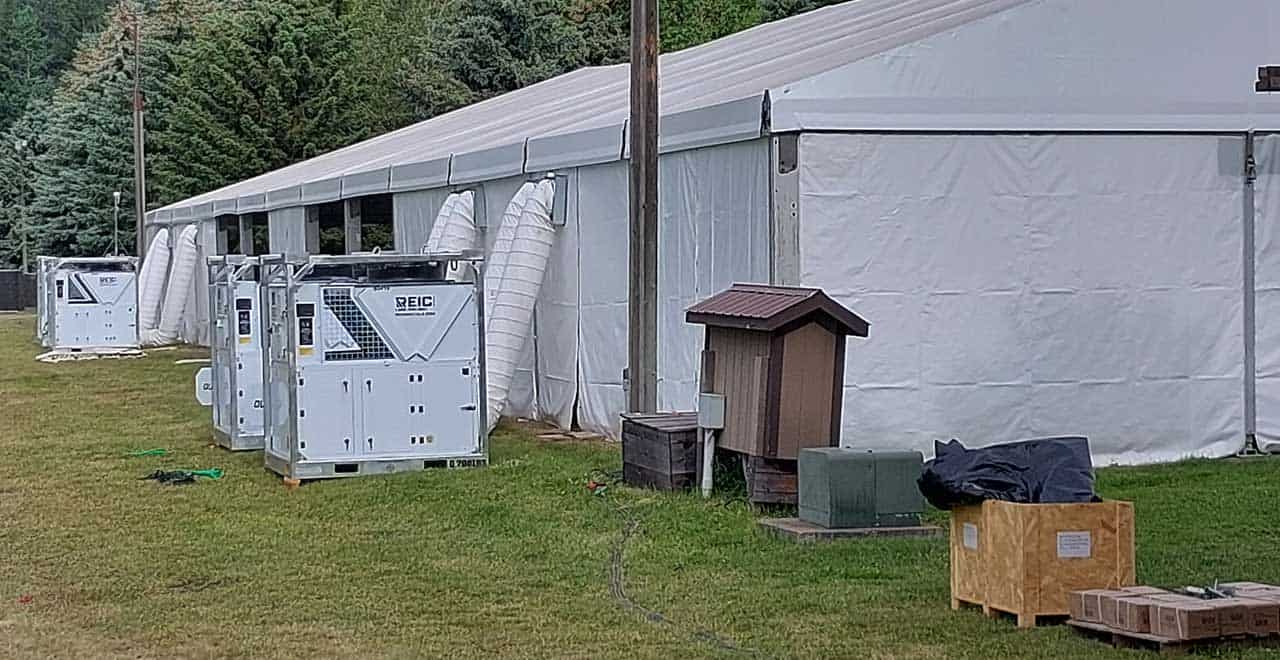
A derecho system moves through western North Dakota in June. Within four hours, three compressor stations in the same corridor have lost grid power. Access roads to two of them are washed out. Communications at the third are down. The crews who respond fastest are not the ones who made the best decisions that morning. They are the ones whose equipment was already staged, whose response sequence was already documented, and whose rental partner had already surveyed the site.
That scenario is not exceptional in the Northern Plains and Western Canada. High winds, large hail, tornado spin-ups, derechos, localized flooding, and ice storms are recurring seasonal events across the regions where oil and gas infrastructure is most concentrated. The word “hurricane” undersells what these systems actually produce when they move through open terrain at speed. Simultaneous loss of power, road access, and communications is not a worst-case outcome. For remote industrial facilities without a preparedness plan, it is the expected one.
Compressor stations, tank batteries, SCADA panels, metering skids, and remote well pads sit in exposed terrain where a single severe storm can create conditions that take days or weeks to recover from without a plan in place. That recovery cost compounds quickly when facilities are remote, roads are compromised, and the equipment needed to restore operations has not been pre-positioned. A facility in North Dakota faces a fundamentally different risk profile from an urban office building, and the preparedness plan needs to reflect that difference.
REIC Rentals serves operators and industrial facilities across these regions with generators, pumps, lighting, climate control, and compressors that can be pre-positioned ahead of peak storm season. This article covers the planning disciplines, operational protocols, and equipment strategies that convert severe weather exposure into a managed risk rather than an extended recovery.
Start Early: When Preparation Must Begin
Every operator in a storm-exposed region should begin preparedness reviews months before peak season, not days. For the Northern Plains and Western Canada, that means starting risk reviews and equipment checks by March or April, before the convective storm season begins and rental inventory tightens across the region as multiple operations compete for the same equipment at the same time.
A practical planning calendar runs across three phases. The first quarter of the year is the time for facility risk assessments, insurance policy reviews, emergency plan documentation updates, and the identification of capital maintenance needs to be addressed before storm season. The second quarter covers structural inspections, generator testing, rental equipment reservations, and tabletop drills that verify the response plan actually works before it is needed under pressure. The third quarter, as severe weather activity intensifies, is the time to refresh procedures based on current conditions, confirm fuel supply arrangements, and verify that staging logistics for pre-positioned equipment remain in order.
The single most consistent failure in severe weather preparedness is the timeline. Facilities that start planning in June for a July storm event are already behind. The decisions that determine how quickly a facility recovers, which equipment is available, what the response sequence is, and who has authority to activate it need to be made when there is time to do so correctly. That is a spring activity, not a summer one.
Risk Assessment: Understanding What Your Facility Actually Faces
Structured risk assessment is the foundation of any preparedness effort. The goal is to understand the specific threats each facility faces, prioritize the exposures that carry the highest consequence, and build a response plan that reflects actual conditions rather than a generic template.
For oil and gas and industrial facilities in the Northern Plains and Western Canada, the relevant threats include high winds and tornado spin-ups during the peak convective season, hail events that can damage process equipment, communications infrastructure, and vehicles across a wide area, ice storms and blizzards that combine physical damage with extended grid outages and blocked access roads, and prolonged grid failures that can follow any of those events and last for days in regions where utility restoration is complicated by remote terrain and damaged infrastructure.
The facility assets most exposed to those threats include tank farms and process equipment in open yards, control rooms and SCADA systems, pipe racks and aboveground infrastructure, remote well pads and compression sites with limited access and no permanent utility backup, and communication systems that may be the only link between a remote site and operational support when roads are impassable.
Reviewing historical outage patterns for the specific region, not just the general area, gives operators a realistic picture of what their facility has faced and is likely to face again. Grid reliability in rural North Dakota and remote Montana corridors differs substantially from urban averages, and preparedness planning should reflect actual outage frequency and duration rather than national statistics that mask regional variation.
Hardening Facilities Before Storm Season
Physical improvements that reduce vulnerability before storms arrive pay their return across multiple events over multiple years. They are also the category of preparedness work most likely to be deferred when planning starts too late, because structural inspection and repair require lead time that a two-week planning window cannot accommodate.
Roof attachments on shops, MCC buildings, and field offices should be inspected and secured before high-wind season. Siding and overhead bay doors with wind-rated latches protect against wind-driven rain intrusion that can damage electrical infrastructure and process equipment. Roof drainage systems, catch basins, and sump pump function should be verified before heavy precipitation events that accumulate faster than inadequate drainage can manage.
Outdoor yard organization matters more than operators often appreciate until they experience the projectile hazard posed by loose equipment, pipe rack materials, scrap metal, and unsecured containers in high winds. Securing or sheltering items that could become debris reduces both the risk of direct damage and the scope of post-storm cleanup. Critical equipment, including generators, switchgear, and SCADA panels, should be positioned away from drainage paths and flood zones where possible, or protected with temporary berming and barriers when relocation is not practical.
REIC Rentals can supply temporary pumps and lighting towers to be staged on site or at nearby depots ahead of storm season, so the equipment needed for immediate post-storm response is already in place rather than sourced during the event.
Operational Planning: Short-Term Actions as Severe Weather Approaches
When severe storm warnings are issued with 24 to 72 hours of lead time, operational response needs to execute quickly and in a predetermined sequence rather than improvising under time pressure. A tiered response framework, built and rehearsed before it is needed, is what enables that speed.
At the watch stage, with roughly 72 hours of lead time, the priorities are monitoring forecasts, alerting field crews, verifying generator fuel levels, and confirming the staging of rental equipment if pre-positioning has not already occurred. At the warning stage, with 24 to 48 hours remaining, production rates may need to be throttled or shut in for vulnerable systems, isolated equipment should be confirmed, fuel should be topped off, and alarm systems and automatic transfer switches should be tested while conditions still allow it. In the final hours before impact, the focus is on completing the site sweep, evacuating non-essential personnel, activating emergency protocols, and securing vehicles and mobile equipment.
Testing generators for operational readiness before a severe storm is a point that cannot be overstated. A generator that has not been tested under realistic load conditions and whose transfer switch has not been verified will not perform reliably when it is most needed. That test belongs on the Q2 planning calendar, not the day a storm watch is issued.
Evacuation routes for remote sites deserve specific attention. A single access road that can be washed out or blocked by downed infrastructure eliminates the route that emergency planning may depend on. Identifying alternate access paths, pre-clearing credentials for vendor and rental crews who may need site access during or after the event, and establishing check-in protocols that work without network connectivity are all components of a remote site preparedness plan that an urban office building does not require, but a rural compressor station does.
REIC Rentals supports last-minute staging of additional generators, light towers, and temporary HVAC equipment in anticipation of severe weather. Our teams regularly support operators in North America who need equipment on site before a storm window closes, and our network of locations provides the logistics reach to make it happen.
Power Continuity: The Longest-Lasting Impact of Severe Weather
Grid disruption is consistently the most persistent consequence of severe weather for oil and gas and industrial facilities. A storm that passes through in hours can leave a remote site without utility power for days, and in regions where ice damage to utility infrastructure is extensive, restoration timelines can extend for weeks in isolated corridors.
Inventorying the loads that must stay energized is the starting point for backup power planning. Control rooms, emergency lighting, fire protection systems, communication systems, tank heat trace, and critical pumps all have different power requirements and different consequences if they go offline. That inventory drives generator sizing, and sizing that does not account for starting loads alongside running loads will produce a generator that trips under actual site conditions rather than performing as planned.
Fuel planning is as important as generator sizing. Backup generation that runs out of fuel 18 hours into a 72-hour outage provides far less protection than the runtime implied by the tank capacity, because refueling during an active storm or on un-cleared roads is not a reliable contingency plan. Planning for 72 hours or more of continuous runtime, with documented refueling intervals and vendor coordination established in advance, is the standard that remote and semi-remote industrial sites should aim to meet.
REIC Rentals deploys trailer-mounted generators, solar-hybrid light towers, temperature-control units, and power-distribution equipment to remote oil and gas sites across our network. Our fleet includes flameless Jet Heat technology rated for hazardous environments, which makes it a practical option for facilities where wind-driven conditions, cold temperatures, or explosion risk limit what standard heating equipment can safely provide.
Communication and Site Access During and After Storms
Communication infrastructure that relies on the same grid, which is disrupted by the storm, is not a resilient communication plan. Cell service in rural areas can be intermittent or entirely unavailable during grid outages, and facilities that rely exclusively on cloud-based coordination systems or standard cellular networks face a communication gap at exactly the moment when coordination matters most.
A multi-channel communication plan for remote industrial facilities should include satellite phones, portable radios, and SMS contact trees with printed backups at each facility. Named roles with alternates, including an incident commander, operations lead, logistics coordinator, and communications person, ensure that the response does not depend on a single individual being reachable and available. Storing contact information in multiple formats and locations, rather than only in a cloud system that may be inaccessible during a grid event, is a basic redundancy that preparedness planning should build in.
Site access control during and after storms matters for both safety and logistics. Defining who is authorized on site during active weather, establishing how gate systems and access credentials operate without network connectivity, and pre-clearing vendor and rental crews for access so equipment can reach the site without delays at the gate are all components of a remote site plan that require advance coordination. One challenge our teams commonly help customers solve is the access delay that occurs when rental equipment arrives at a remote site without pre-clearance, consuming hours of a post-storm recovery window while authorization is tracked down.
Insurance, Documentation, and Records
Insurance coverage gaps are almost always discovered after a storm, not before. Reviewing property and business interruption coverage before the severe weather season, confirming that current replacement values for critical equipment are accurately reflected in the policy, and understanding how coverage applies when multiple causes of damage occur simultaneously are all reviews that should happen in Q1 each year, not during the claims process.
Documentation that supports a claim begins before the storm arrives. Pre-storm photos and videos of the condition of facilities, equipment, and infrastructure create the baseline that adjusters compare post-storm images against. An updated asset register with make, model, serial number, and current replacement value for critical equipment supports accurate claims for items that are damaged or destroyed. Digital backups of inspection reports, vendor contracts, rental agreements, and as-built drawings stored with offsite redundancy ensure that documentation survives the same event it documents.
The practical value of that documentation extends beyond the claims process. Facilities that can demonstrate the condition of their equipment before a storm and the maintenance history that preceded it are in a stronger position when working with insurers, regulators, and operational leadership to justify recovery timelines and costs. Treating documentation as a routine operational practice rather than a storm-specific activity is what produces documentation that is actually useful when it matters.
Post-Storm Assessment and Recovery
A clear post-storm playbook accelerates restart and minimizes production loss. The facilities that recover fastest from severe weather events are those that have a defined inspection sequence, established decision authority for each stage of recovery, and pre-positioned equipment that can be deployed as soon as conditions allow safe re-entry.
Re-entry should not begin until the on-site team or the designated safety officer confirms that the conditions are safe. The initial inspection sequence prioritizes the infrastructure that carries the highest consequence risk: power systems and distribution first, then process units, loading racks, and tanks, then pipe racks and yard infrastructure, then SCADA and communications systems. Documenting damage with photos before cleanup or repair begins protects the claims process and preserves the baseline for repair scope decisions.
Phased restart leverages rental equipment directly. Temporary power from generators maintains critical systems while permanent power infrastructure is assessed and repaired. Pumps dewater flooded areas and manage runoff from compromised containment. Light towers support night work on recovery crews that cannot wait for daylight. Temporary HVAC equipment stabilizes control room and process conditions while permanent systems are restored. REIC Rentals supports post-storm recovery with emergency delivery across our network, with crews and equipment that our teams can mobilize quickly when conditions allow site access.
Scenario: Storm Response at a Remote Industrial Site
Consider an oil and gas compression facility in western North Dakota where a derecho system produces high winds, localized flooding, and a multi-day grid outage across the surrounding utility territory. The facility’s access road is passable but compromised in one section, and the utility’s restoration estimate is three to five days.
A facility with a documented preparedness plan and a pre-season agreement with REIC Rentals activates its response within hours of the storm clearing. Generators pre-positioned at the facility or staged at the nearest REIC Rentals location restore power to control systems, communications, and critical process equipment. Pumps manage water accumulation in low areas around the tank farm. Light towers support the inspection and repair crews working through the evening. The site team follows the documented inspection sequence, assessing power systems first, then process units, then communications infrastructure.
Production resumes in phases within 48 hours, rather than waiting for full utility restoration. The difference between that outcome and a five-day production loss is the plan, the pre-positioned equipment, and the rental partner engagement that was established in spring rather than initiated during the event.
Building a Repeatable Preparedness Framework
A living preparedness plan that is reviewed and updated annually, tested through tabletop exercises and field drills, and refined based on lessons from each event is the standard that well-run industrial facilities maintain. The single exercise that happens once and is never updated does not reflect the facility’s current risk profile, equipment inventory, or personnel. The plan that is reviewed every year and tested every other year is the one that actually performs when conditions demand it.
Annual tabletop exercises should simulate realistic storm scenarios, including deployment of rental equipment, communication failures, and compromised access roads, so that the response is practiced rather than improvised. At least one field drill that activates emergency generation, fuel delivery coordination, and site access protocols confirms that the written plan reflects what actually happens when the sequence runs under real conditions rather than in a conference room.
REIC Rentals supports operators in building storm-readiness plans by reviewing facility risks, pre-qualifying equipment packages, and establishing standing agreements to ensure generators, pumps, lighting, climate control, and fuel storage are available when severe weather hits. Contact our team through REIC Rentals Expert Solutions, or request a quote to begin the preparedness conversation before peak severe-weather season arrives.
Prepared Facilities Recover Faster
Severe weather is a recurring operational reality for oil and gas and industrial facilities across North America, not an exceptional event that requires an exceptional response. The facilities that manage through those events with the least production loss and the fastest recovery are not better resourced than their peers. They are better prepared, and that preparation is a planning discipline, not an equipment budget.
REIC Rentals provides the generators, pumps, lighting, climate control, and compressors that industrial and oil and gas facilities need to stay operational through severe weather events, backed by planning support and a network across North America. Request a quote or find a location near you to build your storm-readiness plan before peak season makes it urgent.
1.888.356.1880 | in**@**ic.com | reic.com
Service You Trust. Equipment You Need.
