
A highway resurfacing crew has 60 days of viable paving weather left in October. The mainline is two weeks behind. Asphalt mat temperatures are dropping faster after sunset. And the forecast shows the first hard freeze arriving in three weeks. This is not a hypothetical situation. It is the operating reality for civil contractors from the Northern Plains to the Pacific Northwest every fall.
September through November are the make-or-break months for contractors pushing to close out paving, bridge deck work, and utility installations before winter shutdowns. The challenge is not just colder temperatures. It is the combination of shorter daylight, overnight frost, saturated subgrades, and volatile weather systems that can halt operations with little warning.
REIC Rentals supports these seasonal transitions by staging and readying compaction equipment, light towers, pumps, and heating equipment so crews stay productive through the shoulder seasons. Here is what project managers and superintendents need to act on before October weather takes hold.
Understanding What Fall Weather Actually Does to a Civil Site
The risks that fall introduces to civil and road construction are distinct and compound quickly.
Rain saturates subgrades, ruts haul roads, floods trenches, and halts paving when the moisture content exceeds specification. High winds strip curing blankets from fresh concrete, cool asphalt mats unevenly on bridge decks, and reduce spray control during seal coat operations. Early frost penetrates shallow subgrades and threatens fresh concrete or asphalt before adequate curing has been achieved.
Weather awareness is not optional at this point in the year. It is a planning input. NOAA 10- to 14-day outlooks, radar apps, and historical first-freeze dates for the specific project location should be standard pre-task references. Our teams work with project managers to flag weather-sensitive milestones on a two-month look-ahead schedule, so decisions about postponing work are made in advance, not during a pour.
Scheduling Paving and Asphalt Work as Temperatures Drop
Asphalt placement is one of the first operations constrained by cold. Most state DOTs set minimum surface and ambient temperature requirements before allowing placement. Thicker lifts allow somewhat lower thresholds, but restrictions tighten as the season advances.
Front-load critical mainline and top-course paving into late September and early October. Reserve lower-risk tasks, such as shoulder restoration, striping, and surface treatments, for later in the season, when adverse conditions are more likely.
Practical adjustments as temperatures drop:
- Shift start times to mid-day to avoid the coldest morning hours and maximize daylight.
- Monitor pavement and air temperature with infrared thermometers before each load arrives.
- Reduce haul distances to limit temperature loss in transit and insulate or tarp truck beds.
- Use warm-mix asphalt where specified to extend compaction windows by several degrees.
- Add rental compactors and light towers: compaction windows shrink as ambient temperatures fall, and evening operations require adequate lighting as days shorten.
REIC Rentals provides supplemental compactors and light towers for fall paving operations on short notice. Book early: demand spikes in the weeks before winter and availability tightens fast.
Concrete Placement and Curing in Colder, Shorter Days
ACI 306R-16 defines cold weather concreting as any period when ambient temperatures may fall below 40 degrees Fahrenheit within the first 24 hours after placement. For bridge deck pours, roadway slabs, and sidewalk replacements in the Mountain West and Pacific Northwest, that threshold arrives regularly by mid-October.
For fall bridge deck pours, schedule placement mid-day when the air temperature is highest. Deploy insulated curing blankets immediately after finishing and install windbreaks to limit evaporative cooling on exposed decks. Coordinate with ready-mix suppliers on mix designs suited for fall pours: accelerators, lower water-cement ratios, and warm batch water all help maintain hydration rate.
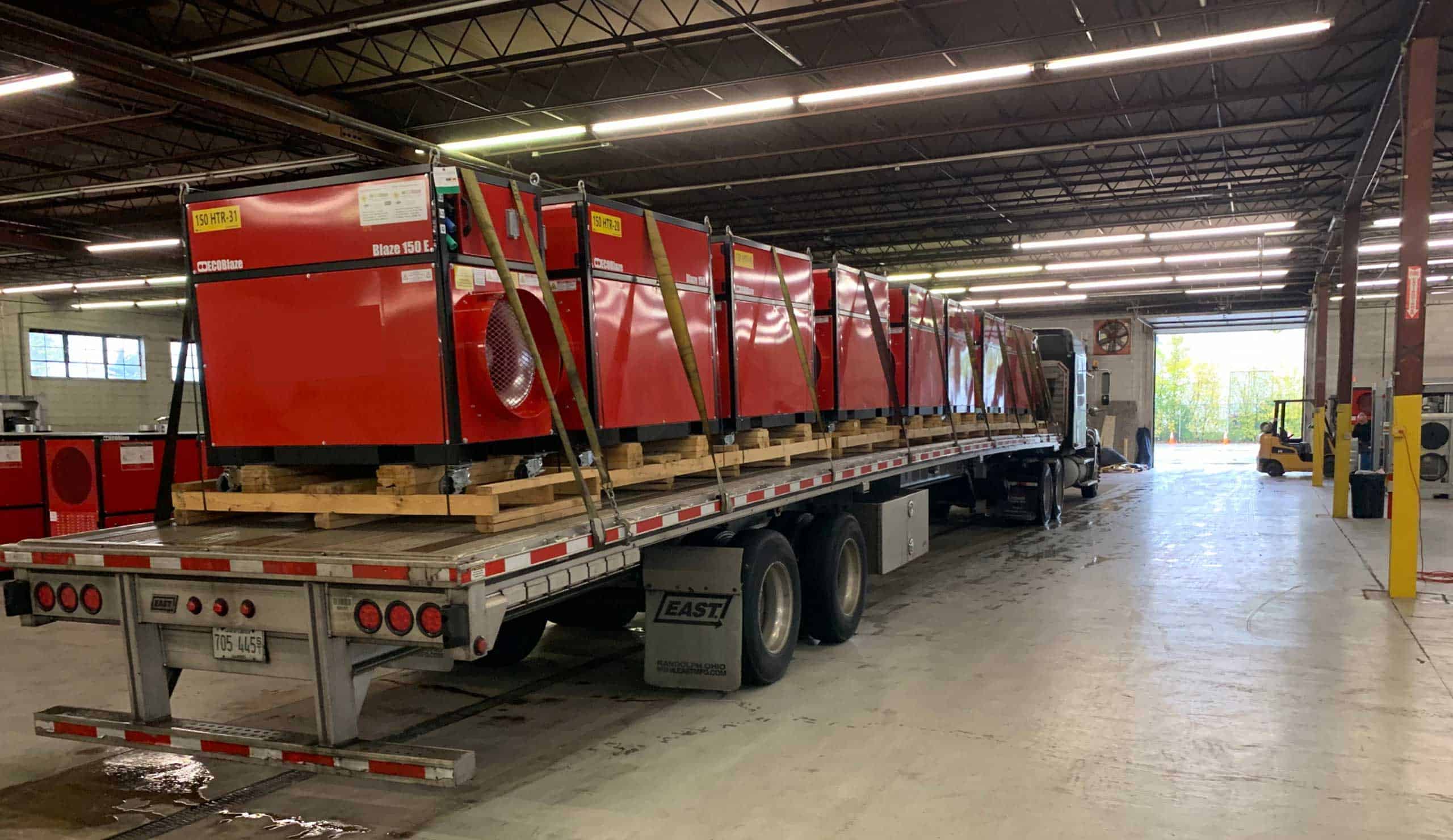
REIC Rentals supplies portable heating equipment for enclosed formwork and curing enclosures, light towers for early-evening finishing work, and power distribution equipment for sensors and monitoring systems that track slab interior temperature in real time.
Strip forms only when cured strength is confirmed, and ambient conditions are stable. Maintain documented temperature logs covering air, surface, and internal slab temperatures for inspectors and quality records.
Protecting Subgrades, Utilities, and Excavations from Moisture and Frost
Fall storms and frost penetration can undermine months of earthwork if subgrades, trenches, and bedding materials are left unprotected. Repeated wetting and drying cycles during October rain events soften road subgrades and utility trenches, leading to rutting and failed compaction tests.
Sequencing underground utility installation to prioritize deeper lines and long crossings before consistent freezing temperatures begin is the most effective protective measure. Cover prepared subgrades with tarps and place temporary aggregate caps on high-traffic haul roads. Clear drainage paths before each forecasted rain event and inspect silt fences and sediment basins regularly.
REIC Rentals supports this phase with dewatering pumps for trench and sump applications, compaction equipment to re-establish density after rain events, and generators for overnight sump operation when on-site power is unavailable.
Worker Safety: Cold Stress and Reduced Visibility
Cold stress can occur at temperatures above 40 degrees Fahrenheit when wind and damp clothing accelerate heat loss. Worker manual dexterity decreases measurably as temperatures drop, increasing the risk for precision-requiring tasks. Hypothermia begins when core temperature falls below 95 degrees Fahrenheit, and the impairments that precede it affect safety and work quality before crews recognize the problem.
Stagger shifts to manage exposure: start later to avoid the coldest hours, concentrate high-dexterity tasks during moderate mid-day conditions, and schedule mid-shift warm-up breaks in heated trailers. As daylight shrinks through October and November, visibility hazards grow at lane closures and highway work zones.
REIC Rentals supports safety plans by providing light towers for night operations and portable heaters to warm tents and site trailers. Warm, well-lit crews work more consistently and reduce lost-time incidents through the shoulder season.
Fall Equipment Readiness
Heavy equipment reliability becomes more fragile in the fall as mornings get colder and rain increases. Equipment performance depends on proactive maintenance before conditions deteriorate, not reactive fixes after a no-start morning.
- Switch hydraulic fluids and gear oils to grades rated for lower operating temperatures before late October.
- Test batteries and inspect charging systems: cold weather significantly reduces battery capacity.
- Verify that block heaters and glow plugs are functioning on every diesel unit before the first sub-freezing morning.
- Test generators, compressors, and pumps to support lighting, heating, and dewatering throughout the season.
REIC Rentals provides seasonal rentals tailored to fall civil operations: trailer-mounted generators, trailer pumps, supplemental compactors, and light towers. Contact us in late summer or early September to lock in fall equipment before availability tightens.
Building Your Fall Weather Action Plan
Successful civil and road construction in the fall depends on an intentional plan: front-load weather-sensitive work, protect work in place, and equip crews for cold, dark, and wet conditions.
The top three fall preparation priorities are:
- Schedule: Front-load weather-sensitive paving and concrete work, and plan around historical freeze dates for your specific region.
- Protection: Tarp subgrades, cure concrete under blankets, maintain drainage, and protect materials from moisture.
- Rentals: Reserve compactors, light towers, heaters, pumps, and generators early to protect the plan.
Contact REIC Rentals to build a tailored fall equipment plan for your civil project. Request a quote or find a location near you to start the conversation before the first cold front arrives.
1.888.356.1880 | in**@**ic.com | reic.com
Service You Trust. Equipment You Need.
