
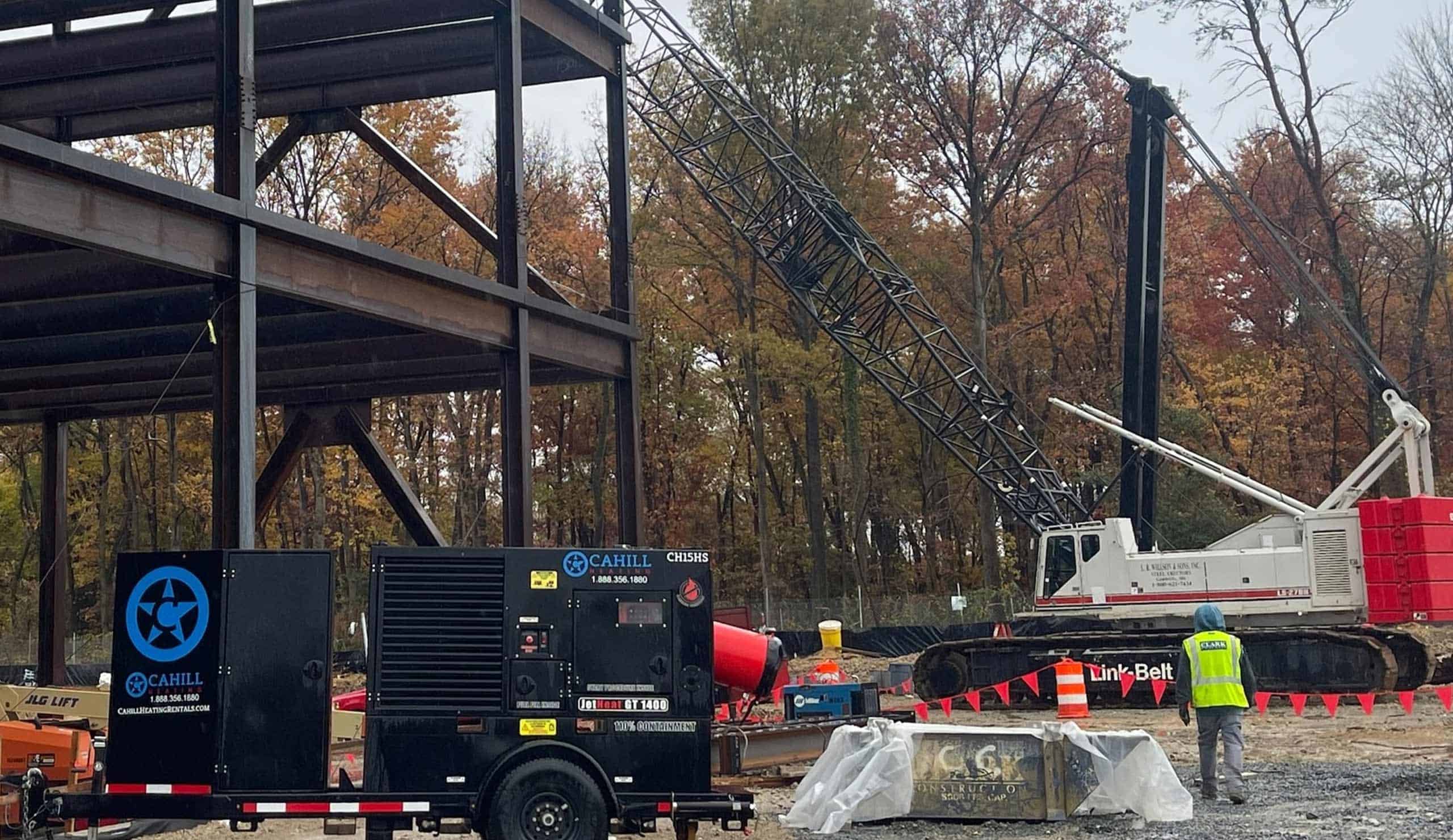
A heating failure at a remote substation during a sustained cold snap is not a comfort event. It is a grid reliability event. When ambient temperatures fall well below freezing, frozen control lines, embrittled cable insulation, and mis-operating protection relays can cascade into outages affecting large service territories. Remote locations with difficult winter access compound the problem: the response that would take hours at an accessible urban substation can take days when roads are blocked, and helicopter delivery is the only viable option.
Remote power generation facilities, substations, and renewable energy sites present an emergency heating challenge that commercial and industrial buildings do not face. The assets are often unmanned. The access is seasonal. The consequence of a heating failure extends beyond the site to the grid connections and customer loads that depend on continuous operation. And the window to prepare before winter conditions close access routes is shorter than most operations teams plan for.
REIC Rentals provides emergency and temporary heating solutions for remote power generation facilities, substations, and renewable energy sites, with generators, heating equipment, and power distribution equipment configured for harsh winter environments and rapid deployment. This article covers the heating risks specific to remote utility infrastructure and how to build an emergency preparedness plan before winter conditions make logistics difficult.
Understanding Heating Loads at Remote Utility Sites
The heating requirement at a remote utility site goes beyond building comfort. It covers specific equipment and systems that must stay above minimum operating temperatures to function correctly.
Battery rooms are among the most sensitive elements. Below 41 degrees Fahrenheit, storage capacity drops and battery life shortens, directly affecting the site’s ability to ride through power disturbances. Diesel fuel begins forming wax crystals near 32 degrees Fahrenheit, and gelling at the cold filter plugging point can prevent generator starting when it is most needed. Instrument air lines, pneumatic valves, and SCADA hardware all carry their own freeze thresholds that, if crossed, disable critical control functions during grid disturbances.
Why Emergency Heating Planning Must Start in Early Fall
Remote utility sites require emergency heating plans finalized well before the first sustained freeze. The access constraints, logistics lead times, and equipment availability that make reactive procurement difficult all favor early preparation.
Access roads serving remote generation sites and substations in the Mountain West, Northern Plains, and Western Canada become restricted or impassable after sustained freezing. Sites accessible in October may require tracked vehicles or helicopter access by December. Staging equipment and fuel before that window closes eliminates the scramble that compounds an already difficult emergency response.
Rental equipment that is readily available in September is committed across the region by November. The facilities that engage REIC Rentals in early fall have more options, better logistics, and lower total response costs than those that make the first call after temperatures have already dropped and access conditions have already changed.
Key Failure Scenarios at Remote Utility Sites
Four failure scenarios account for most cold-weather events at remote utility and generation sites. Planning for each case specifically produces a more resilient emergency response than a generic backup-heating approach.
Station service power loss during a winter storm leaves electric heaters without power at exactly the time when ambient conditions require the most heating capacity. The response requires either backup fuel-fired heating that operates independently of station service, or emergency generation from REIC Rentals to restore power to critical heating loads before control room temperatures drop below the operating thresholds for protection relays.
HVAC failure in substation control buildings is a slower-developing but equally consequential event. Control room temperatures falling below the operating range of protection and communications equipment over hours rather than minutes creates a situation in which the site’s ability to respond to grid events is progressively compromised before the failure is recognized as critical.
Fuel gelling in diesel-powered remote systems during a sustained freeze prevents the generator from starting when the site needs emergency power most. Fuel management, including cold-weather diesel blends or fuel heating systems, must be addressed before the season, not after a failed start is the first indication of the problem.
Loss of battery-shelter heating at renewable energy sites reduces battery capacity, which may not be immediately visible in monitoring data but manifests as inadequate backup duration when the site needs to ride through a grid disturbance or transition to islanded operation.
Assessing Existing Heating and Backup Power Before Winter
A structured site assessment completed between August and early October provides the baseline for emergency heating planning. The assessment should cover all heat-critical spaces at each remote site.
Pre-season assessment checklist:
- Inventory fixed unit heaters, heat trace lines, and thermostat control systems at each site.
- Document backup generators, UPS systems, and battery banks serving heating loads.
- Verify fuel storage condition and volume; confirm cold-weather fuel blending or treatment is in place.
- Test all thermostats and heating controls before the season begins.
- Clear outdoor vents, flues, and exhaust paths of debris.
- Categorize sites by criticality: transmission substations, renewable energy collection points, control hubs, and sites with access constraints that make emergency response slow.
- Document single points of failure: a single HVAC unit serving a control room is a risk that needs a defined backup path.
Integration with remote monitoring matters significantly for unmanned sites. SCADA, RTU, or IoT sensors that confirm heater run status, internal temperatures, and access point status during cold snaps enable operators to detect developing heating problems before they become emergencies. Sites that require physical inspection to verify heating status carry meaningfully higher cold-weather risk than those with remote visibility.
Designing Redundant Emergency Heating Strategies
Effective emergency heating for remote utility infrastructure relies on layered redundancy rather than a single-backup approach. The three layers that provide reliable coverage are primary heating on station service or local generation, secondary heating on a separate circuit or different fuel type, and emergency rental heating from REIC Rentals pre-engineered for rapid dispatch.
Grid-connected substations with reliable station service can run electric unit heaters as primary heating with fuel-fired backup. Off-grid or weak-grid remote sites that serve solar or wind generation typically need fuel-fired units for primary or secondary heating because electrical capacity is constrained. Renewable energy sites with battery storage need heating loads sized and prioritized within the site’s energy management system, ensuring that battery rooms and control shelters receive heat even when overall site energy is constrained.
Separate heater electrical feeds from non-critical loads so that when generation is constrained, critical heating systems have priority. Ensuring that the control power for thermostats and relays is supplied by on-site batteries or a rental generator during a regional outage prevents a situation in which backup heating is available but cannot activate because the control circuit lacks power.
REIC Rentals pre-engineers site-specific emergency heating packages sized in BTU and kilowatt capacity and matched to the voltage, phase, and space layout of each remote site, allowing rapid dispatch when monitoring flags falling temperatures or when forecast models predict a severe cold event. Request a quote to begin your site-specific emergency heating assessment before the fall access window closes.
Integrating Emergency Heating With Renewable Energy and Battery Systems
Emergency heating loads at renewable energy sites must be planned as part of the site’s energy resource management rather than as a separate afterthought. Heating and cooling loads for enclosures at battery-plus-solar or battery-plus-wind sites can require meaningfully more energy storage capacity than the site’s design meaningfully assumed if those loads are not explicitly included in the energy budget.
Strategies for managing heating load at energy-constrained remote sites include load-shedding logic that deprioritizes non-critical heated zones, priority lists that maintain battery rooms and control shelters above staff comfort areas, scheduled heating run windows aligned with renewable energy generation peaks, and preheating enclosures before a forecasted cold snap while generation capacity is available.
REIC Rentals coordinates emergency heating deployments with temporary generator support to avoid overloading remote electrical infrastructure during events when site generation capacity is reduced by weather or equipment issues. That coordination requires understanding the site’s energy configuration before the event, which is another reason why fall engagement rather than emergency procurement produces better outcomes.
Logistics and Pre-Staging for Remote Site Access
Pre-staging emergency supplies and equipment at critical sites before December is the practice that eliminates the access constraint from the emergency response equation. Equipment staged on-site or at the nearest accessible depot before roads become restricted is available as needed. Equipment that requires road delivery after roads are blocked is not.
Pre-season logistics planning for remote utility sites:
- Establish connection points, including cam-locks and outdoor-rated distribution panels, so rental heaters and generators can connect quickly with minimal on-site electrical work.
- Pre-clear vendor access credentials so REIC Rentals delivery crews can reach the site without delays at security gates during emergencies.
- Confirm fuel storage capacity and arrange pre-season fuel fill to ensure adequate reserves for extended heating operation during access-restricted periods.
- Define dispatch and escalation authority clearly: who orders emergency equipment, what the authorization chain is, and how sites are prioritized if a single weather event affects multiple assets simultaneously.
REIC Rentals maintains a regional presence across the Mountain West, Northern Plains, and Western Canada markets, where remote utility infrastructure is most exposed to access constraints that compound winter emergency response challenges. Early engagement allows staging logistics to be planned when road conditions permit.
Contact REIC Rentals before the coming winter to develop your remote-site emergency heating strategy. Find a location near you or request a quote to begin the assessment before fall access conditions change.
1.888.356.1880 | in**@**ic.com | reic.com
Service You Trust. Equipment You Need.
