
A county courthouse does not close because the boiler failed in January. Courts have statutory obligations. The city clerk handles time-sensitive filings. Emergency management operates around the clock. When winter weather stresses or disables the systems that keep a government building functional, the consequences extend beyond occupant discomfort to service disruption affecting every resident who depends on that building to operate.
Government and municipal buildings face a version of winter preparedness that private commercial properties do not. The obligation to remain operational is not aspirational; it is a regulatory and civic duty. And the procurement cycles, budget approval timelines, and vendor engagement processes in the public sector mean that preparation must begin months before the first freeze, not after a winter storm has already exposed the gaps.
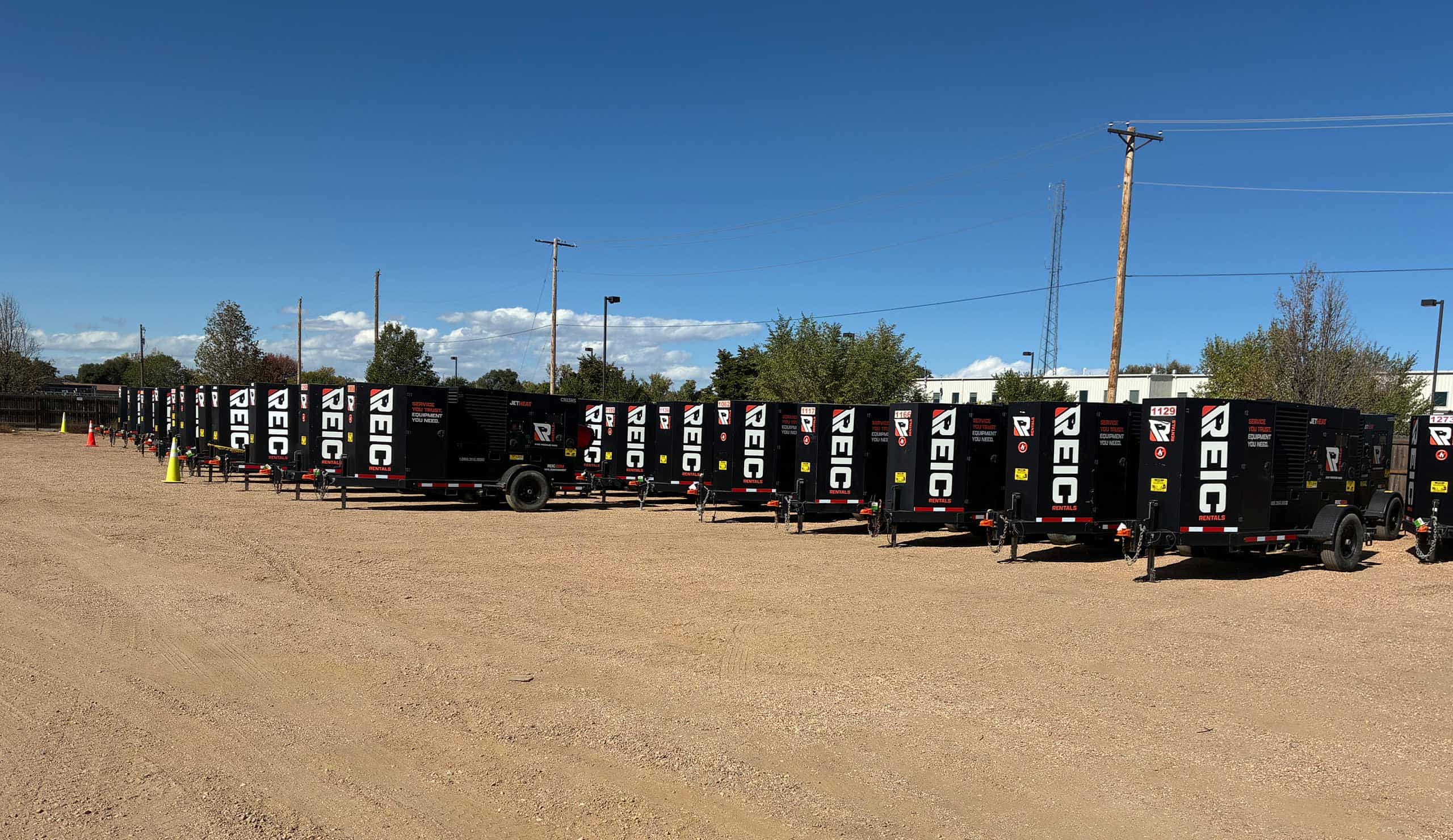
REIC Rentals supports government buildings with temporary heating, cooling, generators, and drying equipment for planned maintenance, emergency failures, and winter weather events. This article covers the planning, assessment, and operational steps that keep government and municipal buildings functioning through winter.
Understanding the Winter Risk Profile of Government Buildings
Winter weather threats to municipal facilities extend well beyond snowfall. The full risk spectrum includes heavy snow accumulation that loads roofs and blocks entrances, ice storms that coat walkways and utility lines, extended polar vortex events that push heating systems past design capacity, and wind-driven snow that creates drifts, causing uneven structural loads and obstructing access.
Older civic structures carry amplified risk. Aging heating systems lack modern redundancy. Historic facades create complex surfaces where ice forms and moisture infiltrates. High-occupancy lobbies and public counters at ground level generate thermal load challenges that modern office designs rarely face.
The risks unique to government buildings go beyond the building itself. Courts, licensing counters, emergency management centers, and vital records offices all require continuity of operations regardless of conditions outside. A heating system failure that would generate a complaint in a commercial office generates a service gap in a government building.
Regulatory, Accessibility, and Compliance Obligations
Municipal buildings operate under layered compliance obligations during winter weather that private facilities do not always share.
Under the ADA, public entities must maintain accessible routes, including ramps, curb cuts, and main entrances, free of snow and ice as part of day-to-day maintenance obligations. Handrails must remain usable, and detour routes must be clearly marked when primary paths are compromised. These are not discretionary maintenance items. They are legal requirements with defined enforcement mechanisms.
OSHA recommends indoor workplace temperatures between 68 and 76 degrees Fahrenheit. For employees in garages, lobbies, or loading docks, maintaining safe temperatures is often a contractual expectation under labor agreements. For public spaces, it is a basic service standard that reflects on the municipality.
Compliance actions that must be completed before winter:
- Document snow removal times, contractor logs, and incident reports: these records are critical for liability defense.
- Test emergency lighting and fire safety systems for readiness before cold weather arrives.
- Verify that temporary lighting and climate-control equipment can maintain egress routes when permanent systems fail.
- Confirm ADA accessible routes are included in snow removal contracts with defined clearance timelines.
Planning Timeline: Aligning Winter Preparation With Government Budget Cycles
Government budgeting cycles are rigid. Waiting until November to plan winter weather preparedness guarantees procurement delays and coverage gaps. The planning timeline must align with fiscal year milestones.
April through June is the window for assessing prior-year performance, identifying capital needs, and allocating contingency funds for rental equipment, snow removal, and fuel reserves. July through September is the time to issue RFPs, negotiate vendor contracts, and pre-approve rental agreements with REIC Rentals for generators, heaters, and climate control equipment. October and November are for testing equipment, conducting exercises, verifying fuel storage, and finalizing snow removal contracts before winter arrives.
Pre-approved agreements with REIC Rentals, structured as master service agreements or framework contracts, eliminate procurement friction. When a winter storm is in the forecast, equipment can be mobilized in hours rather than days. For municipalities, that speed is the difference between maintaining operations and shutting down services that residents depend on.
Pre-Season Facility Assessment: What to Inspect Before the First Freeze
Every municipal building should undergo a targeted winterization assessment each September or October. This is a systematic evaluation of the systems and surfaces most vulnerable to cold air infiltration, moisture, and freeze damage.
Key inspection areas:
- Roofs: membrane integrity, flashings, drain and scupper clearance, ponding zones where water collects and freezes
- Gutters and downspouts: blockages that prevent drainage before temperatures drop
- Facade joints and weep holes: especially on older buildings with ornamental stone or masonry
- Loading docks and exterior stairs: handrails, ice-trapping surfaces, drainage conditions
- Mechanical rooms: exposed piping, heating system condition, backup readiness
- Underground parking: ventilation, water ingress pathways, HVAC function
The assessment should produce a prioritized action list and a contingency plan identifying where REIC Rentals’ temporary climate control equipment would be staged if primary systems fail, including connection points, power requirements, and load priorities.
Protecting Water, Plumbing, and Fire Protection Systems
Frozen pipes and disabled fire protection systems rank among the most costly winter failures in municipal buildings. The consequences extend beyond repair costs to service disruption that affects every function the building houses.
To prevent frozen pipes across municipal facilities:
- Insulate exposed plumbing in unheated areas: near exterior walls, attics, crawlspaces, and loading docks.
- Maintain indoor temperatures in all spaces, including lightly occupied or vacant areas, to protect plumbing throughout the building.
- Monitor temperatures in mechanical rooms, stairwells, archives, records storage, and closed public counters where heat can drop without early warning.
- Verify heat trace on vulnerable pipe runs and test low-temperature alarms before the season begins.
- Check glycol concentrations in sprinkler lines serving unheated spaces.
Temporary heaters from REIC Rentals can protect specific rooms or chases that cannot be easily insulated or re-piped before winter. This is particularly relevant for older buildings, where original piping layouts create unavoidable exposure to cold-air infiltration that envelope improvements alone cannot address.
Maintaining Safe Access and Egress During Winter Events
Municipal buildings often remain open or partially open when private businesses close. Courts, vital records, and emergency administration operate regardless of conditions outside. Safe access is non-negotiable, and its failure carries both liability and public relations consequences.
Priority access points for snow and ice management:
- Main building entrances and ADA ramps
- Employee entrances and emergency exits
- Parking garage entrances and transit-connected corridors
- Public plaza approaches and shared pedestrian routes
Establish trigger policies for snow removal, for example, beginning clearing at two to three inches of accumulation, rather than deciding after each event. Stock de-icing materials appropriate for the specific surface materials in use, as some products damage historic masonry or adjacent infrastructure. Maintain redundancy through backup snow removal vendors and mutual aid agreements with neighboring agencies.
Portable lighting and generators from REIC Rentals keep lobbies, stairwells, and exterior approaches safe when power or HVAC is compromised. These are operational necessities when a building serves the public in all weather.
Interior Climate Control for Occupants and Sensitive Assets
Government buildings often contain archives, artwork, historic materials, and landmark features that are sensitive to fluctuations in temperature and humidity. Climate control during winter serves both occupant safety and asset preservation.
Key interior climate control priorities:
- Public areas and council chambers: maintain minimum safe temperatures for occupant comfort and code compliance.
- IT and server rooms: consistent cooling and humidity control regardless of outdoor conditions.
- Archives and records storage: stable humidity prevents document degradation and mold growth.
- Holding cells and secure areas: temperature minimums are often mandated by law.
When the primary heating plant or steam systems fail, REIC Rentals can supply indirect-fired heaters and dehumidifiers to stabilize conditions throughout the building. Temporary climate control plans for historic municipal buildings should avoid moisture buildup that could damage stone, plaster, and archival materials while still delivering adequate heating to protect both people and assets.
Continuity of Operations and Emergency Power
Essential city and county services cannot tolerate extended outages. Winter storms are among the most frequent causes of significant grid disruptions in North America, and aging electrical infrastructure compounds this risk each year.
Functions requiring uninterrupted power and heating:
- Emergency operations centers and 311 call centers
- Police precincts and dispatch operations
- IT server rooms and data centers
- Finance, payroll, and vital records systems
Permanent generators should be sized to cover critical load circuits with automatic transfer switches tested regularly before winter. Fuel storage must be maintained at capacity and verified before the cold season. Load testing should confirm generator performance under cold-start conditions and full load, not just under favorable conditions.
REIC Rentals provides supplemental generators and temporary power distribution to expand backup capacity for specific wings, departments, or critical systems within a building. Pre-planned generator connection points, clearly documented and accessible, allow rental equipment to integrate rapidly during an outage. The difference between a managed four-hour disruption and a multi-day shutdown often comes down to whether that documentation exists before the emergency.
Staffing, Communication, and Cross-Department Coordination
Cross-department coordination separates an effective winter response from reactive scrambling. Facilities, public works, security, IT, and departmental leadership must operate under a unified winter incident command structure.
One challenge our teams commonly help government facility managers address is the gap between a documented emergency plan and a tested one. A plan that has never been exercised produces hesitation and improvisation at the worst possible moment. Cross-functional tabletop exercises with vendor partners, such as REIC Rentals, confirm that deployment logistics work before they are needed rather than after.
Pre-scripted communication templates for employees, the public, and media should be drafted and approved before the season. Include messaging for building opening times, alternate service locations, and online service options during a winter event. Define who activates the winter weather plan and who has the authority to partially or fully close the building.
REIC Rentals should be listed as a named resource in internal emergency procedures with pre-approved credit and contract terms. When the call comes for temporary power or climate control, procurement should not be the bottleneck. Request a quote or find a location near you to begin pre-season planning.
Post-Storm Assessment, Recovery, and Documentation
The work does not end when the snow stops. Municipal buildings require thorough post-storm evaluations to identify damage, new hazards, and recovery needs.
Post-event inspection priorities:
- Roofs: membrane damage, ponding, new leaks
- Stairways, ramps, and walkways: melt-refreeze hazards
- Mechanical spaces: pipe damage, water intrusion, system failures
- Public areas: ceiling leaks, floor hazards, compromised egress routes
- Fire hydrants and exterior safety systems: confirm accessible and functional
Document everything: time-stamped photos, inspection logs, contractor reports, and public incident records. REIC Rentals’ drying and dehumidification equipment supports recovery operations by drying wet interiors after ice dam leaks or sprinkler line events, preventing mold growth that would otherwise require costly remediation. Track all rental equipment usage, duration, and costs to support future budget justification and insurance claims.
Conduct a lessons-learned review within two weeks of each significant event: Were contracts sufficient? Were response times acceptable? Did the equipment perform as expected? Use this feedback to update the preparedness plan and refine vendor agreements before the next season. Winter resilience is built in the months before the first freeze, not during it.
1.888.356.1880 | in**@**ic.com | reic.com
Service You Trust. Equipment You Need.
