
Heat is one of the most consistent threats to uptime in manufacturing and industrial operations. It simultaneously affects equipment reliability, product quality, crew safety, and production rate. When an existing system cannot keep pace with summer heat loads, the impact spreads quickly through the facility, and the cost compounds with every shift it goes unaddressed.
Industrial facilities generate heat from multiple sources at once. Ovens, kilns, compressors, welding operations, hydraulic systems, chemical processes, and dense machinery layouts all contribute a heat load that exists regardless of outdoor conditions. When summer ambient temperatures add to that internal load and the existing HVAC cannot recover, conditions in critical areas deteriorate faster than most facilities anticipate when planning for the season.
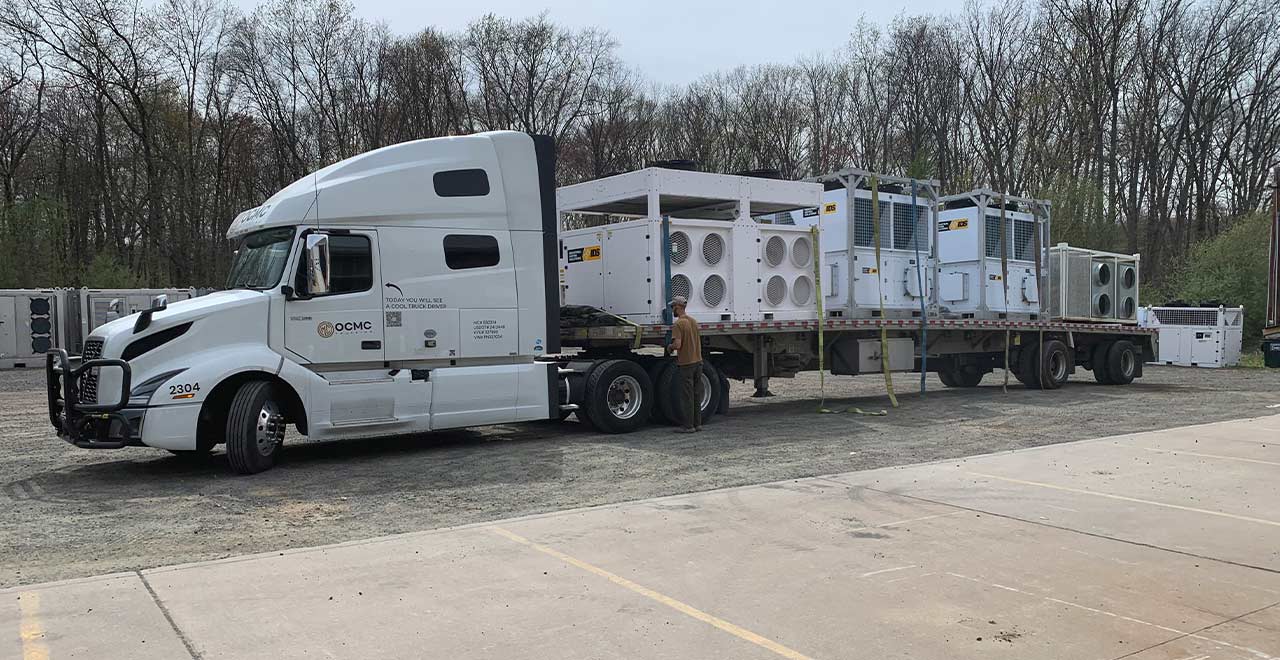
REIC Rentals supports manufacturing and industrial facilities with temporary and supplemental cooling equipment, heating, dehumidification, and HVAC accessories for seasonal peaks, planned outages, emergency response, and production expansion. This article covers how to think about the cooling challenge in industrial environments, what equipment approaches suit different applications, and how to plan before conditions force a reactive response.
Understanding the Industrial Heat Challenge
Manufacturing facilities are fundamentally different from commercial buildings when it comes to heat management. The internal heat load from process equipment often exceeds the contribution from the building envelope through solar gain. Process heat from ovens, reactors, compressors, and welding operations generates heat continuously throughout the production shift, regardless of outdoor temperature. When that internal load combines with summer ambient conditions and a building envelope that includes metal roofing, limited insulation, and large door openings, conditions can deteriorate quickly in areas where the heat has nowhere to go.
The consequences of unmanaged heat in a manufacturing environment fall into three categories. Equipment operates outside its designed temperature range, affecting reliability, increasing failure rates, and causing process drift that produces out-of-specification product. Materials and products that require controlled-temperature conditions during processing or staging are damaged or compromised, resulting in scrap and rework costs. And workers in high-heat areas are exposed to heat stress that affects both safety and sustained output throughout a full shift.
Each of those consequences requires a different cooling response, and treating them all the same produces a solution that addresses none of them adequately. Process cooling for equipment and materials is a different problem from comfort cooling for workers, and both differ from managing the general ambient temperature on a large-volume production floor. REIC Rentals uses those distinctions during the site assessment to ensure the recommended equipment matches the facility’s actual requirements.
Comfort Cooling for Workers in Industrial Environments
Worker safety in high-heat industrial environments is a genuine operational risk with direct schedule and liability consequences. Heat stress progresses from early symptoms that are easy to overlook in a production environment through heat exhaustion to heat stroke, which is a medical emergency. OSHA guidance emphasizes engineering controls, which means cooling and ventilation, as the primary intervention before administrative measures such as rotation and scheduling. Deploying adequate cooling in high-heat worker zones is the most direct way to reduce heat stress risk.
Portable cooling equipment, including portable air conditioners and industrial fans, provides targeted relief in specific worker zones without requiring the full facility volume to be conditioned. Pick stations, assembly benches, inspection areas, packaging lines, and any fixed location where workers spend extended time near heat sources are all candidates for targeted cooling that can be deployed quickly and repositioned as workflows change.
Evaporative coolers provide effective cooling in arid climates and partially open environments, with lower power requirements than refrigerant-based systems. In humid climates, refrigerant cooling is the more reliable choice because evaporative cooling loses effectiveness as ambient humidity rises. Understanding the facility’s climate conditions and humidity levels in the production space is part of selecting the right comfort-cooling approach for the worker population.
Cooled break and recovery areas near active production zones reduce the transit time between heat exposure and relief, thereby improving both the safety benefits of rotation protocols and the practical likelihood that workers will use them during a demanding shift. REIC Rentals considers recovery zone placement alongside production area cooling when advising on equipment layout, because a cooling plan that does not account for where workers move between work periods misses a significant part of the heat-stress management picture.
Targeted Cooling for Specific Process and Equipment Zones
Industrial processes and equipment often have tighter temperature requirements than the workers operating them. Electronics assembly operations require stable temperature and humidity to maintain process tolerances. Food processing and staging areas must maintain conditions that meet product quality and regulatory requirements. Chemical processes and pharmaceutical manufacturing depend on controlled environments that cannot tolerate the variation introduced by summer heat in inadequately cooled facilities.
Targeted cooling addresses these requirements by directing conditioned air to the specific zone, equipment, or process that needs control rather than conditioning the full facility. A single packaging line in a large production building, a server room within a manufacturing facility, a cleanroom adjacent to a hot processing area, or a staging area for temperature-sensitive finished product all require cooling that is sized and positioned to maintain the conditions that the specific area demands, independent of what is happening in the rest of the building.
Flexible ducting from HVAC accessories routes conditioned air from portable cooling equipment positioned at the building perimeter or in adjacent areas to the specific process zones that require it. That capability is what makes targeted cooling practical in large production buildings where positioning equipment directly adjacent to every process zone is not feasible.
Ventilation: Managing Heat, Fumes, and Air Quality
Ventilation in manufacturing facilities serves multiple purposes simultaneously. It removes heat generated by process equipment before it accumulates to levels that affect workers or the product. It exhausts fumes from welding, chemical processes, coating applications, and cooking operations before they reach concentrations that pose health or safety risks. And it provides the fresh air exchange that maintains acceptable indoor air quality across a space where multiple processes are generating contaminants throughout the production shift.
Mechanical ventilation, which uses powered fans and air-handling equipment to move air in a controlled direction at a specified volume, is a reliable foundation for industrial ventilation because it delivers consistent airflow independent of outdoor conditions. In a production environment where shifts run regardless of whether the outdoor temperature or wind speed is favorable for natural ventilation, mechanical systems provide the consistency that natural approaches cannot guarantee.
Natural ventilation through ridge vents, roof vents, and open dock doors supplements mechanical systems effectively during mild conditions when outdoor air quality and security allow. REIC Rentals supports facilities in enhancing existing natural ventilation with mechanical equipment during summer peaks when natural airflow alone cannot maintain acceptable conditions. The HVAC accessories available alongside fans and cooling equipment include ducting components that extend the reach of mechanical ventilation to specific zones within large production buildings.
The direction of airflow matters as much as the volume. Ventilation that moves air from cleaner zones toward areas where heat and contaminants are generated, then exhausts from those areas, maintains acceptable conditions in worker zones without recirculating contaminants. Pushing welding fumes or chemical process exhaust through areas where other workers are stationed, or pulling cooled supply air directly into exhaust points before it reaches the production floor, are installation failures that correct placement prevents.
Air Compressors and the Connection to Cooling
Compressed air systems in manufacturing facilities are a heat source themselves. Compressors generate significant heat during operation, and poorly ventilated compressor rooms can reach temperatures that compromise compressor reliability and output. Cooling and ventilation for compressor rooms is part of the broader plant cooling picture, not a separate concern. REIC Rentals supplies both compressed air equipment and the climate control solutions needed to maintain acceptable operating conditions around it.
Compressed air quality is also affected by temperature. Hot, humid air entering a compressor system produces moisture that degrades downstream pneumatic tools and processes. Cooling inlet air and managing humidity around compressed air equipment improves both the reliability of the compressor and the quality of the compressed air delivered to production processes. REIC Rentals advises on the relationship between compressed air and climate control when both are relevant to a facility’s operations.
Dehumidification in Manufacturing and Industrial Settings
High humidity in manufacturing environments creates problems that go beyond comfort. Corrosion in metal components and tooling accelerates significantly at elevated relative humidity. Electronics assembly processes that depend on stable humidity for process repeatability produce more variation and defects when the environment is uncontrolled. Food processing and pharmaceutical manufacturing have regulatory humidity requirements that must be met regardless of outdoor conditions. REIC Rentals’ drying equipment provides dehumidification for manufacturing environments where humidity control is a process requirement rather than just a comfort consideration.
Dehumidification works in combination with cooling and ventilation rather than as a standalone solution. Bringing conditioned, dry air into the production environment and exhausting humid air out removes moisture from the space continuously rather than simply reducing it temporarily. REIC Rentals advises on the combination of drying, cooling, and ventilation equipment needed to maintain humidity within the required range throughout active production phases, not just at the start of the shift.
Power for Temporary Industrial Cooling Systems
Industrial cooling deployments at scale require a planned power supply that is determined before equipment arrives, rather than resolved during installation. Multiple cooling units, fans, and dehumidification equipment running simultaneously across a large production facility add up to a meaningful electrical load. Where existing facility power cannot support the temporary climate load, generators from REIC Rentals provide the required supply. Power and lighting accessories, including distribution panels and cabling, route power from the generator or existing supply points to cooling equipment positioned throughout the production floor. Coordinating climate and power requirements through a single conversation with REIC Rentals ensures both systems are sized and positioned to work together.
Scenario: Supplemental Cooling During a Summer Production Peak
Consider a food processing facility managing a seasonal production peak during the hottest months of the year. Internal heat load from cooking lines, pasteurization equipment, and refrigeration compressors is consistent year-round. Summer ambient conditions add to that load in ways the permanent HVAC system was not sized to handle at full production, and peak season is precisely when the facility needs to run at maximum throughput.
Targeted portable cooling equipment is deployed to the packaging lines and staging areas where temperature-sensitive finished products are handled. Industrial fans improve air movement across the production floor, where workers operate near cooking equipment throughout the shift. Dehumidification equipment manages humidity levels in areas where packaging material integrity and product quality are affected by moisture. Temporary power distribution supports the additional electrical load without requiring modifications to the facility’s permanent electrical infrastructure.
The equipment plan is built around the specific zones that require control, the temperature and humidity conditions those zones need to maintain, and the power and access constraints of the active production environment. REIC Rentals develops that plan through a site review conversation before equipment is specified, which is what ensures the deployment solves the actual problem rather than adding equipment to a facility without a clear understanding of where it needs to go and what it needs to achieve.
Applications Across Industrial Sectors
The cooling requirements of manufacturing and industrial facilities vary by sector, process type, and the sensitivity of the products and materials involved. Food processing plants and food storage facilities require temperature and humidity control that meets food safety regulatory requirements throughout production and storage. Petrochemical and refinery operations, as well as oil and gas facilities, manage heat loads from process equipment in outdoor and semi-enclosed environments, where ambient summer conditions compound internal heat generation. Power stations require cooling for control rooms and equipment areas during planned maintenance windows when permanent systems may be partially offline.
Mining operations and renewable energy facilities in remote locations require climate control equipment that can be deployed without permanent infrastructure. Coating and curing operations require controlled temperature and humidity conditions during application and cure that summer ambient conditions cannot reliably provide without mechanical intervention. Pipelines and storage tanks require coating application and inspection work within environmental specifications that REIC Rentals’ climate control equipment supports throughout the active window.
Planning Ahead for the Summer Season
The facilities that manage summer heat effectively are those that plan before the season arrives, not after the first heat event affects production. Equipment availability tightens during peak demand periods when industrial facilities across a region compete for the same rental inventory. Identifying the critical zones, confirming the power infrastructure, and reserving equipment in spring gives a facility the lead time to address any site-specific constraints before the season demands it.
The planning inputs are available before summer: last year’s hot zones identified from maintenance records and operator feedback, any planned HVAC maintenance or production expansion scheduled for the summer window, changes in production volume or product mix that will affect the heat load, and the power and access constraints of the facility. Working through those inputs with REIC Rentals produces a summer climate plan that is ready before it is needed rather than assembled under time pressure during a heat emergency.
REIC Rentals conducts site assessments, either in person or through plan review, as part of the planning process. That assessment translates facility conditions and production requirements into an equipment recommendation covering cooling type, capacity, placement, and power requirements before any equipment is deployed. Request a quote or find a location near you to start the summer cooling conversation for your manufacturing or industrial facility.
Keeping Production Moving Through Summer Heat
Heat in a manufacturing or industrial facility is a production problem as much as a safety problem. It simultaneously affects equipment reliability, product quality, crew performance, and schedule adherence. Addressing it requires cooling and ventilation designed for the facility’s actual conditions, sized to the zones that matter most, and supported by a rental partner that understands the operational constraints of an active production environment.
REIC Rentals provides the equipment needed for industrial climate control, backed by planning support and on-site service at 55 locations across North America. Explore the full HVAC range or request a quote to build a cooling plan before the heat affects your production.
1.888.356.1880 | in**@**ic.com | reic.com
Service You Trust. Equipment You Need.
