
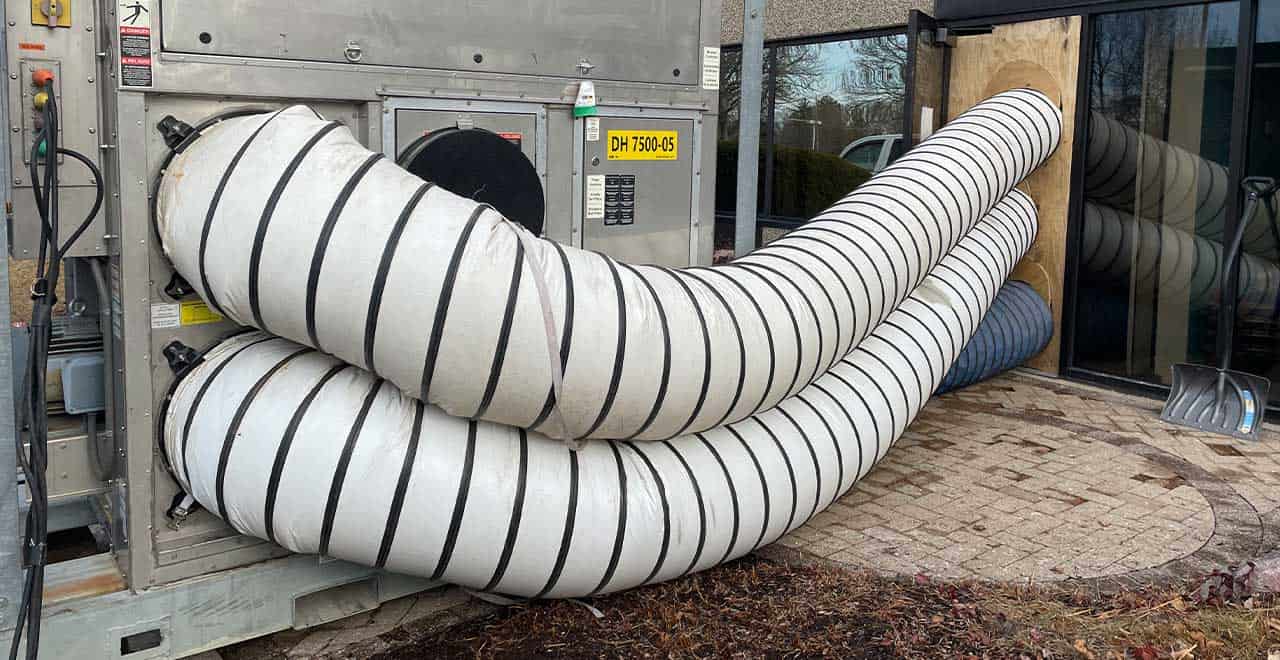
Peak summer temperatures create compounding stress on commercial buildings. HVAC systems run at or beyond their design capacity for extended periods. Electrical loads climb as cooling demand increases across the building and across the grid simultaneously. Tenant comfort and operational continuity depend on systems that perform reliably under conditions that test every component. When something fails during a July heat event, the consequences are immediate, and the window for response is short.
The facilities that manage through summer heat most effectively are not the ones with the newest equipment. They are the ones that assessed their risk exposure before the season arrived, completed maintenance while lead times were manageable, and had a contingency plan with pre-qualified partners ready to activate before a failure forced a reactive response.
REIC Rentals supports property managers, facility teams, and commercial operators with temporary cooling equipment, power solutions, and dehumidification for peak summer demand, planned maintenance windows, and emergency HVAC failures. This article covers the practical steps to prepare a commercial building before peak temperatures arrive and what contingency planning entails when permanent systems require backup.
Assessing Your Building’s Summer Risk Profile
Effective preparation starts with a structured risk review completed before peak season, not during it. The goal is to identify which systems face the greatest summer exposure, which spaces cannot tolerate a cooling failure, and where the gaps are between what existing equipment can deliver and what the building actually needs during peak demand.
Mapping critical spaces is the starting point. Server rooms, medical suites, laboratories, production lines, and data rooms all have temperature tolerances that are significantly tighter than those in general office or retail spaces. Those zones require priority coverage in any contingency plan because the consequences of a cooling failure are immediate and potentially severe. General tenant spaces have greater tolerance, but comfort failures in those areas generate complaints and lease pressure with their own operational and financial consequences.
Reviewing several years of summer utility bills reveals peak-demand days, efficiency trends, and patterns of incidents that signal degrading system performance. HVAC equipment that is consuming disproportionately more energy than it used to is typically working harder to deliver the same output, which is a reliable indicator that capacity margins are thinner than the nameplate suggests. Documenting past summer incidents, including chiller failures, comfort complaints, and emergency repair calls, gives the maintenance team a factual baseline for prioritizing pre-season work and identifying the most likely failure points before they occur under load.
Preparing HVAC Systems Before Peak Temperatures
HVAC maintenance completed before the season peak yields better outcomes than maintenance performed reactively during the peak. Systems that enter summer with clean coils, correct refrigerant charge, verified controls, and confirmed capacity relative to the current building load have meaningfully higher reliability during the high-demand period than those that carry deferred maintenance into it.
Condenser and evaporator coil fouling is one of the most common causes of compressor failure under summer load. Clean coils allow heat exchange to occur at the efficiency the system was designed for. Fouled coils force the compressor to work harder to deliver the same output, accelerating wear and increasing the likelihood of failure precisely when the system is running the longest and hardest. Coil cleaning before the season begins is one of the highest-return maintenance activities available.
Filter condition directly affects both air quality and system efficiency. Overloaded filters restrict airflow, reduce cooling capacity, and add resistance that the fan must overcome during every operating hour. Maintaining filter change intervals appropriate to the building’s occupancy and air quality conditions ensures the system delivers its rated airflow throughout the summer window.
Pre-season inspection should cover refrigerant charge, economizer and damper operation, controls calibration, and a capacity check against the building’s current load. All of it should be complete by late spring. That last item is the one most commonly overlooked. Buildings that have added tenants, equipment, or heat-generating systems since the original HVAC sizing may be operating with significantly less margin against peak conditions than the design assumed. That gap is not visible until a July heat event reveals it under load. Finding it in April allows supplemental cooling to be planned. Finding it in July means scrambling for equipment when availability is tightest and lead times are longest.
REIC Rentals provides portable air conditioners and supplemental cooling equipment to manage peak demand when permanent systems cannot keep pace with the building’s actual load during periods of extreme heat.
Power Infrastructure and Electrical Resilience
Extended heat drives electrical loads higher across the building simultaneously, increasing the demand on switchgear, panels, breakers, and conductors that may have been adequate for typical conditions but face greater stress during a sustained peak period. Pre-season electrical inspection identifies the components most likely to fail under that additional load before they do so during an event.
Infrared scanning of switchgear and electrical panels detects hot spots that indicate connection problems, overloaded circuits, or deteriorating components not visible during standard visual inspection. Connections that are loose or corroded generate resistance and heat that compounds under load and can cause failures during the extended high-demand periods that summer heat events produce. Tightening connections, verifying breaker ratings, and confirming conductor sizing for cooling equipment are practical steps to reduce the risk of electrical failure during peak season.
Backup generator testing under load before peak season confirms that emergency power systems will perform when they are needed. A generator that has not been tested under realistic load conditions may fail at startup during a grid event, when its performance matters most. Confirming fuel storage, testing automatic transfer switches, and verifying that the generator capacity covers the critical loads it is expected to support should all be completed while the urgency of an active event is not driving the timeline.
REIC Rentals provides generators across a range of sizes for temporary power support during added cooling loads, brownout events, and planned maintenance windows when permanent electrical systems are partially offline. Distribution panels and cabling route temporary power to the specific equipment and zones that require it without overloading existing circuits.
Reducing Heat Gain Through the Building Envelope
HVAC system performance during summer is partly a function of how much heat the building envelope allows in. Reducing heat gain through the envelope reduces the load the cooling system must manage, which extends capacity margins, reduces energy consumption, and lowers the probability that peak demand exceeds what installed equipment can deliver.
Reflective roof coatings, window films, and shading devices reduce solar heat gain before it enters the building, which is more effective than cooling the heat out after it has already transferred to the interior. Insulation at penetrations around windows, doors, and roof details prevents the infiltration of hot outdoor air that degrades both temperature and humidity control in occupied spaces. These measures extend the lifespan of permanent HVAC assets by reducing the workload they carry through the summer peak.
Pre-cooling the building during off-peak hours, when electricity rates are lower and outdoor temperatures are cooler, reduces the thermal mass the system must manage during the hottest part of the day. Rebalancing airflows by zone, rather than applying building-wide setpoints, allows the system to direct capacity where the load is highest, rather than conditioning spaces that do not need it at the same rate as those that do.
Humidity Control and Indoor Air Quality
High summer humidity compounds the thermal stress that commercial buildings experience during peak heat events. Elevated relative humidity makes occupied spaces feel warmer at a given temperature, increasing the cooling demand required to maintain acceptable comfort. It also affects materials, equipment, and indoor air quality in ways that go beyond comfort.
Server rooms, healthcare suites, and laboratories require tighter humidity control than general commercial space. Elevated humidity in those environments affects equipment reliability, compliance with operating standards, and the integrity of sensitive materials and processes. General commercial spaces benefit from maintained relative humidity within the range that supports both occupant comfort and the condition of finishes, millwork, and building materials.
REIC Rentals’ drying equipment provides supplemental dehumidification when existing systems cannot manage latent loads during peak summer humidity. Cooling and dehumidification planned together, rather than specified independently, maintain both temperature and humidity within required ranges simultaneously, rather than solving one problem while allowing the other to persist.
Regular maintenance of cooling towers and water-based systems, including flushing and chemical treatment, prevents Legionella growth during warm weather, which is both a safety requirement and a compliance obligation for commercial property operators.
Emergency HVAC Planning and Contingency Preparedness
A written contingency plan is the difference between a controlled response to an HVAC failure and a reactive scramble during a heat event, when every decision is made under time pressure. The components of that plan are all available before the season begins. Building them into a documented playbook in spring means that the people who need to act during an event have clear guidance, rather than having to start the planning process from scratch as conditions deteriorate.
The plan should identify the decision-makers authorized to activate emergency response, the activation thresholds that trigger each level of response, the preferred vendors with pre-qualified equipment and confirmed site familiarity, and the critical loads by area that determine which equipment to deploy first. It should also document the physical infrastructure details that determine how temporary equipment integrates with the building: connection points for temporary cooling and power, access routes for equipment delivery, staging areas that do not block emergency egress, and the electrical capacity available to support temporary systems.
Pre-qualifying a rental partner in spring, before summer demand peaks, allows REIC Rentals to conduct a site assessment, map connection points, and maintain a pre-approved equipment list for the building. When an event occurs, the activation is a logistics call rather than a first contact. REIC Rentals supports multi-building portfolios and can coordinate contingency planning across properties so each site has a documented plan rather than relying on a single building manager to initiate the process independently under pressure.
Scenario: Supplemental Cooling During a Peak Summer Demand Period
Consider a commercial office building where the central chiller reaches its capacity limit during an extended heat event in July. Tenant floors that were comfortable at the start of the week become increasingly difficult to work in by midweek as the chiller runs continuously without bringing temperatures down to the setpoint. The permanent system is not failing. It is simply insufficient for the conditions it is being asked to manage.
In that scenario, supplemental portable cooling equipment staged through a pre-season arrangement with REIC Rentals could be deployed to the floors with the highest occupancy and the most heat-sensitive tenants. Temporary equipment integrates with existing electrical infrastructure, with distribution equipment routing power to units positioned on each affected floor. Conditions return to an acceptable range within the first operational period. Tenants experience a brief disruption rather than a sustained comfort failure, and the building operator avoids both the emergency repair timeline and the premium cost typically generated by a reactive call during a peak heat event.
That outcome depends entirely on the site assessment, equipment list, and logistics plan being in place before the event, not assembled while conditions are already deteriorating and every competing facility in the region is making the same call to the same rental partner at the same time.
Long-Term Planning: Using Summer Performance Data
Each summer generates performance data that informs the capital planning and maintenance decisions for the following season. Peak demand records, emergency call logs, comfort complaint patterns, and utility billing anomalies all reveal where the gaps are between current system capacity and actual building requirements. Using that data to build the case for capital upgrades, efficiency improvements, and system replacements gives facilities and property management teams a factual foundation for budget conversations rather than relying on general industry benchmarks.
Variable-frequency drives on pumps and fans, high-efficiency cooling equipment, improved controls integration, and LED lighting upgrades that reduce internal heat load all lower summer operating costs and improve reliability over time. Each summer’s performance data, peak-demand records, emergency call logs, and comfort-complaint patterns build the case for those investments in the following budget cycle.
Temporary rentals bridge the gap during permanent system replacement projects, protecting operational continuity and avoiding tenant disruption while the upgrade proceeds. REIC Rentals supports planned maintenance and replacement windows with pre-staged temporary equipment so the work can proceed on schedule without leaving the building without cooling during the transition.
Working with REIC Rentals on Summer Preparedness
REIC Rentals engages with commercial property teams on summer preparedness through a defined process that begins before the peak of the season. A pre-season site assessment establishes the building’s risk profile, documents the infrastructure available for integrating temporary equipment, and produces a specific equipment plan with confirmed availability. That plan allows rapid deployment when conditions demand it, rather than beginning the sizing and logistics process under time pressure.
The engagement continues through the active season with 24/7 support, equipment adjustments as conditions change, and post-event demobilization that promptly removes temporary equipment once permanent systems are restored. For multi-site portfolios, centralized account management provides consistent service standards and documentation across all properties rather than managing each building as an independent relationship.
Request a quote or find a location near you to schedule a pre-season site review and build your summer HVAC contingency plan before peak temperatures make it urgent.
Ready Before Summer Demands It
Commercial buildings that manage peak summer temperatures well share a common characteristic: their operators treated summer preparation as a spring planning task rather than as a reactive response to entirely predictable events. The maintenance, risk assessment, contingency planning, and rental partner engagement that protect operations through summer heat are all more effective, less expensive, and less disruptive when completed before the season arrives than when initiated during it.
REIC Rentals provides the cooling, power, drying, and HVAC accessories that commercial buildings need to stay operational through summer’s most demanding conditions. Explore the full HVAC range or request a quote to start the preparedness conversation today.
1.888.356.1880 | in**@**ic.com | reic.com
Service You Trust. Equipment You Need.
