
Sustained relative humidity above 60 percent during an OR suite or sterile processing renovation is not a comfort issue. It is a condition that supports microbial growth on porous construction materials within 24 to 48 hours, compromises the sterility of wrapped instrument sets, and can trigger infection control event reviews that delay OR reopenings. In these spaces, dehumidification is not an environmental amenity. It is a compliance and patient-safety requirement.
Operating rooms and sterile processing departments carry tighter humidity tolerances and higher regulatory scrutiny than any other clinical space. When those spaces undergo renovation, moisture loads spike due to wet trades, permanent HVAC systems are offline or decoupled, and the consequences of uncontrolled humidity range from material failures to clinical outcomes.
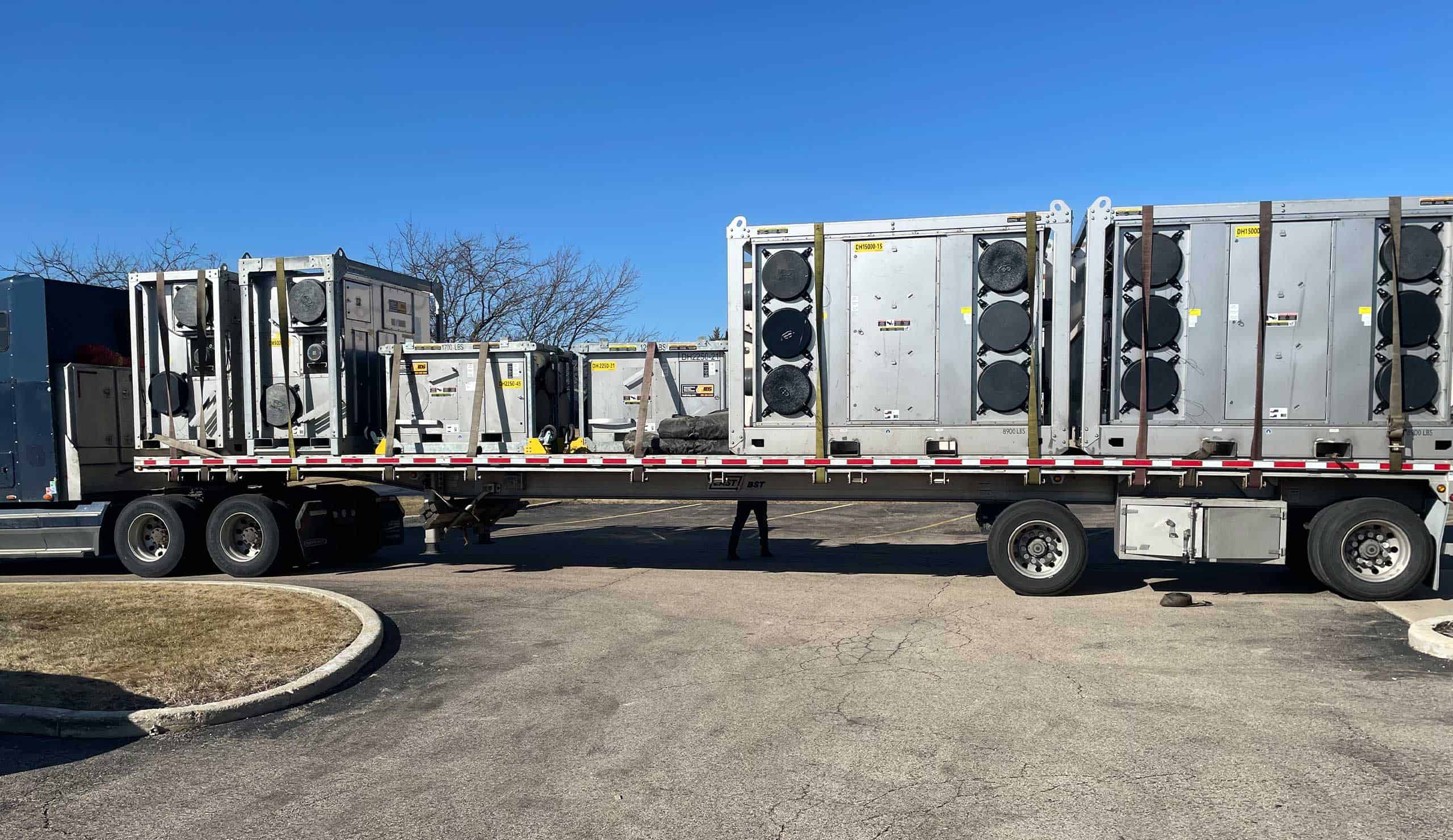
REIC Rentals provides specialized temporary dehumidification and climate control for hospital and healthcare renovation projects, with drying and dehumidification equipment configured for the specific requirements of OR and SPD environments. This article covers what makes dehumidification in these spaces clinically distinct and how to plan it correctly from preconstruction onward.
The Regulatory and Standards Landscape
Humidity parameters in operating rooms and sterile processing areas are governed by overlapping standards, including ASHRAE Standard 170, FGI Guidelines, NFPA 99, and state codes, as well as accreditation requirements from the Joint Commission, DNV, and HFAP. Each carries specific requirements that apply to both permanent systems and temporary infrastructure during renovation.
ASHRAE 170 sets relative humidity limits of 20 to 60 percent for operating rooms and invasive procedure rooms. Sterile storage areas in SPDs are typically maintained at or below 60 percent RH, with many facility design standards specifying a maximum of 50 percent. Infection control risk assessments and Environment of Care committees increasingly require documented humidity-control plans for construction projects affecting surgery and sterile processing.
Surveyors review humidity logs from both permanent and temporary systems. Sustained RH above 60 percent can trigger infection control event reviews, delay OR reopenings, or require remediation. REIC Rentals supports compliance documentation with data logging and reporting that aligns with accreditation survey requirements.
How High Humidity Threatens OR and SPD Environments
When relative humidity climbs above 60 percent, construction materials, including gypsum board, ceiling tiles, and casework substrates, become substrates for bacterial, fungal, and mold growth. Active construction dehumidification stops mold colonization within the 24- to 48-hour window that matters most when wet trades are underway.
In the sterile processing department, the decontamination zone generates significant latent loads from steam, hot water, and chemical processes. During renovation, that moisture can migrate into clean workrooms and sterile storage zones if barriers and pressure relationships are not managed. The result is compromised sterility of wrapped instrument sets, peel packs, and sterile supplies, before the renovated space is even commissioned.
The clinical consequences are specific. Surface condensation fosters mold growth on ductwork and diffusers above the sterile field. Humidity above 60 percent degrades the packaging integrity of sterile supplies. Adjacent patient areas experience air quality effects when construction moisture is not contained. Maintaining conditions between 40 and 60 percent RH throughout the renovation is what prevents those outcomes.
Protecting Materials, Finishes, and Medical Equipment
Healthcare construction materials in ORs and SPDs are selected for cleanability and durability, but many are vulnerable to high humidity during installation and curing.
Sheet vinyl and resinous floors common in OR suites are sensitive to slab moisture. Excess moisture causes adhesive failure, bubbling, and seam separations that become weak points in infection control. High humidity warps casework doors, delaminates sterile storage cabinets, and damages ceiling systems designed for cleanroom-level performance.
Staged medical equipment, including stainless-steel sterilizers, washer-disinfectors, and surgical booms, faces corrosion risk from sustained moisture exposure during renovation staging. High humidity accelerates corrosion in electronic medical devices and control systems. REIC Rentals’ dehumidification plans for healthcare projects include protecting both installed finishes and staged medical equipment.
Maintaining Air Quality and Moisture Control During Active Renovations
Many hospitals renovate OR floors and SPDs while surgery and sterile processing continue nearby, sometimes on the same floor or directly above active suites. This creates a dual challenge: maintaining air quality and preventing moisture migration into operational clinical areas.
Coordinating dehumidifiers with temporary air handlers and HEPA-filtered negative air machines maintains both particle control and humidity control simultaneously. Renovation zones should be held between 40 and 55 percent RH to prevent mold, limit microbial growth on temporary barriers, and maintain compatibility with adjacent OR and SPD conditions.
REIC Rentals engineers moisture-control strategies that integrate with infection control plans, balancing airflow, temperature, and humidity to protect both construction workers and clinical staff. Our HVAC accessories, including pressure-monitoring equipment and flexible ducting, enable temporary systems to maintain the pressure relationships that prevent construction contaminants from migrating into clinical areas.
Choosing the Right Dehumidification Technology
OR and SPD renovations often require more than one dehumidification approach, selected based on load, schedule, and environmental sensitivity.
Desiccant dehumidifiers excel in applications with large latent loads, low dew point targets, concrete curing phases, and cool-weather construction. They operate at low temperatures and achieve lower dew points than refrigerant systems, making them appropriate for conditions where refrigerant equipment is less effective.
Refrigerant-based systems condense moisture by cooling the air and provide strong energy efficiency in warm conditions. They are appropriate for moderate humidity control in occupied-adjacent zones and for temporary sterile storage areas where precise humidity maintenance is required without the aggressive drying of desiccant equipment.
Complex OR floor renovations with multiple sub-zones often benefit from a hybrid approach: primary drying with desiccant equipment, with refrigerant compact units for zone control where the main system cannot reach. REIC Rentals provides engineered dehumidification packages configured for healthcare, including remote monitoring, alarms, and integration with temporary power and mechanical systems.
Planning, Phasing, and Risk Management
Humidity management must be designed into the renovation from the first planning meeting, rather than added in response to visible condensation or failed moisture readings.
Critical planning steps include:
- Incorporate dehumidification into the ICRA and phasing plan: identify which phases contribute the most moisture load, and size equipment accordingly to accelerate drying.
- In multi-phase SPD renovations, apply different humidity strategies to the decontamination, assembly and pack, and sterile storage zones at each stage to keep core sterile processing functions online.
- Run continuous humidity monitoring and logging from demolition through final commissioning to support sign-off from infection prevention, facilities leadership, and accrediting bodies.
- Engage REIC Rentals early so sizing, routing, and staging of temporary dehumidification coordinates with temporary walls, access paths, and ceiling work without disrupting surgical schedules.
How REIC Rentals Supports OR and SPD Renovations
REIC Rentals engages in hospital renovation projects from preconstruction planning through final turnover, not just equipment delivery.
Preconstruction support includes load calculations, review of architectural and MEP plans, and recommendations for dehumidifier types, locations, and duct routing tailored to OR and SPD space constraints.
Rapid mobilization supports time-sensitive situations, including unplanned sterile processing shutdowns, emergency OR renovations following flooding, and schedule accelerations requiring aggressive moisture removal to keep the department operational.
24/7 monitoring and alarms alert project teams when humidity trends drift, helping avoid overnight moisture events that can compromise sterile processing workflows or delay OR reopening.
REIC Rentals coordinates deliveries through hospital loading docks, complies with infection control protocols, and stages equipment to minimize interference with patient flows. Request a quote or find a location near you to scope dehumidification for your next OR or SPD renovation before the next phase begins.
1.888.356.1880 | in**@**ic.com | reic.com
Service You Trust. Equipment You Need.
